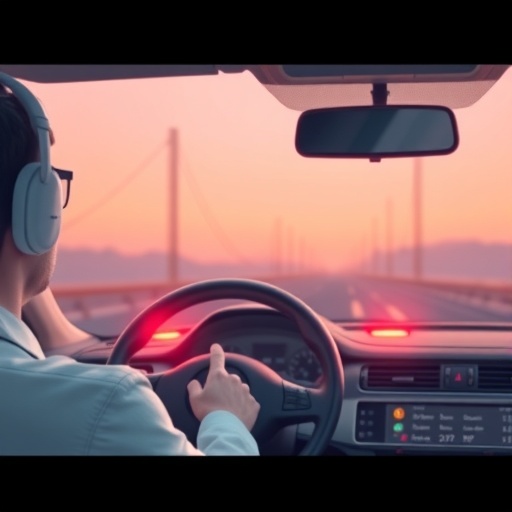
Cars equipped with self-driving technologies promise a future filled with enhanced safety and convenience. Yet, the advent of these intelligent vehicles brings with it a complex set of challenges that human brains are ill-prepared to handle. As these cars proliferate in our daily lives, it becomes essential to understand the psychological impact they have on drivers and the new expectations they set.
In a compelling examination of this issue, Professor Ronald McLeod, an esteemed figure in the field of Engineering Psychology, sheds light on the psychological burdens placed on drivers by semi-autonomous vehicle systems. McLeod’s extensive work focuses on human interactions with different automated systems, spanning everything from industrial machines to aviation technology. He highlights a core dilemma: while the technology aims to alleviate human error, the cognitive load it imposes is often underestimated.
In his book, Transitioning to Autonomy, McLeod recounts a personal encounter that starkly illustrates the dissonance between existing driving paradigms and the demands of autonomous features. Following the purchase of a self-driving capable car, he was launched into Glasgow’s bustling traffic without formal training on how to supervise such a system. This scenario exemplifies a troubling reality: drivers around the world are similarly untrained and unprepared for their new roles as overseers of automated systems.
Modern vehicles typically come equipped with varying degrees of driver assistance tools. Some of these are now mandated in new car models, designed to curb accidents commonly attributed to human mistakes. Technologies such as lane-keeping assistance, automatic braking, and road sign recognition function with the intention of defining safer driving experiences. However, these systems require a mental shift from active driver to a supervisory controller, which is a source of confusion and stress among users.
The expectations placed on drivers by these advanced systems often go unnoticed. When the automated features engage, the driver does not merely transition to a passive role; instead, they must undertake the complex task of monitoring and evaluating the vehicle’s performance in real-time while being ready to intervene at any moment. This transition demands a heightened state of vigilance and engagement, tasks in which humans often falter.
Psychologists recognize the phenomenon of “vigilance tasks,” which are demanding in the long term and require sustained focus during periods of minimal activity. Professor McLeod articulates the struggle many drivers encounter when balancing monitoring the vehicle’s capabilities with manual driving skills. Continuous attention beyond brief intervals poses immense challenges, yet autonomous systems demand exactly that from their human operators.
The cognitive burden of driving under these new technological frameworks often surpasses the demands of traditional manual driving. Drivers must build and maintain a comprehensive mental model of their car’s functions, limitations, and surrounding environment. They must constantly evaluate the system’s awareness of potential hazards while being prepared to react decisively when necessary. This cognitive task becomes even more problematic when factoring in individual variances, including age, experience, and fatigue.
Anxiety often manifests during critical driving situations, particularly when the driver’s perception of a hazard is not mirrored by the vehicle’s responsive capabilities. McLeod recounts a nerve-wracking moment when he approached a traffic jam while his vehicle inadvertently maintained its speed. The uncertainty of the system’s awareness of the hazard ahead forced him into a mental tug-of-war, weighing the risks of delay against potential overreacting. This anxiety points to a significant design flaw in many automated driving systems – the failure to clearly communicate the vehicle’s status, capabilities, and limitations effectively to the driver.
Much of the information required for safe operation is relegated to dense user manuals or poorly displayed controls within the cockpit, leaving users grasping at straws to decipher their responsibilities in a system that is expected to autonomously manage significant aspects of driving. This gap in communication contributes to a disorientation that often leaves individuals feeling underprepared and overly reliant on the vehicle’s capabilities. As McLeod argues, the implications of such oversights can be dire when it comes to public safety.
Beyond automotive applications, the transitional relationships to supervisory control as a concept are unfolding across various sectors, from aviation to manufacturing. McLeod uses historical references from notable incidents such as the Boeing 737 MAX crashes and various maritime disasters to underscore a common thread – the profound disconnect between technological designers, regulators, and the operators of these systems. Each instance reflects a failure to adequately consider the psychological complexities involved in human oversight of automated mechanisms.
As society marches toward deeper integration of autonomous technology, McLeod calls for a fundamental overhaul of how autonomous systems are adopted and integrated into daily life. He emphasizes the importance of simulation-based training that would provide targeted education for users, ensuring they are equipped to handle the new demands imposed by these vehicles. Furthermore, he advocates for the development of interface designs that relay current system statuses more transparently, allowing drivers to maintain an informed awareness of their vehicle’s operations.
Updating driving assessments to include a focus on supervisory control skills could be a catalyst for a smoother transition into this new era of transportation. Emphasizing the overlap between human cognitive expectations and system functionality could lead to better-trained drivers and safer roads. The psychological dimension must be emphasized by design teams and regulatory bodies throughout the automotive sector. Autonomous features cannot be treated as auxiliary technologies; rather, they should underpin a completely redefined user experience that accounts for the unique challenges posed by supervisory control.
The road ahead does not call for a retreat from automation; instead, it highlights the urgency of reshaping the way society embraces and adapts to these advancements. Without a concerted effort to recalibrate our approaches to training, design, and user experiences, the promise of a safer future could be overshadowed by an ever-increasing likelihood of accidents and miscommunication. The fusion of psychology, design, and technology can pave the way for a genuinely safer environment on our roads.
The transition to an autonomous future must not only be about technological innovation; it requires a nuanced understanding of human behavior, expectations, and limitations. By treating these aspects as serious considerations in the development cycle, we can better prepare society for the challenges that autonomous vehicles introduce. The balance between human operators and automated systems can, if approached thoughtfully, lead to a sustainable, safer, and more seamless integration of technology into our daily commutes and broader transport contexts.
Subject of Research: Psychological demands of drivers in autonomous vehicles
Article Title: Navigating the New Role: The Psychological Challenges of Autonomous Driving
News Publication Date: October 2023
Web References: N/A
References: N/A
Image Credits: N/A
Keywords
Autonomous vehicles, Human Factors, Engineering Psychology, Cognitive load, Supervisory control, Driver assistance systems, Safety, Human-computer interaction, Vigilance tasks, Technology adoption, Psychological impacts, Transportation.
Tags: challenges of transitioning to autonomous vehiclescognitive load of semi-autonomous drivingdriver expectations with self-driving carsengineering psychology in automated systemshuman interaction with self-driving technologyimpact of autonomous vehicles on human psychologyimplications of self-driving cars on driver behaviormental preparedness for self-driving carspsychological burdens of automated drivingpsychological challenges of self-driving carssafety concerns with autonomous vehiclestraining needs for autonomous vehicle users