In a groundbreaking advancement poised to revolutionize agricultural monitoring, Purdue University researchers have developed an innovative smart platform capable of wirelessly assessing subsoil health with unprecedented accuracy and efficiency. Spearheaded by Associate Professor Rahim Rahimi from Purdue’s School of Materials Engineering, this novel technology—referred to as HARVEST—promises to fundamentally transform how farmers manage soil resources, optimize input use, and sustainably boost crop yields in an era where precision agriculture is more critical than ever.
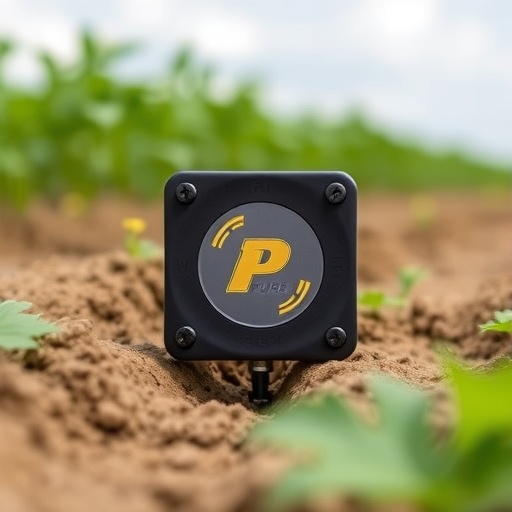
HARVEST, an acronym for Hybrid Antenna for Radio-frequency-enhanced Volumetric water content and Electrical-conductivity-based Soil Tracking, epitomizes a marriage of materials science, wireless communication, and agricultural engineering. Unlike conventional soil monitoring solutions, which predominantly rely on costly, labor-intensive, or limited surface sensing techniques such as drone imaging or physical soil sampling, this system deploys uniquely designed nail-shaped sensing probes embedded into the subsoil. These probes interface seamlessly with an above-ground triple-ring antenna array, creating a passive, wireless network that dramatically enhances the ability to collect spatially and temporally rich subsoil data without the burden of onboard electronics.
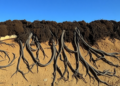
The hallmark of this technology lies in its capacity to measure critical subsoil parameters — such as volumetric water content and electrical conductivity — at depths where plant roots actively uptake water and nutrients, typically below the top 6 to 8 inches of soil. This is significant because variations in moisture and salinity within these subsurface layers can often be early indicators of plant stress and overall soil health, aspects that traditional surface monitoring cannot reliably capture in real time. This fine-grained insight arms farmers with actionable data, empowering them to tailor irrigation, fertilization, and pesticide application with pinpoint precision across vast agricultural landscapes.
From a technical standpoint, the HARVEST probes operate without batteries or complex electronics, leveraging the principle of radio-frequency interrogation facilitated by the aerial antenna system. The probes’ triple-ring antenna design enhances coupling efficiency and preserves signal integrity by minimizing losses commonly associated with subsurface sensing. The system’s passive nature not only curtails maintenance demands but also lowers deployment costs, making it scalable and accessible for farms of varying sizes—from smallholder holdings to expansive commercial operations.
Extensive field validation in Purdue’s cornfields over a full growing season has demonstrated the robustness and reliability of HARVEST’s wireless communication, showcasing its capacity to deliver continuous, distributed monitoring across diverse soil conditions and environmental dynamics. The real-time data acquisition enables precision agriculture practitioners and decision-support software platforms to enact timely interventions, mitigating yield losses by adapting to soil condition fluctuations before visible crop symptoms emerge above ground.
Beyond performance, HARVEST exemplifies sustainability by targeting the reduction of unnecessary water, fertilizer, and pesticide use—a critical step in minimizing environmental footprints associated with conventional crop production. Over-application of these inputs not only inflates operational costs but accelerates pollution through nutrient runoff, threatening water quality and ecosystem health. By contrast, this technologically advanced platform fosters resource conservation, supports ecological balance, and enhances long-term agronomic viability.
Another notable dimension of this invention is its seamless integration potential with emerging agricultural technologies, such as smart tractors and automated irrigation systems. The wireless, passive sensor network can synergistically feed real-time soil health data into autonomous equipment, enabling adaptive, site-specific management strategies that respond dynamically to heterogeneous field conditions. This integration promises to create a holistic, data-driven precision farming ecosystem that optimizes inputs while boosting yield and resilience.
The development of HARVEST is a testament to the interdisciplinary collaboration among materials engineers, electrical engineers, and agricultural scientists at Purdue. This convergence of expertise has yielded a sophisticated yet practical innovation that pushes the boundaries of subsoil sensing technologies, embodying a new paradigm in smart agriculture. Furthermore, the research team’s use of commercially available materials and compatibility with low-cost unmanned aerial vehicle (UAV) platforms ensure practicality and wide adaptability in diverse agricultural contexts.
Looking forward, the research team aspires to transition HARVEST from a university prototype to a commercially viable instrument through partnerships with agricultural equipment manufacturers and technology service providers. This vision includes deploying the technology at scale across multiple crop species and farming operations worldwide, catalyzing a global movement towards more sustainable, efficient, and profitable agriculture.
In addressing the prevailing challenge in soil health monitoring—balancing the need for detailed, widespread data against cost and usability constraints—HARVEST emerges as a game-changing solution. It holds the promise not only to empower farmers with deeper insights but also to fundamentally reshape precision agriculture, enabling smarter input management, reducing environmental impact, and enhancing food security amidst rising global demands.
The implications of this advancement extend far beyond individual farms, bearing the potential to influence policy, environmental stewardship, and global agricultural practices. By fostering the adoption of data-centric, environmentally responsible farming methods, HARVEST supports a future where technological innovation actively contributes to preserving natural ecosystems while feeding a growing population.
With patent protections underway through Purdue’s Office of Technology Commercialization, this invention is well-positioned for industrial development and widespread dissemination. Industry stakeholders interested in realizing the full commercial and societal benefits of HARVEST are encouraged to engage with Purdue’s licensing representatives to explore collaboration opportunities.
HARVEST is more than a high-tech sensor system; it represents a pivotal step towards the sustainable intensification of agriculture—where technology and nature converge to cultivate a resilient, productive, and environmentally harmonious future for global food systems.
Subject of Research: Wireless subsoil health monitoring using novel nail-shaped probes integrated with radio-frequency passive antenna systems for precision agriculture.
Article Title: A smart nail platform for wireless subsoil health monitoring via unmanned aerial vehicle-assisted radio frequency interrogation
News Publication Date: 27-Dec-2025
Web References:
https://doi.org/10.1038/s41467-025-67889-w
Image Credits: Purdue University photo/Kevin Crisp
Keywords: Farming, Agriculture, Soils, Crop production, Electrical engineering, Sensors