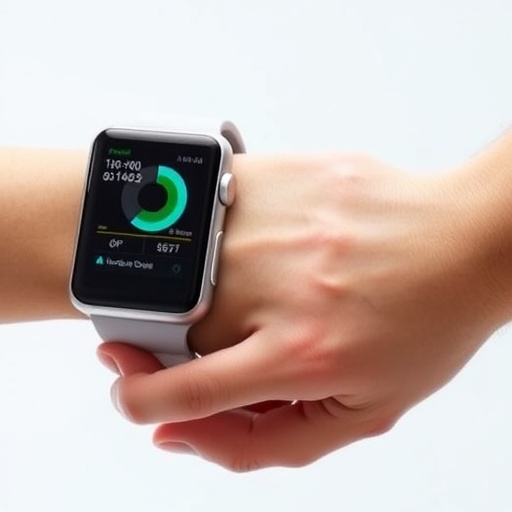
In September 2025, a groundbreaking development emerged in the realm of wearable health technology, as the U.S. Food and Drug Administration granted clearance for the Apple Watch’s Hypertension Notifications Feature. This innovative tool leverages the watch’s advanced optical sensors to analyze blood flow patterns, alerting users when their cardiovascular data may indicate the presence of hypertension, commonly referred to as high blood pressure. While the functionality of this feature is not designed to serve as a definitive diagnosis, it symbolizes a significant stride toward the integration of wearable devices in public health initiatives aimed at population screening.
A recent comprehensive analysis, spearheaded by researchers affiliated with the University of Utah and the University of Pennsylvania, delves into the potential real-world impacts of this cutting-edge technology if it were to be implemented across the entirety of the U.S. adult demographic. Published in the revered Journal of the American Medical Association, this study sheds light on the implications and effectiveness of the Apple Watch’s hypertension alerts.
High blood pressure, often termed a “silent killer,” typically presents without noticeable symptoms. Adam Bress, Pharm.D., M.S., a senior author and prominent researcher at the Spencer Fox Eccles School of Medicine at the University of Utah, underscores the gravity of hypertension’s role in cardiovascular health. According to Bress, the absence of symptoms can lead individuals to remain unaware of their condition, ultimately contributing to its status as one of the leading modifiable factors associated with heart disease.
The validation study conducted by Apple previously indicated that approximately 59 percent of individuals with undiagnosed hypertension would fail to receive alerts via the smartwatch, while around 8 percent of those without hypertension would be erroneously notified. The established clinical guidelines recommend confirmation of a hypertension diagnosis using both office-based blood pressure measurements and additional out-of-office assessments through cuffed devices. This practice addresses the discrepancies that can arise from varying blood pressure readings in clinical versus home settings.
Using data derived from a nationally representative survey of U.S. adults, Bress and his research team evaluated how the alerts from the Apple Watch would alter the likelihood of receiving a true hypertension diagnosis among adults who were previously oblivious to their condition. The analysis targeted adults aged 22 and older who were not pregnant and had no prior knowledge of having high blood pressure—the essential demographic for utilizing this feature.
The findings of the analysis revealed crucial differences in the effectiveness of the alert system across various age groups. In younger adults under the age of 30, receiving an alert escalates the likelihood of having hypertension from 14 percent—according to data from the National Health and Nutrition Examination Survey (NHANES)—to 47 percent, while the absence of an alert declines the probability to 10 percent. Conversely, for adults aged 60 and above, a received alert increases the likelihood of hypertension from 45 percent to a staggering 81 percent, while the absence of an alert merely reduces the probability to 34 percent.
A pivotal insight from the data is that as the prevalence of undiagnosed hypertension rises, the correlation between receiving an alert and having genuine hypertension strengthens. In stark contrast, the lack of an alert becomes less reassuring in populations with higher instances of undiagnosed hypertension. For instance, younger adults may find comfort in not receiving an alert, while older adults, who are more susceptible to hypertension, should exercise caution regarding the implications of an absence of alert.
Furthermore, the study reveals disparities in hypertension warning responses based on racial and ethnic categorizations. Among non-Hispanic Black adults, receiving an alert amplifies the likelihood of having hypertension from 36 percent to 75 percent, whereas the absence of an alert decreases this probability to 26 percent. In comparison, alerts among Hispanic adults increase their probability of having hypertension from 24 percent to 63 percent, while a lack of alert decreases it to 17 percent. These findings reflect well-documented disparities in cardiovascular health primarily driven by social determinants.
As the discussion surrounding the utility of the smartwatch hypertension alert feature unfolds, researchers emphasize that the significant user base of Apple Watch—estimated at around 30 million in the United States and 200 million globally—could stand to benefit from such a public health advancement. However, it is critical to underline that these notification systems are designed to complement existing traditional blood pressure screening methods rather than serve as a replacement.
Bress reflects on the potential impact of this technology, suggesting that if the alerts drive individuals towards medical consultation and ultimately the use of validated cuff-based measurements, it constitutes a positive advancement in public health engagement. Current guidelines advocate for blood pressure screenings to be administered to adults every three to five years if they are under 40 years of age and lack additional risk factors, while recommending annual assessments for adults aged 40 and older.
Caution is advised, as the lack of an alert may provide a misleading sense of security to some individuals, potentially dissuading them from pursuing necessary cuff-based screenings. This could result in missed opportunities for timely diagnosis and treatment of hypertension, underscoring the need for vigilance in patient care approaches.
When patients present with alerts generated by their Apple Watch, Bress recommends that healthcare providers conduct thorough cuff-based office blood pressure measurements, followed by out-of-office evaluations, which could include home blood pressure monitoring or ambulatory monitoring to confirm the diagnosis. This multi-faceted assessment approach is imperative for ensuring the accuracy in diagnosing hypertension.
Moreover, the research team is committed to initiating follow-up studies aimed at more accurately estimating the incidence of false negatives and false positives within the U.S. adult population. These estimates will consider various demographic variables, including region, income, and educational background, to provide a nuanced understanding of how the smartwatch hypertension notifications may impact different segments of the population.
With the results having been published in JAMA as “Impact of a Smartwatch Hypertension Notification Feature for Population Screening,” this development is backed by support from the National Heart, Lung, and Blood Institute and incorporates multidisciplinary collaboration among researchers from esteemed institutions, including the University of Utah, University of Pennsylvania, University of Sydney, University of Tasmania, and Columbia University.
These findings mark a pivotal moment in the evolution of health technology and its integration into routine population health management strategies, as wearables begin to play an increasingly vital role in the early detection and management of health conditions such as hypertension.
Subject of Research: Hypertension detection via wearable technology
Article Title: Impact of a Smartwatch Hypertension Notification Feature for Population Screening
News Publication Date: 9-Feb-2026
Web References: JAMA
References: N/A
Image Credits: Charlie Ehlert / University of Utah Health
Keywords