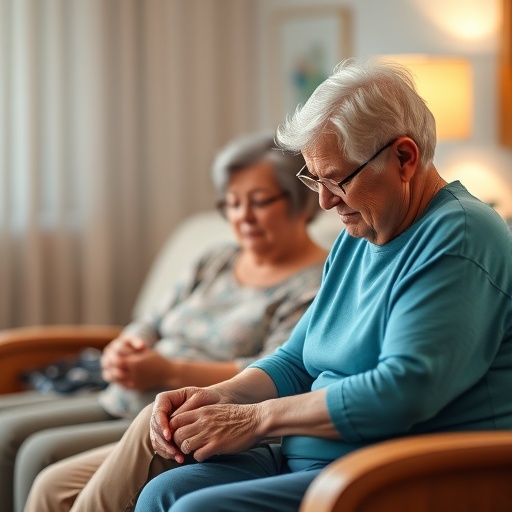
In the intricate tapestry of human experience, the transition into later stages of life remains one of the most profound challenges, particularly for those entering nursing homes. A recent study led by Xu et al., published in the esteemed journal BMC Geriatrics, unveils critical insights into how attitudes toward aging manifest during this delicate “early transition period” and their significant correlation with quality of life. The study’s findings elucidate how perceptions of aging are not merely abstract reflections; they have tangible implications for the well-being of elderly individuals as they navigate the complexities of nursing home life.
The exploration initiates by defining the “early transition period,” a crucial timeframe that frames the experiences of older adults moving into nursing homes. This period is marked by a whirlwind of emotions—anxiety, sadness, and even relief—as individuals grapple with leaving their long-time homes for new environments. As the study suggests, these attitudes toward aging during this transition are not uniform; they can significantly influence how residents adapt and thrive in nursing care facilities.
Utilizing a robust methodological framework, Xu and her colleagues conducted surveys and interviews with residents to assess their perceptions and attitudes toward aging. The researchers categorized these attitudes into latent profiles, enabling them to identify distinct groups within the elderly population. This nuanced approach transcends traditional binaries, promoting a deeper understanding of how varied views on aging can coexist within the same environment.
Among the findings emerged the notion that a positive attitude toward aging was correlated with higher quality of life indicators. Residents who embraced the aging process, viewing it as an opportunity for growth and new experiences, reported higher satisfaction levels in their daily lives. This insight is crucial for healthcare providers and family members seeking to support loved ones through this challenging transition. By fostering a positive outlook on aging, it appears possible to enhance the quality of life for nursing home residents substantially.
Conversely, the study also illuminated the darker side of aging perceptions. Residents who expressed negative attitudes toward aging tended to experience lower quality of life, marked by feelings of isolation and depression. This segment of the population often struggles to adapt to their new surroundings, leading to an increased risk of declining health—both physically and mentally. Understanding these profiles can empower caregivers and administrators in nursing homes to implement targeted interventions aimed at improving residents’ outlook on their aging process.
Moreover, the study delves into the role of social connections in shaping attitudes toward aging. It became evident that residents who maintained strong relationships with family and friends tended to harbor more positive feelings about growing older. Encouraging social interaction within nursing homes could serve as a fundamental strategy in mitigating negative attitudes and fostering a supportive community atmosphere.
In this context, the role of healthcare providers cannot be overstated. They serve not merely as caretakers, but as pivotal figures who can influence the collective attitude toward aging in nursing homes. Regular engagement, thoughtful communication, and activities designed to enhance cognitive and social skills can promote a healthier mindset among residents. Healthcare professionals are called to be more than just service providers; they should act as allies in the journey through aging, embodying positivity and compassion.
Equally important is the attention to the environment in which elderly individuals reside. The study suggests that a supportive and empowering physical space within nursing homes can help cultivate more positive attitudes toward aging. Thoughtful design that prioritizes accessibility, comfort, and opportunities for participation and activity can significantly affect how residents perceive their new living arrangements. The creation of inviting common areas and engaging programs can transform a nursing home into a vibrant community rather than a place of confinement.
Furthermore, the implications of these findings extend well beyond individual nursing homes. Administrators and policymakers are urged to consider the collective impacts of aging perceptions on a broader scale. Programmatic changes at the institutional level can reshape attitudes towards aging within society, reflecting a holistic understanding of elderly care. By framing the narrative around aging positively, enhancing community involvement, and advocating for adequate resources, society can address the ingrained stigma that often accompanies the aging process.
Education plays a critical role in this transformative journey. By incorporating training programs for both nursing home staff and families of residents, the understanding of aging can shift fundamentally. Educating caregivers on the psychological aspects of aging, along with strategies to foster positive associations, can enhance the overall atmosphere within nursing homes. This grassroots approach can catalyze a cultural shift, where aging is celebrated rather than mourned, ultimately leading to better quality of life for all involved.
Additionally, it’s vital to acknowledge that the research by Xu et al. opens the door for future inquiries. As society evolves, understanding the intricate dynamics of aging remains an urgent priority. Further studies could explore the effects of various interventions designed to shift negative attitudes and their subsequent impact on quality of life. A longitudinal approach could provide insights into how sustained positive reinforcement can modify personal attitudes toward aging over time.
Finally, the significance of this study cannot be understated. It challenges prevailing narratives surrounding aging and nursing homes, urging us to rethink how we perceive the later stages of life. The findings advocate for an inclusive, compassionate approach to elderly care that acknowledges the complexity of human emotion. As we move forward, the lessons drawn from this research represent not just a blueprint for improving individual lives, but a call to action for society as a whole. Emphasizing positive aging can steer communities toward a more empathetic understanding of the aging process, fostering a culture that honors the wisdom and experience of older adults.
In conclusion, the journey through aging, particularly during the vulnerable transition into nursing homes, must be approached with sensitivity and understanding. As uncovered by Xu et al., attitudes toward aging profoundly influence the quality of life for elderly individuals. By promoting positive narratives, fostering strong social connections, and creating supportive environments, society can enhance the experience of aging, ensuring that older adults find dignity and fulfillment in their later years. The urgent call remains: to reshape our collective perceptions of aging and to acknowledge that this stage of life, when approached positively, can be a remarkable period of growth and opportunity.
Subject of Research: Attitudes toward aging and their correlation with quality of life in nursing home residents.
Article Title: Latent profiles of attitudes toward ageing during the nursing home “early transition period” and its correlation with quality of life.
Article References: Xu, L., Lin, T., Wang, Z. et al. Latent profiles of attitudes toward ageing during the nursing home “early transition period” and its correlation with quality of life. BMC Geriatr (2026). https://doi.org/10.1186/s12877-026-07007-7
Image Credits: AI Generated
DOI:
Keywords: attitudes toward aging, nursing homes, quality of life, elderly care, social connections
Tags: attitudes toward agingchallenges of aging in long-term careearly transition period in nursing homeselderly well-being and nursing careemotional impact of moving to nursing homesimplications of aging attitudes on elderly careinfluence of attitudes on nursing home experiencesmethodological approaches in geriatric studiesnursing home resident adaptationperceptions of aging in nursing carequality of life for elderlyresident perceptions and nursing home quality