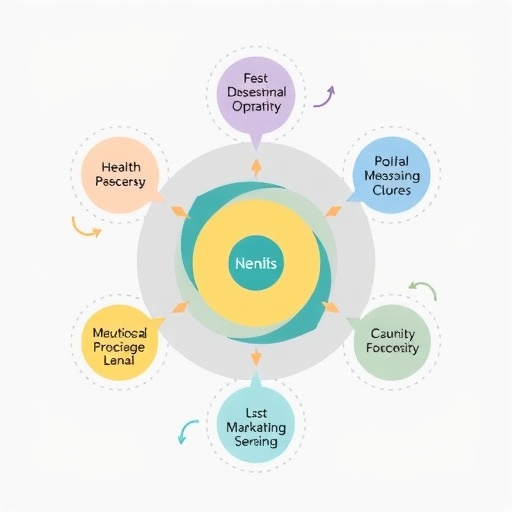
In a groundbreaking study set to transform the landscape of public health policy, researchers Ö. Erol, H. Tozan, M.A. Karadayı, and their collaborators have unveiled a novel multi-dimensional framework that redefines how health system resilience can be assessed. This significant shift in thinking is particularly timely, as the world grapples with the long-lasting impacts of recent global health crises. Their work highlights the need for advanced methodologies that embrace the complexity of health systems while ensuring they remain adaptable in the face of adversity.
The primary focus of the research lies in establishing a comprehensive evaluation system that measures not only the inherent capacities of health systems but also their responsive capabilities amid crises. The framework draws upon various disciplines, illustrating the interconnectedness of health services, policy, community engagement, and technological advancements in creating a robust health system. This integrative approach moves beyond traditional metrics that often fall short in capturing the dynamic nature of resilience.
One of the critical insights revealed in the study is the necessity for health systems to cultivate resilience as a critical component of their operational ethos. The authors suggest that this resilient mindset must begin at the foundational level, emphasizing the importance of training healthcare workers, optimizing resource allocation, and fostering community partnerships. By prioritizing these aspects, health systems can better prepare for unexpected public health emergencies, thereby safeguarding population health in both the short and long term.
Another crucial element of the framework is the emphasis on real-time data utilization. The advancement of technology has facilitated a significant shift toward data-driven decision-making in public health. The authors argue that leveraging big data analytics and artificial intelligence can provide invaluable insights into system performance during a crisis. Moreover, these technologies can aid in predictive analytics, allowing health systems to foresee potential challenges and fortify their strategies accordingly.
The framework also introduces the concept of ‘adaptive resilience,’ which encapsulates the idea that health systems must evolve in response to emerging threats and changing demographics. This adaptability requires not only an understanding of the current landscape but also anticipation of future trends. As populations become increasingly mobile and interconnected, health systems that remain static risk their sustainability and effectiveness. The study advocates for ongoing education, research, and policy development to ensure health systems remain agile and responsive.
In terms of practical application, this research underscores the importance of collaboration across multiple sectors. The authors make a compelling case for integrating efforts from government bodies, healthcare providers, non-profits, and private entities to enhance health system resilience. By sharing resources, knowledge, and strategies, these diverse stakeholders can create a more cohesive and fortified response to health crises.
Moreover, the paper highlights the role of community engagement in fostering resilience. Engaging local populations in health initiatives not only empowers individuals but also cultivates a sense of shared responsibility. When communities are actively involved in shaping their health landscape, they are more likely to adapt to changes and provide support during emergencies. The authors provide case studies that illustrate successful community health programs that have significantly improved local resilience.
The research team also recognizes the barriers to implementing their proposed framework in real-world settings. Identifying and overcoming these barriers is vital for achieving meaningful progress. The authors emphasize the necessity for evidence-based policy-making that prioritizes funding for resilience-building initiatives. Moreover, they stress the need for leadership and commitment at all levels of governance to ensure that resilience becomes a core objective in health system reforms.
In examining the ethical dimensions of health system resilience, the study also raises critical questions regarding equity and access. The authors argue that any resilience framework must prioritize marginalized populations who often bear the brunt of health crises. By embedding equity into the assessment parameters, health systems can better serve vulnerable populations, ensuring that interventions are inclusive and just.
Ultimately, this research presents a call to action for health policymakers, practitioners, and researchers alike. As the world navigates an era characterized by uncertainty and unpredictability, the adoption of this multi-dimensional framework could be pivotal. It advocates for a proactive rather than reactive approach, fostering a culture of resilience that is ingrained in all facets of healthcare delivery.
In conclusion, the study conducted by Erol et al. lays the groundwork for future advancements in health system resilience. By synthesizing evidence from diverse fields and emphasizing collaboration, adaptability, and equity, their framework equips health systems with the tools necessary to face both current and future challenges. This significant contribution to public health discourse could very well establish a new standard for health system assessments in the years to come.
As we reflect on this vital research, it is evident that the quest for health system resilience is not simply a technical challenge, but a fundamental public health imperative. As global citizens, we must advocate for health systems that are not only robust in their responses but are also compassionate in their approach, ultimately aiming to create a healthier world for all.
Subject of Research: Health system resilience assessment framework.
Article Title: From inherent capacities to resilient systems: a multi-dimensional framework for assessing health system resilience.
Article References:
Erol, Ö., Tozan, H., Karadayı, M.A. et al. From inherent capacities to resilient systems: a multi-dimensional framework for assessing health system resilience.
BMC Health Serv Res (2026). https://doi.org/10.1186/s12913-026-14027-x
Image Credits: AI Generated
DOI:
Keywords: Health system resilience, multi-dimensional framework, adaptive resilience, community engagement, data utilization, equity in health care.
Tags: adaptability in health systemsadvanced methodologies in public healthcommunity engagement in health resiliencecomprehensive health system metricshealth system resilience assessmenthealthcare workforce training for resilienceinterconnected health services and technologymulti-dimensional health evaluation frameworkovercoming global health crisespublic health policy transformationresponsive health system capabilities