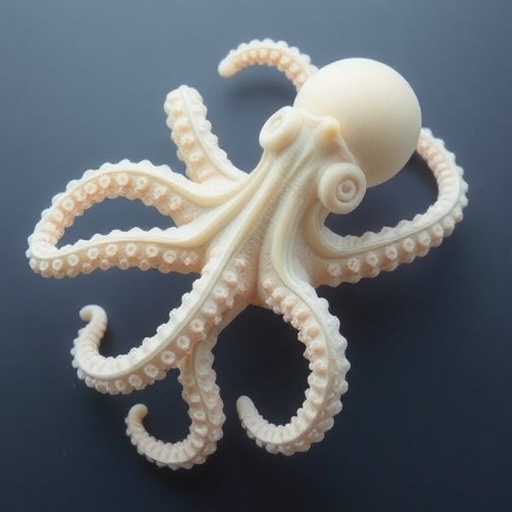
Researchers at Penn State University have unveiled a groundbreaking method for creating multifunctional “smart synthetic skin,” inspired by the remarkable adaptive capabilities of cephalopods like octopuses. Through an innovative fabrication technique, the team has effectively developed a programmable hydrogel material that can dynamically change its appearance, texture, and even its structural shape in response to external stimuli. This development is not only poised to advance the field of synthetic materials but also holds potential applications in adaptive camouflage, information encryption, and soft robotics.
The foundation of this cutting-edge research lies in the principles of 4D printing, which extends the capabilities of traditional 3D printing by incorporating time as a critical component. This method produces 3D objects that undergo reactive changes when confronted with environmental shifts. The materials respond to changes in temperature, mechanical pressure, or exposure to various liquids, enabling a level of versatility previously unavailable in synthetic materials.
At the heart of this invention is the unique technique called halftone-encoded printing. This remarkable approach allows researchers to embed digital images and patterns directly into the hydrogel, akin to how dot patterns convey images in newspapers. Specifically, the researchers employed binary coding — consisting of ones and zeros — for encoding information, making it possible for the smart skin to alter its visual presentation based on the context and stimuli it encounters.
Notably, when manipulated under specific conditions such as heating or stretching, the smart skin can switch between visible and hidden states, revealing encoded information. One of the most striking demonstrations featured the iconic Mona Lisa. Initially obscured, the image became apparent when the skin was exposed to conditions like immersion in ice water or gradual heating. This striking capability illustrates how the synthesized material can facilitate a wide range of applications, from military camouflage to secure data hiding.
The researchers drew inspiration from the incredible adaptive features of cephalopods, which utilize a sophisticated network of muscles and nerves to alter their skin for camouflage or communication. According to Hongtao Sun, the principal investigator of the study, the cephalopods’ natural abilities prompted the development of this smart material. Researchers aimed to create a synthetic system that mirrors the way these marine creatures control their skin to interact with their surroundings.
In the study, the team meticulously designed halftone patterns to dictate how various sections of the smart skin respond differently to external influences. Some areas can deswell or soften in contrast to others based on environmental alterations. This intricate control allows researchers to effectively program the synthetic skin to exhibit specific behaviors in response to its surroundings, essentially imparting instructions into the material.
A standout feature of this smart skin is its impressive malleability. The hydrogel can effortlessly transition from a flat form to complex bio-inspired shapes, reminiscent of the dynamic surfaces of cephalopod skin. Uniquely, unlike several other shape-morphing materials, this hydrogel achieves transformative results with a single layer, controlled by the constitutive halftone pattern. This innovation challenges conventional notions of how materials can be structured to achieve versatility in application.
Furthermore, this smart skin can perform multiple functions simultaneously, thanks largely to the meticulous co-design of the halftone patterns. For example, the team successfully encoded the Mona Lisa image into flat films which, upon transforming into 3D structures, demonstrated a gradual reveal of the hidden information. This dual functionality exemplifies how changes in both shape and aesthetic properties can be orchestrated in unison.
The broader implications of this work cannot be overstated. By integrating advanced manufacturing techniques with intelligent materials, the researchers are paving the way for innovative applications across sectors including biomimetic engineering, advanced encryption technologies, and biomedical devices. Their approach draws heavily on principles from multiple disciplines, encouraging greater collaboration in the fields of material science, engineering, and mechanics.
Looking forward, the research team aims to establish a scalable and versatile platform that enhances the precision of digital encoding for multifunctional smart material systems. They aspire to further develop methods of integrating various functions within a single adaptive smart material, focusing on broader applications that could enhance dynamic response systems and complex engineering solutions.
This interdisciplinary study brings new energy to the ongoing conversation about the future of materials science and its impact on our daily lives. As the team continues to refine their approach, they remain committed to uncovering the technologies that will shape the next generation of adaptive materials.
The potential for our understanding of material properties and functionalities is immense, and the continued exploration of such versatile materials could transform how we approach various challenges in engineering, security, and beyond. The experiment with the smart synthetic skin stands as a testament to what can be achieved with innovative thinking and a willingness to look toward nature for inspiration.
As the team from Penn State begins to share their findings with the broader community, the world watches with anticipation for what new breakthroughs may emerge next from this pioneering research group. The advancement of multifunctional materials not only challenges existing methodologies but also opens new doors for application across different industries, heralding a new era in material science.
Subject of Research:
Article Title: Halftone-encoded 4D printing of stimulus-reconfigurable binary domains for cephalopod-inspired synthetic smart skins
News Publication Date: 12-Nov-2025
Web References:
References:
Image Credits: Provided by Hongtao Sun
Keywords
Tags: 4D printing techniquesadaptive camouflage technologycephalopod-inspired researchdynamic material responsivenesshalftone-encoded printing processinformation encryption methodsmultifunctional hydrogel applicationsoctopus-inspired designsmart synthetic skin technologysoft robotics advancementssynthetic materials innovation