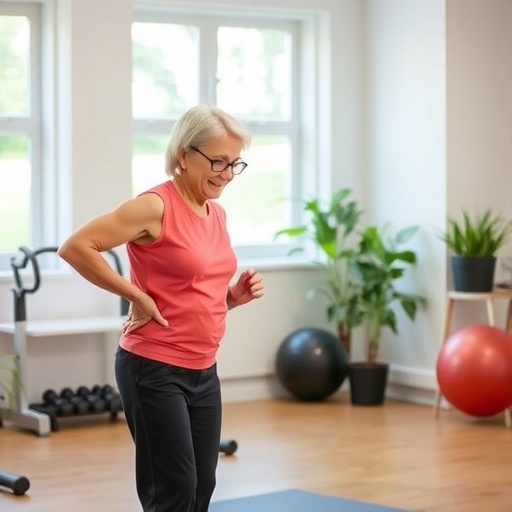
In a groundbreaking study published in BMC Geriatrics, researchers have unveiled vital insights into the adaptive strategies employed by older adults to maintain stability when faced with unexpected disturbances. The ability to react effectively to perturbations, such as slips or trips, is crucial for the preservation of independence and mobility in aging individuals. This research highlights how older adults adjust their muscle synergies—coordinated groupings of muscles—to counterbalance the instability induced by environmental challenges, ultimately enhancing both their physical stability and overall confidence during movement.
The researchers, led by Lin et al., employed a sophisticated experimental design to investigate the adaptive mechanisms that older individuals utilize during recovery steps after experiencing a disturbance. By meticulously analyzing the intricate patterns of muscle activation, the study underscores the continued plasticity of the neuromuscular system in older adults, challenging the prevailing notion that aging leads to a static decline in motor control. Instead, it posits that the musculoskeletal system retains the capacity for adaptation, particularly in response to external stability demands.
Understanding the adaptive alterations in muscle synergies during recovery steps is critical, as it directly impacts the risk of falls, which are a major concern for older populations. Falls can lead to severe injuries, loss of independence, and increased healthcare costs, making it essential to identify mechanisms that can enhance stability. This study explores these adaptive strategies in depth, offering vital knowledge that could inform the development of targeted interventions aimed at improving mobility and reducing fall risk in older adults.
The experimental setup involved participants navigating a series of balance challenges designed to simulate real-world perturbations. The study meticulously tracked the biomechanical responses of the subjects during these trials. It was observed that older adults recruited additional muscle groups and adjusted the timing of their muscle contractions significantly when responding to balance disturbances. This insight reveals a sophisticated level of neuromuscular coordination that clinicians and caregivers must understand to support the aging population better.
Central to this research is the concept of muscle synergies, which refers to the coordination of various muscle groups to achieve a specific movement goal efficiently. The findings indicated that older adults adjusted their muscle synergies adaptively, suggesting a significant degree of flexibility in their movement patterns. This adaptability is indicative of a learning process, where older adults refine their motor strategies based on previous experiences with perturbations, thereby enhancing their ability to stabilize during similar future events.
Moreover, the study presents compelling evidence that these adaptive changes can be beneficial in real-world scenarios, indicating that older adults who engage in regular physical activity may exhibit greater muscle synergy adaptability than their sedentary counterparts. This emphasizes the importance of physical exercise not only for overall health but also for the maintenance of functional movement capabilities in the face of environmental challenges, offering a clear direction for health professionals when advising on active aging.
An important nuance revealed through the research is the variability in adaptive responses among individuals, suggesting that factors such as past experiences, fitness levels, and psychological resilience may influence how effectively one can implement muscle synergies under duress. Understanding these individual differences can enhance tailored interventions, encouraging older adults to adopt strategies that are most effective for their unique circumstances.
As the global population ages, the implications of such research extend far beyond individual health. Public health initiatives must prioritize enhancing stability in older adults by integrating findings from studies like this into community programs. By fostering environments that encourage mobility and by promoting exercises that enhance muscle synergy adaptability, communities can play a pivotal role in reducing fall risks and improving life quality among older citizens.
The overarching message from Lin et al.’s research is one of optimism regarding aging and physical capability. It dispels myths of inevitable decline and points towards a more dynamic understanding of how older adults can continue to thrive physically. With appropriate interventions, older individuals can cultivate their resilience against falls and mobility challenges, paving the way for a more active and engaged lifestyle.
In conclusion, Lin et al.’s study represents a significant advancement in our understanding of how older adults adapt their muscle synergies in real-time to maintain stability under challenging conditions. This knowledge opens new avenues for research and practical applications, highlighting the incredible capacity for adaptability that exists even in our later years. Future studies will undoubtedly build on these findings, further enriching the dialogue surrounding aging, stability, and the importance of physical activity in enhancing quality of life.
The ramifications of this research are immense, illustrating the need for ongoing investigation into neuromuscular adaptations and the potential for developing specific training programs aimed at optimizing physical performance in older adults. By focusing on the natural capacities for adaptation and learning, researchers and practitioners can devise innovative strategies to empower older populations, encouraging both independence and enhanced well-being as they age gracefully.
Aging is often accompanied by misconceptions surrounding loss of physical capability; however, studies like this one illuminate the underlying resilience present in older adults. It serves as a vital reminder of the importance of maintaining an active lifestyle, engaging in balance exercises, and remaining proactive in health management. These principles must be disseminated widely to create awareness and drive improvements in the care and support of aging individuals.
As we look towards the future, it is evident that research into muscle synergies and stability control will be paramount as societies address the challenges posed by an aging demographic. Focused investigations will not only expand the scientific community’s understanding of age-related changes but will also empower those who are aging to approach their later years with confidence and capability, fostering a more inclusive environment for all.
Subject of Research: Adaptive alterations in muscle synergies in older adults.
Article Title: Adaptive alterations in muscle synergies during the recovery step compensate for perturbation-induced stability demands in older adults.
Article References:
Lin, H., Liang, H., Qi, F. et al. Adaptive alterations in muscle synergies during the recovery step compensate for perturbation-induced stability demands in older adults.
BMC Geriatr (2026). https://doi.org/10.1186/s12877-026-07092-8
Image Credits: AI Generated
DOI: 10.1186/s12877-026-07092-8
Keywords: muscle synergies, stability, older adults, perturbation, adaptability, aging, falls, neuromuscular coordination, physical activity, resilience, balance exercises, independence, quality of life, geriatric health.
Tags: adaptive mechanisms in elderly movementBMC Geriatrics study on older adultscoordinated muscle groupings for balanceenhancing physical stability in older adultsfall prevention in seniorsimpact of environmental challenges on mobilitymaintaining independence in agingmuscle synergy adjustments in older adultsneuromuscular system plasticityrecovery steps after disturbancesresearch on aging and motor controlstability strategies for aging individuals