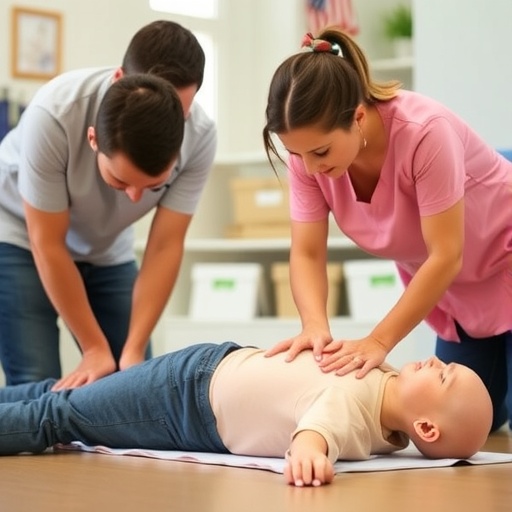
A recent survey from the American Heart Association reveals a persistent misconception among the American adult population: nearly 60% incorrectly believe that Hands-Only CPR requires special training to be performed effectively. This widespread misunderstanding presents a critical public health challenge given that immediate initiation of CPR has been scientifically proven to significantly improve survival rates in cardiac emergencies. As cardiac arrests predominantly occur outside medical facilities, the role of bystanders in delivering prompt intervention is of paramount importance. Research has shown that Hands-Only CPR, when administered correctly, can double or even triple a victim’s chance of survival, underscoring the urgent need to dispel myths surrounding CPR.
The American Heart Association has strategically launched an awareness campaign during Heart Month 2026 titled “You Are the First Responder Until Help Arrives.” This initiative emphasizes the empowering message that medical credentials are not a prerequisite for saving a life; rather, possessing basic knowledge, the courage to act, and timely intervention are what truly matter. Currently, bystander CPR is provided in only about 41% of out-of-hospital cardiac arrest cases. Such a low engagement rate indicates a significant room for improvement in public readiness to act in emergencies, a gap the Association’s campaign aims to bridge.
Stacey E. Rosen, M.D., FAHA, and volunteer president of the American Heart Association, highlights the pervasive fear and misconceptions that inhibit bystanders from performing CPR. Dr. Rosen notes that many individuals hesitate due to the fear of “doing CPR wrong” or believe they must be certified before undertaking CPR efforts. The campaign’s core message is simple yet powerful: Upon witnessing a collapse, one should immediately call 911 and then commence urgent chest compressions at the center of the chest, pushing hard and fast. These compressions maintain vital blood flow until emergency professionals arrive, as hands-on intervention can literally mean the difference between life and death.
In the United States, over 350,000 cardiac arrests occur annually outside hospital environments, with a staggering fatality rate approaching 90%. The majority of these incidents occur in private homes, where immediate professional medical aid is unlikely to be available. A poignant example underscores the value of Hands-Only CPR: Kristen Walenga, a cardiac arrest survivor, owes her life to her 15-year-old son who, previously trained through the American Heart Association’s Kids Heart Challenge, acted decisively to perform CPR and summon help. This real-life scenario exemplifies the critical impact of early intervention and public education.
Hands-Only CPR is intentionally designed to be uncomplicated, requiring only two fundamental steps: calling 911 promptly and performing chest compressions at a rhythm of 100 to 120 beats per minute, mimicking popular tunes like “Stayin’ Alive” or “Uptown Funk.” Furthermore, if an automated external defibrillator (AED) is accessible, its utilization is encouraged. These devices provide voice-guided prompts to deliver electric shocks, potentially restoring a heart’s normal rhythm. Notably, CPR procedures differ when performed on infants and children, where rescue breaths remain essential components.
The accessibility of CPR training has expanded widely, offering multiple flexible avenues tailored to diverse lifestyles and settings—including homes, workplaces, and schools. The American Heart Association encourages individuals to engage with available resources, such as online video tutorials for Hands-Only CPR, comprehensive classes that broaden skills to include mouth-to-mouth resuscitation and AED operation, and institutional programs establishing cardiac emergency response plans. This multifaceted approach seeks to normalize lifesaving action and elevate communal preparedness across all societal sectors.
Despite these advances, disparities persist in willingness and capability to perform CPR. Research identifies that women and Black adults are statistically less likely to receive bystander CPR during cardiac emergencies. These discrepancies arise from factors such as fear of performing CPR incorrectly, apprehension about legal liabilities, and culturally rooted hesitations concerning physical contact—compounded further by the misconception that formal certification is necessary. Addressing these barriers demands culturally sensitive and targeted education campaigns to foster inclusive readiness.
Dr. Rosen eloquently asserts that CPR is a form of civic duty—transcending uniforms and professional roles—where ordinary individuals become everyday heroes by stepping up to assist neighbors, friends, and family members. Preparedness and the willingness to help reinforce the social fabric of communities, contributing to collective resilience in the face of medical emergencies. Cardiac arrest can strike indiscriminately in any setting, underscoring the universal importance of public CPR knowledge.
The “You Are the First Responder” campaign is a cornerstone of the American Heart Association’s broader Nation of Lifesavers initiative, which is supported nationally by Walgreens. This ambitious program aims to transform more bystanders into confident lifesavers and achieve a doubling in survival rates from out-of-hospital cardiac arrests by the year 2030. By fostering hands-on education, community engagement, and resources distribution, the initiative charts a transformative path toward enhanced cardiac arrest outcomes nationwide.
Additional resources provided by the American Heart Association include multilingual video tutorials demonstrating Hands-Only CPR techniques, detailed scientific guidelines updated in 2025, and educational programs tailored for children as young as four years old. The organization also offers fact sheets on heart and brain health, free online support networks for survivors and caregivers, and consistent public communication via social media platforms. These comprehensive offerings aim to sustain momentum and accessibility for all segments of the population.
The challenge remains to reshape societal narratives about CPR—moving from an intimidating medical procedure perceived as reserved for professionals to an act of immediate and accessible aid within the reach of every individual. Amplified public awareness, inclusive messaging, and accessible hands-on training are instrumental in saving thousands of lives annually. As the evidence shows, survival hinges on swift action, and empowering the public with this knowledge could save countless families from tragedy.
In conclusion, the current state of public knowledge around CPR reflects both significant opportunities and urgent needs. Hands-Only CPR stands as a scientifically validated, user-friendly intervention that requires no prior expertise but offers life-saving potential in numerous scenarios. Through initiatives like “You Are the First Responder Until Help Arrives,” the American Heart Association is steadfast in its mission to elevate public readiness, demystify CPR, and ultimately save lives through community empowerment and collective action.
Subject of Research: Public Perception and Knowledge of Hands-Only CPR and Cardiac Emergency Response
Article Title: New Survey Highlights Misconceptions Hindering Life-Saving CPR Action Among American Adults
News Publication Date: February 2, 2026
Web References:
https://newsroom.heart.org/news/new-consumer-survey-shows-many-still-incorrectly-believe-cpr-requires-special-training
https://cpr.heart.org/en/cpr-courses-and-kits/hands-only-cpr
https://www.heart.org/en/professional/educator/school-programs/the-kids-heart-challenge-american-heart-challenge-experience
References:
Del Rios M, Bartos JA, Panchal AR, et al. 2025 American Heart Association Guidelines for Cardiopulmonary Resuscitation and Emergency Cardiovascular Care. Circulation. 2025;152(suppl):S284–S312.
Palaniappan LP, Allen NB, Almarzooq ZI, et al. 2026 Heart disease and stroke statistics: a report from the American Heart Association. Circulation. Published online January 21, 2026.
Keywords: CPR, Hands-Only CPR, cardiac arrest, public health, emergency response, cardiac emergency, bystander intervention, American Heart Association, AED, survival rates, health education, community preparedness
Tags: American Heart Association initiativesbystander intervention importancecardiac arrest survival ratesCPR myths debunkedCPR training misconceptionsemergency response educationempowering first respondersHands-Only CPR effectivenessHeart Month 2026 campaignincreasing public readinesslife-saving intervention knowledgepublic health awareness campaign