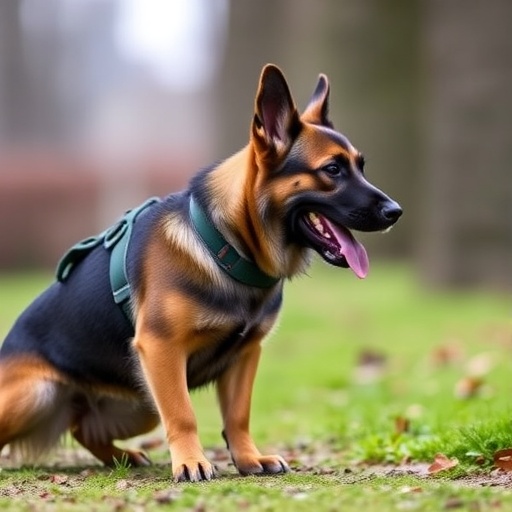
In the realm of professional scent detection, the quest for the ideal canine operative has long been a focus of scientific inquiry and practical refinement. Recent research conducted in the Netherlands sheds new light on the essential personality traits and behavioral characteristics that underpin a successful scent detection dog in active deployments. Through face-to-face structured interviews with experienced Dutch police dog handlers, this study provides a comprehensive portrait of what makes a scent detection dog not just competent but truly exceptional in its field.
Scent detection dogs are invaluable assets across various sectors, including law enforcement, search and rescue, and hazardous substance identification. Their ability to detect and alert to the presence of specific odors relies not only on their olfactory capabilities but also heavily on their temperament and psychological resilience. This research pivots on the nuanced understanding that beyond training, intrinsic personality traits dictate operational success and longevity in the field.
The study identifies three core qualities as indispensable for professional scent detection dogs: confidence, persistence, and resilience. Confidence in this context refers to the dog’s ability to engage with new environments and stimuli without hesitation or fear. Such assuredness enables the canine to maintain focus amidst the unpredictability of real-world deployments. Persistency underlines the dog’s motivation and tenacity in scent detection tasks, ensuring that the search is thorough and unwavering even during challenging scenarios.
Resilience is perhaps the most critical attribute, encompassing the dog’s capacity to recover from setbacks and stressors encountered during work. The absence of neuroticism or insecurities fortifies the animal against the psychological toll that demanding work conditions often impose. Dogs exhibiting these traits can sustain high-performance levels without succumbing to burnout or behavioral breakdowns.
The methodology of this research involved in-depth, structured interviews aimed at extracting qualitative insights directly from handlers who regularly deploy scent detection dogs in professional settings. By privileging experiential knowledge, the study bridges the gap between theoretical behavioral science and practical operational demands. Handler perspectives revealed a consensus that personality assessments during selection and training phases are pivotal in predicting a dog’s future professional suitability.
Interestingly, the findings challenge some traditional criteria often emphasized in canine selection. While physical attributes and breed characteristics remain relevant, this research highlights psychological makeup as equally, if not more, influential in determining effectiveness. The handlers unanimously valued dogs that demonstrated an intrinsic eagerness to work paired with emotional stability, a combination that maximizes learning adaptability and task engagement.
The interplay between genetics and environment also featured implicitly within handler anecdotes. Dogs bred from lines with stable temperaments coupled with enriched early-life socialization and training regimens tend to excel in scent detection roles. This suggests potential avenues for breeding programs to integrate behavioral trait assessments more rigorously, optimizing the pipeline of future candidates.
Moreover, the study underscores the importance of maintaining and nurturing these personality traits throughout a dog’s career. Continuous support and adaptive training help preserve confidence and resilience levels, thereby extending operational effectiveness and welfare. The role of the handler emerges as not only a trainer but a critical partner in sustaining the dog’s psychological wellbeing under demanding circumstances.
From a technical standpoint, the research opens pathways for implementing standardized psychological evaluations as part of scent detection dog selection protocols. Instruments such as behavioral questionnaires, stress-reactivity tests, and cognitive challenge tasks may provide objective metrics to complement handler insights. This multidimensional approach can refine selection accuracy, reduce attrition rates, and optimize resource allocation.
Furthermore, understanding these traits has implications for training methodologies. Tailoring training programs to align with an individual dog’s psychological profile can enhance task acquisition rates and decrease training time. For instance, dogs exhibiting lower persistence may benefit from incremental reinforcement schedules to build stamina, whereas those with fluctuating confidence might require desensitization exercises.
The broader societal impact of these findings lies in the enhanced reliability and efficiency of scent detection deployments. From drug interdiction to explosive detection and beyond, having dogs that are psychologically equipped to handle complex environments minimizes operational failures and reduces risks to human partners. Additionally, promoting canine welfare through informed selection and management aligns ethical imperatives with operational goals.
In summary, this research spearheads a nuanced understanding of scent detection dog performance, spotlighting confidence, persistence, and resilience as cardinal traits. The integration of handler-derived insights with behavioral science presents a compelling roadmap for future initiatives in canine selection, training, and welfare. As public safety agencies increasingly rely on scent detection dogs, embedding these findings into policy and practice is imperative to ensure optimal outcomes and humane treatment.
Ultimately, the study underscores the symbiotic relationship between dog and handler, where mutual trust and psychological attunement are foundational. As scent detection continues to evolve with technological advancements, recognizing and fostering these innate canine qualities will remain central to human-canine teamwork and success.
Subject of Research: Ideal personality and behavioral characteristics of professional scent detection dogs
Article Title: Exploring ideal scent detection dog characteristics for successful professional deployment as derived from face-to-face structured interviews with professional scent detection dog handlers
News Publication Date: 4-Feb-2026
Web References: http://dx.doi.org/10.1371/journal.pone.0339379
Image Credits: Anthony Duran, Unsplash, CC0
Keywords: scent detection dogs, canine behavior, police dogs, dog training, dog personality traits, persistence, confidence, resilience, professional deployment, handler insights
Tags: canine operatives in law enforcementcharacteristics of exceptional detection dogsconfidence in scent detection dogsDutch police dog handlersimportance of temperament in detection caninesolfactory capabilities of detection dogspersistence in dogs for search and rescueprofessional scent detection researchpsychological traits in canine trainingresilience in working dogsscent detection dogstraits of effective detection dogs