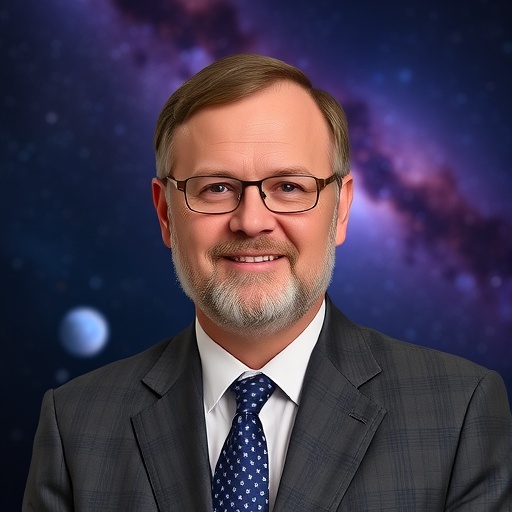
Dr. Stephen Fuselier Heads Southwest Research Institute’s Space Science Division with Vision for Heliophysics and Beyond
Southwest Research Institute (SwRI) has announced the appointment of Dr. Stephen Fuselier as the new vice president of its Space Science Division, marking a pivotal leadership change within one of the nation’s premier research organizations devoted to space science innovation. Renowned for his profound expertise in heliophysics and his instrumental roles in multiple NASA missions, Fuselier brings over forty years of accumulated experience that is expected to steer SwRI’s Space Science Division toward pioneering scientific breakthroughs and deeper exploration of the heliosphere and planetary magnetospheres.
Fuselier’s selection follows his distinguished tenure as the co-chair of the National Academies of Solar and Space Physics Decadal Survey, a critical initiative that shapes the strategic trajectory of solar and space physics research nationally. The survey’s recommendations, which inform NASA’s priorities for the upcoming decade, rely on the expert insights of researchers like Fuselier to determine essential scientific questions and the observational tools necessary to address them. His leadership is thus set to align SwRI’s research endeavors with the most pressing and impactful scientific missions slated for the near future.
A physicist by training, Dr. Fuselier earned his doctorate from the University of Iowa in 1984, subsequently cultivating a career defined by methodical investigation of plasma interactions within Earth’s magnetosphere and other planetary environments. With a research portfolio encompassing the aurora borealis, magnetospheric dynamics, and solar wind interactions, he has contributed meaningfully to the understanding of fundamental processes that govern space weather phenomena and the structure of the solar system’s magnetic boundary regions.
Dr. Jim Burch, senior vice president of SwRI’s Space Sector, emphasizes Fuselier’s broad scientific expertise, underscoring Fuselier’s transformational work that spans from the Earth’s near-space environment to the distant edges of the solar system. This expansive scope includes a deep understanding of regions like Saturn’s magnetosphere and interactions with cometary matter, positioning Fuselier to embrace SwRI’s multidisciplinary approach to space science research. His leadership promises to harness these diverse scientific realms, driving forward cutting-edge investigations that couple observational data with advanced theoretical models.
Within the realm of NASA missions, Fuselier’s role has been especially prominent. He serves as a co-investigator on the Interstellar Mapping and Acceleration Probe (IMAP), a mission aimed at studying the boundary regions where the solar wind encounters interstellar space, providing insights into the behavior of energetic particles and cosmic ray acceleration mechanisms at the edge of the heliosphere. As sensor lead for the Interstellar Boundary Explorer (IBEX), Fuselier has contributed to measurements that trace the interactions between the solar wind and interstellar medium, deciphering the shape and dynamics of the heliospheric boundary.
In addition, Fuselier holds the position of deputy principal investigator and instrument lead on the Tandem Reconnection and Cusp Electrodynamics Reconnaissance Satellites (TRACERS), a mission launched in July 2025 that investigates magnetic reconnection processes in Earth’s cusp regions. This cutting-edge mission explores how solar wind particles enter Earth’s magnetosphere, enhancing understanding of space weather phenomena and magnetic energy conversion processes. Fuselier’s involvement in the Magnetospheric Multiscale (MMS) mission further solidifies his expertise in magnetic reconnection, as MMS studies these rapid plasma processes in the Earth’s magnetosphere using four spacecraft flying in formation.
Dr. Fuselier’s prolific scientific output includes over 610 published articles in peer-reviewed journals and conference proceedings. His impressive scholarly record reflects both the depth and breadth of his contributions to space plasma physics and magnetospheric science. Recognition of his scientific excellence includes his election as a Fellow of the American Geophysical Union in 1995, signifying his influential status within the geophysical community, and his 2021 election to the National Academy of Sciences, an honor reserved for individuals demonstrating outstanding and sustained achievements in original research.
Having dedicated a significant portion of his career to SwRI, Fuselier joined the institute in 2011 as a program director before quickly ascending to leadership roles, including director and executive director of the Space Science Division. His appointment as acting vice president in 2024 set the stage for his current leadership role, reflecting the institute’s confidence in his vision and management capabilities to further develop the division’s research portfolio and collaborations with partners such as NASA and academic institutions.
In addition to his research and leadership roles, Fuselier is deeply committed to education and mentorship through his position as an adjunct professor at the University of Texas at San Antonio. This partnership, embodied in the SwRI-UT San Antonio Graduate Program in Physics, fosters the next generation of space scientists by combining rigorous academic training with opportunities for hands-on research in cutting-edge space science investigations.
Demonstrating his dedication to fostering science education, in 2025, Fuselier and his wife established the Stephen Fuselier and Elizabeth Packer Endowed Scholarship at UT San Antonio. This scholarship supports students pursuing majors in physics or electrical engineering, ensuring continued investment in developing future innovators in space science and related fields.
Dr. Fuselier’s appointment represents an exciting phase for the Southwest Research Institute’s Space Science Division as it continues to drive forward groundbreaking research into space phenomena, supported by extensive experience, scientific rigor, and visionary leadership. His stewardship promises to enhance our understanding of the dynamic interactions between the sun, solar wind, and planetary environments, further illuminating fundamental processes shaping our heliosphere and broader cosmic neighborhood.
For those interested in exploring the research and technological ventures of SwRI’s Space Science Division, further information can be found at SwRI’s dedicated space research and technology portal, which highlights ongoing projects and collaborative efforts advancing space exploration and scientific discovery.
Subject of Research: Not explicitly stated beyond space sciences and heliophysics
Article Title: Not provided
News Publication Date: February 4, 2026
Web References: https://www.swri.org/markets/earth-space/space-research-technology?&utm_medium=referral&utm_source=eurekalert!&utm_campaign=fuselier-vp-pr
References: Not provided
Image Credits: Southwest Research Institute
Keywords
Space sciences, Astrophysics, Solar physics
Tags: Dr. Stephen Fuselier appointmentheliophysics research leadershipinnovative space science leadershipNASA missions expertiseNational Academies Solar and Space Physicsobservational tools for heliophysicsplanetary magnetospheres explorationscientific breakthroughs in space sciencesolar and space physics Decadal SurveySouthwest Research Institute Space Science Divisionstrategic trajectory for space researchSwRI research initiatives