In a groundbreaking stride against the relentless tide of multidrug-resistant bacterial infections, Australian scientists have unveiled an innovative therapeutic approach that could redefine the landscape of infectious disease treatment. Spearheaded by Professor Richard Payne from the University of Sydney, this pioneering research capitalizes on the precise design of antibodies targeting a unique sugar molecule exclusive to bacterial pathogens, heralding a new era of immunotherapies that circumvent the pitfalls of traditional antibiotics.
This transformative study, recently published in Nature Chemical Biology, details how laboratory-engineered antibodies can hone in on a structurally distinctive bacterial sugar, pseudaminic acid, effectively marking lethal pathogens for immune elimination. Such targeted specificity paves the way for treatments that could robustly combat drug-resistant bacteria, particularly those causing hospital-acquired infections that currently defy last-resort antibiotics.
The scientific endeavor brought together an interdisciplinary team, including Professor Ethan Goddard-Borger of WEHI and Associate Professor Nichollas Scott at the University of Melbourne and the Peter Doherty Institute for Infection and Immunity. Their collaboration exemplifies the power of chemical synthesis integrated with biochemistry, immunology, and microbiology, allowing for an unprecedented molecular understanding and manipulation of bacterial surface sugars.
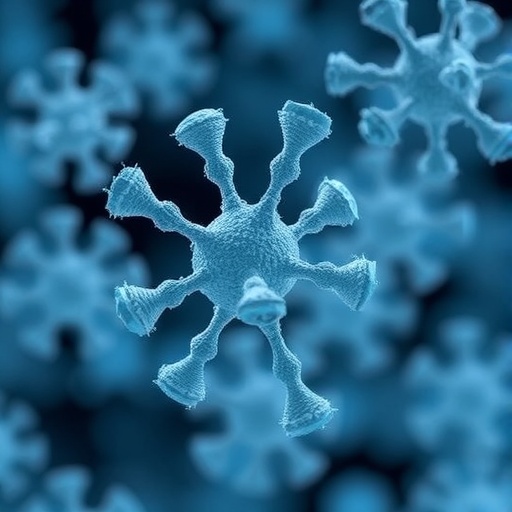
At the heart of this breakthrough lies the sugar pseudaminic acid, a molecule absent in human cells but ubiquitous on the coats of various dangerous bacteria. This exclusivity designates pseudaminic acid as a highly selective immunotherapy target, dramatically minimizing the risk of off-target effects commonly seen with conventional antibiotics that can harm beneficial host cells.
The researchers ingeniously synthesized pseudaminic acid and its conjugated peptides in the laboratory, meticulously characterizing their three-dimensional molecular configuration. This precise molecular blueprint facilitated the rational design of a “pan-specific” antibody capable of recognizing pseudaminic acid across a broad spectrum of bacterial species and strains, highlighting the antibody’s remarkable versatility and clinical potential.
In vivo experiments employing mouse models of infection demonstrated the antibody’s formidable therapeutic efficacy. Treatment with the antibody eradicated multidrug-resistant Acinetobacter baumannii—a pathogen notorious for causing severe hospital-acquired pneumonia and bloodstream infections worldwide. The success of this approach marks a vital watershed moment, illustrating that the immune system can be selectively guided to dismantle otherwise untreatable bacterial invaders.
The pressing threat posed by multidrug-resistant Acinetobacter baumannii has escalated into a global healthcare crisis, with infections often impervious even to last-line antibiotic treatments. Professor Goddard-Borger emphasized the significance of the findings as a compelling proof-of-concept, signaling a promising pathway toward life-saving passive immunotherapies that circumvent antibiotic resistance mechanisms.
Unlike active vaccination, passive immunotherapy involves the direct administration of pre-formed antibodies, providing immediate immune support to infected patients. This approach bears tremendous advantages, particularly for immunocompromised or critically ill individuals in intensive care units, enabling rapid infection control and reducing mortality rates.
Beyond therapeutic implications, these bespoke antibodies stand to revolutionize bacterial pathogenesis research. Associate Professor Scott highlighted that pseudaminic acid is central to bacterial virulence yet has remained elusive due to the complexities of studying these sugar modifications. The ability to selectively map pseudaminic acid expression on bacterial surfaces equips scientists with powerful tools to unravel infection mechanisms and develop novel diagnostics.
Looking forward, the research team is committed to translating this foundational science into clinical applications over the coming years. Their ultimate goal encompasses developing clinically viable antibody therapies that neutralize multidrug-resistant A. baumannii, effectively removing one of the most deadly members of the notorious ESKAPE pathogens—a group of bacteria responsible for the majority of hospital infections and antibiotic resistance crises.
This research aligns seamlessly with the vision of the newly established Australian Research Council Centre of Excellence for Advanced Peptide and Protein Engineering, under the leadership of Professor Payne. The Centre aims to bridge molecular insight and real-world solutions, fostering innovations that not only treat but also ultimately prevent devastating bacterial infections in vulnerable populations.
The success demonstrated in this project underscores an emerging paradigm in microbiology and immunotherapy, where synthetic chemistry and molecular engineering unlock avenues to outsmart bacterial defenses. By leveraging the unique biochemical signatures of pathogens, scientists can craft tailored therapies that restore hope in the era of escalating antimicrobial resistance.
As the scientific community rallies to combat the relentless rise of drug resistance, this study stands as a beacon of innovation, underscoring the importance of interdisciplinary collaboration in addressing one of modern medicine’s most formidable challenges. It brings a renewed optimism that advanced molecular designs can spur breakthroughs capable of saving countless lives.
Subject of Research: Animals
Article Title: Uncovering bacterial pseudaminylation with pan-specific antibody tools
News Publication Date: 4-Feb-2026
Web References: http://dx.doi.org/10.1038/s41589-025-02114-9
References: Tang, A. et al ‘Uncovering bacterial pseudaminylation with pan-specific antibody tools’ (Nature Chemical Biology 2026). DOI: 10.1038/s41589-025-02114-9
Image Credits: Stefanie Zingsheim/The University of Sydney
Keywords: multidrug-resistant bacteria, pseudaminic acid, antibody therapy, Acinetobacter baumannii, passive immunotherapy, synthetic chemistry, bacterial virulence, antimicrobial resistance, ESKAPE pathogens, immunotherapy, molecular engineering, hospital-acquired infections
Tags: advancements in infectious disease therapiescombatting drug-resistant bacteriaengineered antibodies for infection treatmenthospital-acquired infection solutionsinnovative immunotherapy approachesmultidisciplinary research in microbiologyNature Chemical Biology publicationovercoming antibiotic resistance in medicineProfessor Richard Payne research findingspseudaminic acid in bacterial pathogenssugar molecules in bacterial infectionstargeting bacterial surface sugars