A groundbreaking study led by researchers at Queen Mary University of London has unveiled a transformative model reshaping our understanding of innate biases in precocial animals—species that exhibit immediate autonomous movement following birth or hatching. Far from being blank slates, these newly born animals are now shown to harbor an intricate network of multiple, subtly interwoven biases that guide their early survival strategies. Contrary to long-held assumptions that innate preferences are strong and unyielding, this research highlights the surprisingly weak and transient nature of these predispositions, revealing a sophisticated biological design optimized for adaptive decision-making without the necessity of prior learning.
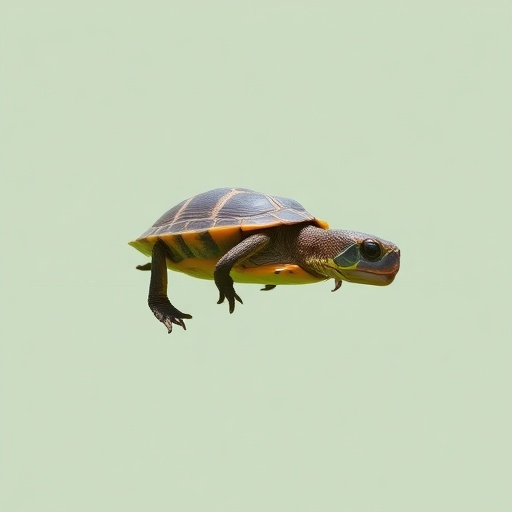
The model presented by the scientists elucidates how various weak biases, while individually insufficient, synergistically interact to underpin crucial early-life behavioral choices. For example, newborn turtles and chicks utilize subtle cues across multiple sensory modalities—such as sound, color, and movement—to navigate complex environments. These biases, though malleable and modest in strength, collectively form a robust decision-making framework enabling these animals to identify vital stimuli like their mother or preferred food sources. This distributed pattern of weak innate preferences challenges the classical concept of fixed-action patterns, which are typically characterized by rigidity and overwhelming strength but limited flexibility.
Fundamentally, the research suggests that early biases are not rigid instincts but rather probabilistic tendencies that balance the trade-off between false alarms and missed opportunities. This dynamic facilitates more nuanced behavioral responses, allowing organisms to adjust their reliance on particular cues based on the availability and reliability of environmental information. The authors introduce a mathematical framework to simulate and predict how these biases combine, providing a novel lens through which the biological intricacies of adaptive early choice can be explored and understood.
One of the striking insights from the study is how co-occurrence of multiple sensory cues augments the reliability of decision-making. The model exemplifies a scenario in which the simultaneous presence of a reddish hue, upward motion, and speed fluctuations converges as a powerful indicator of a mother hen’s proximity. This convergence operates across modalities—visual patterns resembling faces combined with characteristic auditory signals such as “cluck” sounds—dramatically enhancing the organism’s ability to discern relevant stimuli amid environmental noise.
This “self-supervised” or unsupervised strategy has widespread implications beyond developmental biology, with direct applications in artificial intelligence (AI) and machine learning. Current AI systems often require extensive datasets and supervised learning to make reliable decisions, but this biological blueprint demonstrates that effective choice-making can arise from minimal prior knowledge by leveraging interdependent weak cues. This paradigm shift could inform the design of AI systems capable of adaptive decision-making with sparse data, mimicking the biological advantage seen in nature.
The fascinating reality that newborn animals operate with an inherent, albeit soft, intelligence has profound consequences for our understanding of cognitive evolution. It reveals a hitherto underestimated complexity in early animal behavior, emphasizing that survival and learning are scaffolded by an ensemble of flexible biases rather than deterministic hardwiring. Such discoveries recalibrate previous interpretations of instinct and highlight the interplay between genetic predispositions and environmental contingencies shaping behavior from the outset.
Elisabetta Versace, Senior Lecturer in Psychology at Queen Mary University of London, reflects on this counterintuitive finding, noting that the “softness” or flexibility of innate preferences serves as a crucial adaptive function. Weak biases effectively minimize erroneous responses that could arise from overly rigid decision-making frameworks while capitalizing on the richness of the multisensory environment. This adaptive plasticity allows newborn animals to utilize a cacophony of cues to optimize their initial interactions without relying on accumulated experience.
Benjamin L. de Bivort, a Professor of Organismic and Evolutionary Biology at Harvard University, underscores the transformative utility of such modeling efforts. He emphasizes that this approach clarifies and contextualizes decades of experimental research, providing a coherent explanation for previously puzzling observations about the seemingly inconsistent preferences exhibited by naïve animals. The model brings unity to disparate findings, portraying them as partial glimpses of a unified underlying mechanism for early life navigation.
Beyond the biological realm, these insights are poised to revolutionize developmental psychology by opening new avenues for exploring how early cognition emerges from minimal evidence. The implications extend to robotics as well, where the integration of weak, cross-modal biases could enable machines to interact with complex, unpredictable environments more fluidly. This biomimetic approach offers a blueprint for creating autonomous agents with innate heuristics that transcend the limitations of purely data-driven programming.
An important technical dimension of the study involves the quantification of bias strength and flexibility along a continuum. The researchers differentiate fixed-action patterns—typically associated with inflexible, high-strength responses—from early predispositions, which are generally characterized by low strength but high plasticity. This conceptual spectrum provides a qualitative framework for interpreting innate behaviors in a species-specific and context-dependent manner, broadening the analytical toolkit for behavioral scientists and AI developers alike.
The research methodology encompasses an extensive literature review that integrates empirical data across multiple species and contexts. This comprehensive synthesis allows the formulation of generalized principles underpinning early adaptive behavior, highlighting the ubiquity and evolutionary significance of weak biases. The outcome is a unifying theory that synthesizes behavioral ecology, cognitive psychology, and computational modeling within a singular conceptual paradigm.
Looking ahead, the research sets forth clear experimental predictions that invite validation in both biological and artificial systems. By probing how multiple weak cues combine and influence decision outcomes, future research can deepen our understanding of the mechanisms driving early learning and preference formation. Such investigations hold promise not only for elucidating developmental processes but also for pioneering AI systems that emulate biological resilience and adaptability.
In conclusion, this novel model revolutionizes the scientific narrative on innate animal behavior, demonstrating that multiple germaine yet subtle biases collectively steer early adaptive choices without reliance on prior experience. These findings hold transformative potential for multiple disciplines, from understanding the genesis of intelligence in living organisms to engineering smarter, more flexible artificial agents capable of thriving with minimal data.
Subject of Research: Animals
Article Title: Multiple weak biases support adaptive choices without prior experience: a self-supervised strategy
News Publication Date: 4 February 2026
Web References: http://dx.doi.org/10.1098/rspb.2025.1878
Image Credits: Queen Mary University of London
Keywords: Animals, Evolutionary methods, Animal instincts, Animal learning, Animal intelligence, Artificial intelligence
Tags: adaptive decision-making in animalsbiological design of animal behaviorearly survival strategies in animalsflexible innate preferencesinnate biases in precocial speciesmodel inspired by baby chicksmulti-sensory navigation in newbornsnaïve animal behaviorQueen Mary University of London studytransformative animal behavior researchturtles and insectsweak biases in decision-making