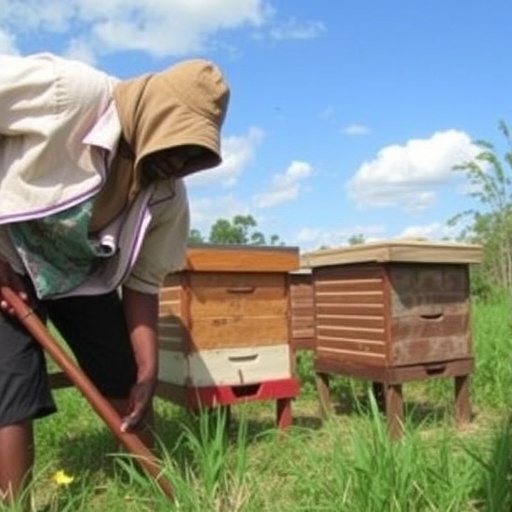
The world of beekeeping has always been fascinating, steeped in tradition and skill. However, as environmental pressures mount and agricultural practices evolve, the need for innovation in this field has become undeniable. In the heart of Tanzania, researchers have been exploring the profitability dynamics of improved and traditional beehive models, revealing critical insights that may reshape the future of apiculture. Prominent among these researchers is W. George, whose recent retraction note has sparked discussions regarding the sustainability and economic viability associated with different beehive systems.
Beehives are not just containers for honey; they are complex ecosystems that require balance, care, and a deep understanding of bee behavior. Traditionally, many Tanzanian beekeepers have employed simple hives constructed from readily available materials, aiming for minimal investment. However, these conventional beehives often yield lower production rates and less honey quality, which can make them economically challenging. The research highlighted the need to compare these traditional models with improved beehive designs that leverage modern technology to maximize honey yield and efficiency.
As the study unfolded, it became evident that improved beekeeping techniques could potentially transform the livelihoods of Tanzanian farmers. Improved bee models are designed with better ventilation, pest resistance, and honey extraction processes that significantly enhance production. By transitioning to upgraded hives, beekeepers could increase their revenue streams, thereby improving their overall economic stability and ensuring the sustainability of their practices.
However, adopting improved beehive systems is not without its challenges. Initial costs can be prohibitive for many small-scale farmers, who often depend on low-cost, traditional methods. The research further identified a critical barrier: the need for education and training. Enhancing beekeeping skills is essential for farmers to understand and effectively manage the dynamics of improved beehives. Thus, the study underscores the importance of agricultural extension services to provide necessary training and support to new and seasoned beekeepers alike.
Moreover, adapting to improved beehive models extends beyond mere design. The ecological impact of beekeeping practices was a significant focus of George’s research. In the face of changing climatic conditions and dwindling natural resources, bees serve as vital pollinators for countless crops. Therefore, strengthening bee populations through better management practices is crucial not just for honey production, but also for food security in Tanzania. The interdependence between agriculture and beekeeping makes any advancements in either field critical for the other.
The potential profitability of improved beehive models is complemented by environmental stewardship. While the quest for economic gain often drives agricultural practices, sustainable beekeeping should prioritize biodiversity and ecosystem health. This dual focus may attract both local entrepreneurs and international investors interested in ethical production practices. As sustainable honey production gains traction globally, Tanzanian beekeepers have a unique opportunity to position themselves within a burgeoning market for organic and ethically sourced products.
Furthermore, the study explored consumer trends highlighting a growing demand for traceable honey. As consumers become increasingly aware of sourcing and production methods, the commitment to ethically produced and sustainably harvested honey may lead to rewards for those who adhere to best practices. Beekeepers employing improved models may find themselves uniquely positioned to meet these demands and, thus, increase their profitability through premium pricing.
The research also emphasized the implications of local and international policies affecting agriculture and beekeeping. Understanding these policies is critical for Tanzanian beekeepers, who must navigate a complex regulatory landscape. Policies that support research funding, provide subsidies for sustainable equipment, or incentivize ecological farming can dramatically influence the profitability dynamics of different beehive models. Keeping abreast of changing regulations will be essential for beekeepers aiming to capitalize on both local markets and international trade opportunities.
George’s exploration of improved beehive models has larger implications for food systems in Tanzania. By recognizing the interconnectedness of agricultural practices, honey production, and economic viability, this research paves the way for more holistic approaches to rural development. Bridging gaps in knowledge, resources, and infrastructure will require collaborative efforts from government bodies, NGOs, and private sector investors. Therefore, creating a comprehensive framework that encompasses education, support, and policy advocacy will be essential.
Additionally, sustainable practices must not only focus on profitability but also on community welfare. As beekeeping can often be a collective endeavor, the increase in honey production can lead to community-based initiatives that empower local farmers. Cooperative models, in which resources, knowledge, and profits are shared, can help bolster resilience and reduce vulnerability among smallholder beekeepers. Such initiatives can ensure that the benefits of improved beekeeping practices reach beyond individual harvests to uplift whole communities.
In conclusion, the ongoing research into the profitability dynamics of beehive models in Tanzania heralds a new era for beekeeping in the region. Improved beehive systems have the potential to enhance economic outcomes for farmers while simultaneously promoting ecological sustainability. As beekeepers weigh the pros and cons of traditional versus modern approaches, the path forward must involve a collaborative effort to foster education, innovation, and community engagement. These advancements might not only benefit local economies but also create a more resilient agricultural system capable of weathering the challenges of tomorrow.
The path outlined by George’s work encourages dialogue that integrates traditional knowledge with scientific research. This synthesis will be essential in building a robust and adaptive beekeeping industry in Tanzania while paving the way for global recognition of Tanzanian honey’s unique quality and value.
Subject of Research: Profitability dynamics of improved and traditional beehive models in Tanzania
Article Title: Retraction Note: Profitability dynamics of improved and traditional beehive models in Tanzania
Article References:
George, W. Retraction Note: Profitability dynamics of improved and traditional beehive models in Tanzania. Discov Agric 4, 37 (2026). https://doi.org/10.1007/s44279-026-00509-3
Image Credits: AI Generated
DOI:
Keywords: Beekeeping, honey production, improved beehives, Tanzania, sustainability, economic viability, agricultural practices, ecology, community welfare.
Tags: challenges in traditional beehive modelseconomic viability of beehive systemshoney production efficiencyhoney quality and production ratesimpact of environmental pressures on apicultureinnovations in apiculturemodern technology in beekeepingprofitability of beekeeping in Tanzaniasustainable beekeeping techniquesTanzanian beekeeping practicestraditional vs improved beehivesW. George beekeeping research