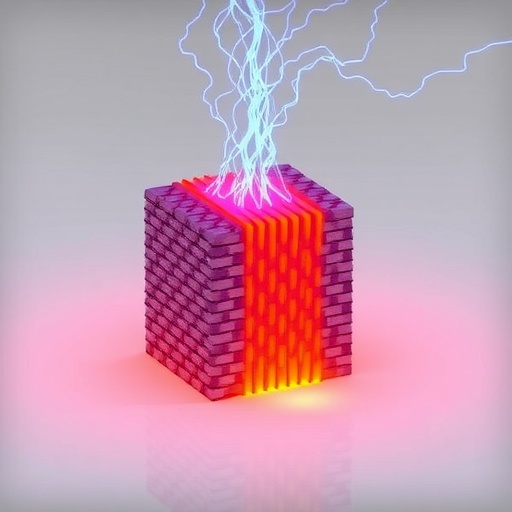
In the realm of sustainable energy technologies, thermoelectric devices have emerged as a key player due to their ability to convert temperature differences directly into voltage. This potential for converting waste heat into usable energy is particularly compelling in industries where a significant portion of energy input is lost as waste heat. Thermoelectric devices can capture this energy, offering an innovative pathway to enhancing overall energy efficiency while simultaneously paving the way for portable power generation solutions.
Traditionally, most thermoelectric devices leverage the longitudinal thermoelectric effect, where electric current flows in the same direction as heat movement. These devices are typically constructed from alternating layers of p-type and n-type semiconductors arranged in series. This design exploits the opposing charge carrier motions in response to temperature gradients. However, the complexity of this multi-layer design introduces significant challenges, notably increased electrical contact resistance, which can lead to energy losses and restrict the system’s efficiency.
Recent advancements have directed attention toward transverse thermoelectric (TTE) devices, which promise a more efficient alternative. Unlike traditional designs, TTE devices function by generating a voltage perpendicular to the direction of heat flow. This fundamental shift allows for the use of a single type of material, thus eliminating the need for multiple interfaces. The reduction in contact resistance not only simplifies manufacturing processes but has also been shown to enhance device performance significantly, although suitable materials exhibiting strong TTE effects remain scarce.
A groundbreaking study conducted by a research team, spearheaded by Associate Professor Ryuji Okazaki from the Tokyo University of Science, recently delineated the potential of molybdenum disilicide (MoSi2) to inspire the next generation of TTE materials. This mixed-dimensional semimetal displayed significant transverse thermoelectric behavior. With collaborative contributions from several researchers within the team, their findings illuminate an entirely new direction in material design and identification for TTE applications.
The research focused heavily on the unique transport properties of MoSi2, utilizing a combination of experimental measurements and first-principles calculations to gauge various physical properties, including resistivity, thermal conductivity, and longitudinal thermopower. A key focus was placed on assessing how these properties varied along the material’s two crystallographic axes. The results highlighted a pronounced axis-dependent conduction polarity (ADCP), a notable feature that was corroborated through Hall resistivity investigations.
Delving deeper into the origins of this ADCP, the team utilized advanced computational methods to analyze the electronic structure of MoSi2. One pivotal finding was the material’s mixed-dimensional Fermi surface structure, characterized by the existence of two Fermi surfaces with opposing polarities. Such structural nuances are crucial, as they dictate many of the electronic and transport characteristics fundamental to the material’s thermoelectric behavior.
Through meticulous experimentation, the researchers advanced their investigation by applying a temperature difference at a 45-degree angle to one of the crystallographic axes of MoSi2. This innovative approach yielded remarkably clear transverse thermopower signals, thereby validating the material’s applicability for TTE devices. Notably, the magnitude of the thermopower observed in MoSi2 outpaced that seen in other candidate materials, including tungsten disilicide (WSi2), credited primarily to the distinct electron distribution patterns inherent to MoSi2.
The implications of these findings extend beyond fundamental research; they signal a potential revolution in the development of efficient heat recovery systems. By implementing thin films of MoSi2 within TTE applications, researchers foresee the possibility of harnessing larger heat source areas, which could dramatically enhance voltage production capabilities. Furthermore, the efficiency gains offered by MoSi2 may facilitate the transition towards low-temperature applications, broadening the scope of viable materials in this emerging field.
Professor Okazaki’s observations bring to light the significance of mixed-dimensional Fermi surfaces as a critical variable influencing ADCP and, correspondingly, the efficacy of transverse thermopower generation. This insight solidifies MoSi2’s status as a frontrunner in TTE research, setting a precedent for subsequent investigations aimed at exploring and exploiting similarly structured materials.
The study ultimately signifies not merely a step forward in material science but an essential pivot towards sustainable energy solutions. The potential applications of TTE devices utilizing MoSi2 can extend to various sectors, including electronic engineering and renewable energy, underscoring the pressing need to address energy loss mechanisms in traditional systems. As industries continue to seek pathways to reduce their carbon footprints, innovations such as those borne out of this research can play an integral role in shaping a greener, more sustainable future.
With this new understanding of MoSi2 and its capabilities, the research team is laying the groundwork for future exploratory efforts to discover and characterize additional materials that could further enhance thermoelectric device performance. As thermoelectric technologies gain traction, the prospect of efficient waste heat recovery systems becomes increasingly tangible, representing a blend of innovation and practicality that can lead us towards a more energy-conscious society.
In summation, the advancements in transverse thermoelectric materials illuminated by the Tokyo University of Science team’s research herald significant progress in thermoelectric technology. As researchers continue to uncover the complexities of materials like MoSi2, the possibilities for applying these solutions in real-world applications expand, demonstrating the vital interplay between material science and environmental sustainability in addressing global energy challenges.
Subject of Research: Transverse thermoelectric properties of MoSi2
Article Title: Axis-Dependent Conduction Polarity and Transverse Thermoelectric Conversion in the Mixed-dimensional Semimetal MoSi2
News Publication Date: 29-Dec-2025
Web References: DOI Link
References: None available
Image Credits: Associate Professor Ryuji Okazaki from Tokyo University of Science, Japan.
Keywords
Tags: applications of thermoelectric devices in energy systemsbreakthroughs in thermoelectric technologychallenges in thermoelectric device efficiencyconverting temperature differences into electricityenhancing energy efficiency in industriesinnovative portable power generation solutionslongitudinal vs transverse thermoelectric effectsreducing electrical contact resistance in thermoelectricssingle material thermoelectric systemssustainable energy technologies advancementsthermoelectric materials for waste heat recoverytransverse thermoelectric device benefits