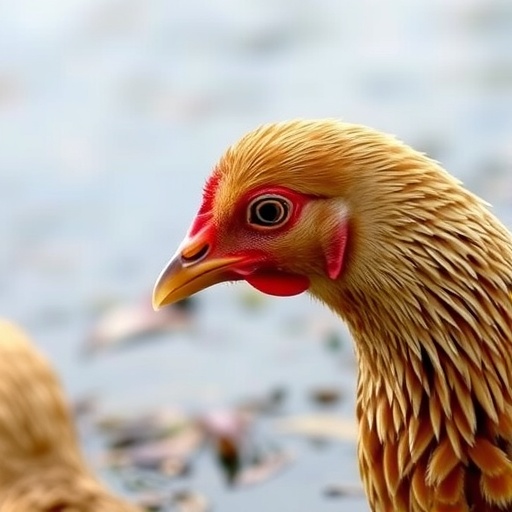
In a groundbreaking study that could transform our understanding of avian health and biosecurity, researchers Smith, Kelly, and Pierdon have undertaken a comprehensive surveillance of Avibacterium paragallinarum, a pathogen often linked to severe respiratory issues in poultry. This bacterium poses a significant threat not only to commercial layer hens but also to wild waterfowl, making its monitoring crucial for maintaining healthy bird populations and, consequently, the health of the ecosystems that depend on them. The urgency of exploring the prevalence and transmission dynamics of Avibacterium paragallinarum cannot be overstated as the poultry industry grapples with increasing challenges related to avian diseases.
The emergence of Avibacterium paragallinarum as a critical pathogen in avian species underscores the importance of vigilant surveillance strategies. This bacterium is characterized by its ability to induce infectious coryza, a respiratory disease that leads to significant economic losses in poultry farming. In the study published in Discov Anim, the researchers employed a multifaceted approach, leveraging advanced molecular techniques to identify and track the pathogen’s presence in various populations. By adopting cutting-edge methodologies, they have been able to provide a clearer picture of how this bacterium distributes itself in both domesticated and wild avian reservoirs.
One notable aspect of this research is its dual focus on both commercial layer hens and wild waterfowl, emphasizing the interconnectedness of these two groups. Wild birds often serve as reservoirs for many pathogens, including Avibacterium paragallinarum, which can spill over into domesticated populations. The authors meticulously detail their methodology, which included sampling from diverse environments and bird populations, thus highlighting the potential avenues for disease transmission between these groups. Their findings underscore the necessity for integrated surveillance systems that account for the ecological dynamics of pathogen spread.
The implications of this research extend beyond mere identification; it raises crucial questions about biosecurity measures in poultry farming. With increasing global trade and transport of live birds, the potential for introducing new pathogens into naive populations is a concerning reality. The study’s findings may well inform the development of more robust biosecurity protocols aimed at mitigating the risks associated with Avibacterium paragallinarum. This realization points towards a future where biosecurity is not just a reactive measure but a proactive strategy supported by rigorous scientific data.
Moreover, the authors emphasize the role of environmental factors in facilitating the spread of Avibacterium paragallinarum. Changes in habitat—such as increased agricultural development, climate variation, and migration patterns—can all influence how this bacterium is transmitted between species. By situating their findings within the broader context of environmental science, the researchers advocate for a multidisciplinary approach to disease management. This perspective is particularly crucial in an era where climate change continues to reshape avian habitats and behaviors.
As the research community grapples with the complexities of pathogen dynamics, the study’s conclusions provide valuable insights into the cohabitation of domestic and wild bird populations. The findings suggest that an understanding of wild species’ health is integral to ensuring the well-being of livestock. The interplay between wildlife and domestic animal health is a fascinating field of study, with potential implications for biodiversity conservation, wildlife management practices, and the sustainability of agricultural systems.
Public health implications are also a vital aspect of this research. As zoonotic diseases continue to emerge, identifying potential reservoirs and pathways for transmission becomes increasingly essential. The work of Smith and colleagues offers a glimpse into the interconnected web of wildlife and agriculture, highlighting the necessity for a One Health approach that integrates veterinary health, public health, and environmental science. The surveillance of Avibacterium paragallinarum could provide critical information that aids in preventing outbreaks that might ultimately affect human populations as well.
Furthermore, the international dimensions of this research are worthy of consideration. As avian species migrate across borders, the cross-continent spread of pathogens presents a unique challenge for global health security. Regulatory frameworks must evolve to address these transboundary issues while accommodating the natural behaviors of wildlife. The insights gained from this study could serve as vital components in shaping international policy regarding animal health surveillance and biosecurity protocols.
In light of the findings presented, the study also opens the door for future research opportunities. The gaps in knowledge surrounding the complete lifecycle and transmission pathways of Avibacterium paragallinarum remain vast and largely unexplored. Continued investigation into the bacterium’s virulence factors, resistance mechanisms, and interaction with host immune systems could lead to novel intervention strategies. As researchers build upon the foundation laid by this work, the poultry industry collectively stands to benefit from enhanced disease prevention measures and improved animal welfare standards.
In conclusion, the surveillance of Avibacterium paragallinarum as articulated in the recent study serves as a clarion call for heightened awareness of avian health issues. The intersectionality of domestic and wild species and their health dynamics within our ecosystems demands a robust response grounded in science. As the poultry industry faces myriad challenges, grounding practices in research and data becomes imperative for ensuring future sustainability and resilience.
The study serves as a reminder that thorough research and innovative practices are essential as we navigate an increasingly interconnected world fraught with complexities related to animal health. It is vital for stakeholders across all sectors—farmers, policy makers, scientists, and the public—to acknowledge their roles in safeguarding avian health and, by extension, the health of our planet. The path forward lies in comprehensive surveillance, interdisciplinary collaboration, and a commitment to understanding the intricate relationships that define the ecosystems we inhabit.
As we digest the vast implications of this research, it is clear that the vigilance in monitoring Avibacterium paragallinarum offers an invaluable opportunity to protect not only our domestic poultry but also the biodiversity that enriches our lives. With ongoing commitment and research, we can ensure a healthier future for both our agricultural practices and the wildlife that coexist alongside them.
Subject of Research: Surveillance of Avibacterium paragallinarum in commercial layer hens and wild waterfowl.
Article Title: Surveillance for Avibacterium paragallinarum in commercial layer hens and wild waterfowl.
Article References:
Smith, K.C., Kelly, D.J. & Pierdon, M.K. Surveillance for Avibacterium paragallinarum in commercial layer hens and wild waterfowl.
Discov Anim 3, 12 (2026). https://doi.org/10.1007/s44338-026-00169-z
Image Credits: AI Generated
DOI: https://doi.org/10.1007/s44338-026-00169-z
Keywords: Avibacterium paragallinarum, surveillance, poultry health, biosecurity, wild waterfowl, zoonotic diseases, One Health approach.
Tags: avian health researchavian pathogen transmission dynamicsAvibacterium paragallinarum surveillancebiosecurity in poultry farmingcommercial layer hens health riskscomprehensive disease monitoring strategiesecological health of bird populationseconomic impact of avian diseasesinfectious coryza in poultrymolecular techniques in pathogen identificationpoultry respiratory diseaseswild waterfowl health monitoring