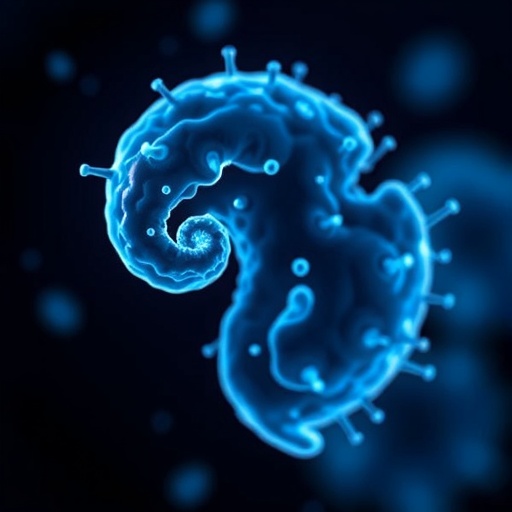
In the relentless pursuit of understanding aging and its intricate relationship with chronic diseases, a groundbreaking discovery has emerged from the laboratories at Vanderbilt University. The research, led by Assistant Professor Kris Burkewitz and published in Nature Cell Biology in February 2026, unveils a novel mechanism by which cells actively remodel their internal architecture during the aging process. This mechanism centers on the endoplasmic reticulum (ER), a vast and labyrinthine organelle critical to cellular function, revealing its dynamic restructuring through a specialized process known as ER-phagy. This remarkable insight opens new avenues for therapeutic interventions aimed at age-associated diseases, including neurodegeneration and metabolic disorders.
Aging, an unavoidable biological phenomenon, is commonly linked to a surge in chronic ailments such as cancers, diabetes, and Alzheimer’s disease. Despite the extension of lifespan worldwide, the quality of these extended years often suffers due to the cumulative burden of these conditions. The visionary goal of Burkewitz’s laboratory is to decouple the aging process from the onset of disease, effectively prolonging healthy living rather than mere longevity. Their strategy delves deeply into the cell’s microcosm, focusing on how internal compartments, or organelles, organize and regulate metabolic and functional output.
At the heart of this exploration is the endoplasmic reticulum, an elaborate network of interconnected sheets and tubules that orchestrate a wide spectrum of cellular tasks including protein synthesis, lipid metabolism, and spatial organization of other organelles. Traditionally, aging research has concentrated on how the abundance and activity of cellular machineries fluctuate over time. However, the Burkewitz team shifts focus from quantity to spatial architecture, emphasizing the critical role of cellular organization in maintaining efficient metabolism and function during aging.
Using the nematode Caenorhabditis elegans as a model organism, the researchers have employed advanced genetic tools alongside state-of-the-art light and electron microscopy techniques. The transparency and rapid lifecycle of these worms provide a unique window into real-time changes within living cells throughout the aging process. The investigative team meticulously visualized dramatic alterations within the ER, observing that aging cells specifically reduce “rough” ER—responsible predominantly for protein production—while the “tubular” ER, associated with lipid synthesis, remains relatively stable. These structural changes resonate with the broader metabolic shifts characteristic of aging, such as declining proteostasis and altered lipid distribution.
Central to these observations is ER-phagy, a selective autophagic process that degrades specific subdomains of the ER. By targeting and removing dysfunctional segments, ER-phagy facilitates the remodeling of ER architecture in response to cellular stress and aging. The discovery that ER-phagy mediates such remodeling introduces a potentially modifiable pathway that directly influences lifespan and healthy aging, marking ER-phagy as a promising therapeutic target for intervening in age-related pathologies.
Eric Donahue, the paper’s first author and a medical scientist trainee, highlights the novelty of this discovery, emphasizing that the role of ER remodeling in aging was an unexplored facet of cellular biology. This work not only illuminates previously uncharted terrain in the aging puzzle but also underscores how early structural changes in cellular architecture might act as triggers for downstream dysfunction and disease manifestation.
Burkewitz’s analogy likens the cell to a factory where the organization of machinery dictates production efficiency and quality. As in a factory, the spatial arrangement within cells is paramount; even with all necessary components present, disorder results in operational failure. Likewise, ER remodeling functions like a factory retooling, optimizing its internal layout in response to shifting demands and constraints that arise during aging. Disruptions in ER organization correlate strongly with decreased cellular efficiency, metabolite imbalance, and ultimately, disease states.
The team’s findings also cast new light on the relationship between metabolic decline and organelle dynamics. The observed reduction in rough ER may underlie the deterioration of protein synthesis known to occur with age, while sustained tubular ER underlines an adaptive shift in lipid handling. These findings compel further investigation into how ER remodeling influences other organelles and systemic physiology, including the possible ripple effects on cellular signaling, energy balance, and homeostasis.
Going forward, the Burkewitz lab aims to dissect the molecular underpinnings of the ER’s structural plasticity and how this shape-shifting governs cell function across different tissue types. Given that ER architecture is a master regulator of numerous cellular compartments, unraveling its remodeling pathways might not only elucidate early biomarkers of aging but also reveal intervention points to stave off age-related deterioration.
Collaborative efforts with experts in cell biology, biochemistry, molecular physiology, and biophysics have enriched this research. The Vanderbilt teams, alongside partners from the University of Michigan and the University of California, San Diego, have collectively contributed advanced microscopy techniques and genetic approaches vital for capturing the minute architectural reorganizations occurring within living cells throughout aging.
Importantly, these revelations underscore the therapeutic potential of modulating ER-phagy. Pharmacological agents or genetic interventions designed to fine-tune this process could preserve ER integrity, thereby delaying or preventing the onset of chronic age-associated diseases. With aging populations worldwide expanding rapidly, such advances offer hope for healthier, more productive later years, reducing the personal and societal burdens imposed by aging-related chronic conditions.
In sum, the discovery that ER remodeling and ER-phagy are critically involved in aging charts a transformative shift in how we view cellular aging. From a static decline to a dynamic, organelle-driven process, this insight heralds new frontiers in aging research and drug development. As science progressively unravels these intricate cellular narratives, the prospect of enhancing healthspan alongside lifespan becomes ever more tangible.
Subject of Research: Cellular remodeling in aging; endoplasmic reticulum; ER-phagy; aging biology; cellular architecture
Article Title: ER remodeling is a feature of aging and depends on ER-phagy
News Publication Date: 2-Feb-2026
Image Credits: Burkewitz et. al.
Keywords: Endoplasmic reticulum, Aging populations, Electron microscopy
Tags: cellular aging mechanismscellular function and architecturechronic disease preventionendoplasmic reticulum remodelingER-phagy processhealthy aging strategieslifespan extension researchmetabolic disorder interventionsneurodegeneration researchquality of life in agingtherapeutic interventions for agingVanderbilt University breakthroughs