In a groundbreaking development in the management of Long COVID symptoms, a team of researchers has pioneered the first digital platform aimed at supporting individuals coping with the debilitating consequences of post-exertional malaise (PEM). This innovative study, published in the esteemed journal Nature Communications, details a randomized controlled trial that explores the efficacy of an app named “Pace Me,” designed to assist users in modulating their physical activity and energy expenditure.
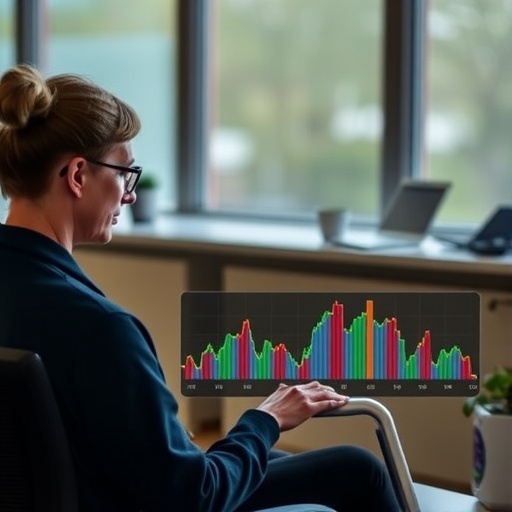
The “Pace Me” platform ingeniously integrates a wearable activity tracker, specifically a Fitbit watch, with an intelligent mobile application that delivers timely, context-aware notifications throughout the day. These alerts serve as behavioral nudges, cautioning users before they potentially exceed their energy limits—a condition often exacerbating symptoms for those with Long COVID. This symbiotic wearable-app duo represents a novel approach by providing real-time feedback that empowers users to carefully balance activity and rest, mitigating episodes of symptom flare-ups.
Conceptualized and led by Dr. Lawrence Hayes from Lancaster University, along with Dr. Nilihan Sanal-Hayes and Professor Nicholas Sculthorpe, the trial stands as a beacon of multidisciplinary collaboration aimed at addressing the complex clinical challenge posed by Long COVID. The trial was meticulously designed, recruiting 250 participants who were randomized into two cohorts. The intervention group was equipped with the complete “Pace Me” system featuring active tracking and alert functionalities. In contrast, the control group used a version of the app restricted to data input screens, devoid of any tracking or proactive alerts, effectively serving as a placebo comparator.
What distinguishes this trial is its focus on PEM as a primary outcome measure—an intense exacerbation of symptoms following exertion, which notoriously hampers recovery in Long COVID sufferers. Over a span of six months, the study rigorously quantified both subjective symptom reports and objective wearable data. Although both cohorts exhibited symptomatic improvements, the digitally assisted intervention did not significantly outperform the control group in reducing PEM incidence overall. Remarkably, however, about 13 participants in the intervention arm transitioned from PEM-positive to PEM-negative status, with a notable 10% reduction in participants reporting PEM compared to baseline.
While the overall efficacy signal was modest, Dr. Hayes emphasizes that the safety profile and acceptability of the digital platform mark a vital milestone. The study validates the feasibility of deploying adaptive digital health tools for energy management in post-viral syndromes, an area historically underserved by conventional therapeutic strategies. This innovation opens the door for iterative refinement and targeted development that could cater to chronic conditions where symptom persistence and flare-ups predominate, such as myalgic encephalomyelitis/chronic fatigue syndrome (ME/CFS), multiple sclerosis, and autoimmune diseases like lupus.
The trial’s methodological rigor lies in leveraging real-time physiological data to create personalized intervention thresholds, dynamically adjusting behavioral prompts in accordance with each user’s fluctuating capacity. This approach embodies a paradigm shift from static rehabilitation protocols to precision digital therapeutics, capable of delivering scalable and remotely accessible care solutions aligned with contemporary health system priorities. The design also highlights the importance of integrating user feedback loops within digital health ecosystems to optimize engagement and therapeutic adherence.
Importantly, the researchers contextualize their findings within broader health policy frameworks, referencing the NHS Long Term Plan and the Darzi report, both of which champion the digital transformation of healthcare delivery to improve chronic illness management. The platform’s adaptability signifies its potential for expansion beyond Long COVID to encompass diverse pathologies characterized by energy dysregulation and symptom exacerbation post-activity, thus presenting a versatile tool in the digital health arsenal.
Despite the lack of a statistically superior outcome relative to usual care, the learnings from this trial underscore critical considerations for future research. These include the need for refined algorithms that can better discriminate between safe and excessive activity levels, enhanced user interface designs to facilitate intuitive interaction, and integration with multidisciplinary care teams to provide holistic disease management. Emerging evidence from this study lays a vital foundation for subsequent trials exploring digital therapeutics in syndromes with overlapping pathophysiological and symptom profiles.
This investigation also calls attention to the nuanced trajectory of recovery in Long COVID compared to other chronic illnesses, advocating for digital tools that are tailored not only to individual patients but also to disease-specific progression patterns. Such precision aligns with the evolving paradigm of personalized medicine and underscores the necessity for multi-modal intervention strategies that incorporate physiological monitoring, symptom reporting, and psychosocial support within a unified platform.
In closing, the “Pace Me” digital tool heralds a promising frontier in the chronic disease management domain by harnessing wearable technology and real-time analytics to empower patients in self-regulating their activity. While further technological enhancement and clinical validation are warranted, this pioneering study delineates a compelling framework for leveraging digital platforms to ameliorate the burdens of Long COVID and potentially other fatiguing conditions that challenge conventional treatment paradigms.
Subject of Research: People
Article Title: A Digital Platform with Activity Tracking for Energy Management Support in Long COVID: A Randomised Controlled Trial
News Publication Date: 2-Feb-2026
Web References: http://dx.doi.org/10.1038/s41467-025-64831-y
Image Credits: Lancaster University
Keywords: Long COVID, Human health, Chronic fatigue syndrome, Information technology, Smartphones, Health care, Health care delivery
Tags: behavioral nudges for chronic illnessdigital health solutionsenergy level trackingFitbit integration with health appsinnovative health interventionsLong COVID managementmultidisciplinary research in Long COVIDPace Me apppost-exertional malaiserandomized controlled trial Long COVIDsymptom management strategieswearable technology for health