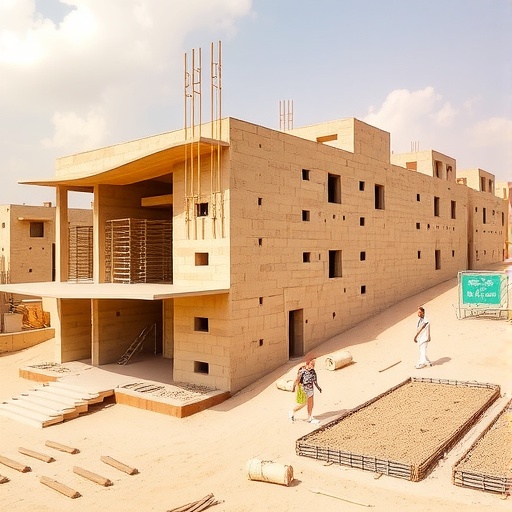
The world is on the brink of an unprecedented sand crisis. For a material so abundant, the specific sand suitable for concrete is becoming increasingly scarce, posing a significant challenge for the construction industry. With over four billion tons of cement produced annually, and concrete accounting for roughly eight percent of global CO₂ emissions, the urgency for finding sustainable alternatives is more pressing than ever. The extraction methods currently employed, including mining riverbeds and crushing mountains for gravel, result in extensive ecological disruption, raising critical environmental concerns.
While the modern construction industry heavily relies on specific types of sand, there are vast deserts worldwide containing billions of tons of sand that remain largely untapped. However, this desert sand has long been deemed unsuitable for concrete production due to its fine-grained texture and lack of cohesive properties. Thus, it has often been classified as “useless” in the context of construction. Yet, could this overlooked resource be engineered into a viable alternative?
An innovative breakthrough is on the horizon as researchers at the Norwegian University of Science and Technology (NTNU) and the University of Tokyo have embarked on a pioneering project that creatively addresses this dilemma. They propose a novel material known as botanical sand concrete—a sustainable solution that seeks to harness desert sand in combination with plant-based additives. This breakthrough is being explored under the guidance of Ren Wei, a postdoctoral fellow at NTNU’s Department of Manufacturing and Civil Engineering.
The creation of botanical sand concrete involves a meticulous and experimental approach. The research team embarked on a series of trials, where they experimented with varying temperatures, pressures, and sand types to determine the optimal conditions for producing this new material. Their findings indicated that desert sand, when combined with wood fibers and subjected to hydraulic pressing under heat, can achieve surprising strength and durability, making it suitable for use in construction. The pressing process effectively transforms the otherwise weak composition of desert sand into a viable concrete alternative.
The potential applications for this botanical sand concrete are compelling. Initial results suggest that it can be particularly effective for creating paving stones and walkways, which opens up a wide array of possibilities in urban design and infrastructure development. The researchers were particularly excited to reveal that the new material demonstrated the required strength for practical use, addressing initial concerns about the mechanical integrity necessary for construction purposes.
The implications of successfully developing botanical sand concrete extend beyond merely substituting traditional materials. If this innovation can be rolled out efficiently, it may fundamentally change how the construction industry sources its materials. By reducing the need to extract sand from fragile ecosystems, this advancement could effectively lessen the ecological footprint of construction practices. Ren Wei speculated that widespread adoption of such technology might signify a paradigm shift in sustainable building methodologies while also showcasing the utility of an otherwise neglected resource.
However, challenges remain before botanical sand concrete can be embraced on a grand scale. The harsher climates in locations where desert sand is prevalent pose questions regarding the material’s performance under extreme conditions, such as cold weather. Ongoing testing and research are critical to confirm its viability for outdoor applications, particularly in regions like Norway where winter weather can be punishing.
As a sustainable alternative, the researchers caution against mass shipping of desert sand across the globe, which could negate the environmental benefits of using local materials. The concept behind botanical sand concrete emphasizes local production and minimizing transportation, aligning with principles of sustainability and responsible resource use. This approach reinforces the need to utilize natural resources in their regions of abundance effectively and ethically.
This discovery also highlights the paradoxical nature of contemporary construction practices: while immense quantities of desert sand exist undisturbed, valuable terrestrial ecosystems are being recklessly exploited to meet the needs of the global demand for concrete. By valorizing desert sand, botanical sand concrete offers a solution that could help transcend this conflict, where pressing natural reserves for construction materials has been the norm for decades.
As the research team prepares to submit further findings for peer review, excitement builds around the prospects of botanical sand concrete becoming a staple of sustainable building materials in the future. “With continued development and successful field trials, we may soon bring to life a material that harmonizes construction needs with environmental responsibility,” Ren Wei concluded, encapsulating the optimistic vision driving this research initiative.
This study represents a significant step toward resolving one of the construction industry’s most pressing challenges, transforming an overlooked resource into an innovative solution that benefits both society and the environment. The implications for sustainable construction could be profound, potentially positioning botanical sand concrete as a frontrunner in the future of building materials.
Given the pressing nature of climate change and environmental degradation, innovation must be at the forefront of our efforts. The development of materials like botanical sand concrete symbolizes a commitment to finding solutions that not only address our immediate needs but also foster a sustainable future for generations to come. As the landscape of architectural and environmental engineering evolves, each step in this direction represents hope for a more sustainable and equitable world.
Subject of Research: Not applicable
Article Title: Botanical sandcrete: An environment-friendly alternative way to the mass utilization of fine (desert) sand
News Publication Date: 18-Sep-2025
Web References: DOI
References: N/A
Image Credits: Photo: NTNU
Keywords
sustainable construction, desert sand, botanical sand concrete, environmental impact, innovative materials, concrete alternatives, ecological sustainability, construction industry, renewable resources.
Tags: alternative materials for concretechallenges of concrete productiondesert sand in sustainable constructionecological impact of sand extractionengineering desert sand for constructionenvironmental sustainability in housingfuture of infrastructure using desert sandinnovative construction materials researchNTNU and University of Tokyo collaborationrecycling and reusing construction materialsreducing CO₂ emissions in buildingsand crisis in construction industry