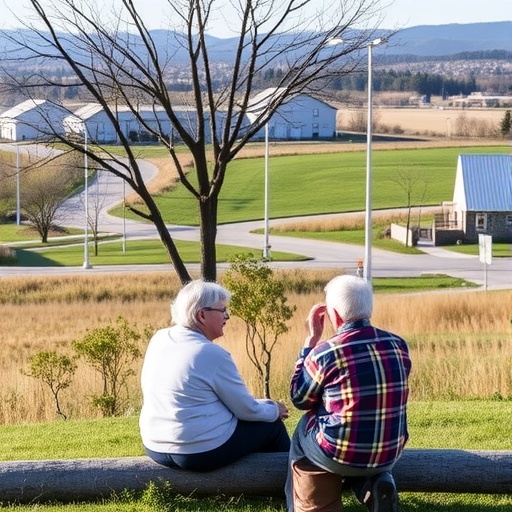
A recent study led by researchers Yi, Fan, Chen, and colleagues has highlighted the critical link between leisure activity patterns and health vulnerabilities among older adults in China. The ambitious nationwide analysis focuses on stark urban-rural differences, drawing upon extensive data from the China Health and Retirement Longitudinal Study (CHARLS). This research sheds light on the multifaceted relationship between lifestyle choices in leisure activities and their corresponding impacts on the health of older adults—a demographic that is rapidly growing in China amidst shifting socio-economic landscapes.
As populations age, understanding health vulnerabilities becomes imperative. The CHARLS data provides a comprehensive overview of various lifestyle factors, including physical activities, social engagement, and recreational pursuits, across diverse urban and rural settings. The study aims at identifying how these differing leisure activity patterns can contribute to health discrepancies, which is increasingly relevant in light of China’s demographic transition. It is particularly critical for policymakers and health care practitioners to grasp these dynamics to inform effective aging strategies and interventions.
In urban areas, older adults often have more access to structured leisure activities, ranging from community centers offering classes to organized sports leagues. Conversely, rural seniors may engage in more informal recreational practices, influenced by environmental factors and social structures unique to their communities. The findings of the study reveal not just the prevalence of these activities but also the underlying socioeconomic factors that drive such differences in engagement—wealth, education, and local infrastructure play significant roles.
Significantly, the research uncovers that leisure activities are not just mere pastimes; rather, they function as vital constructs for social interaction and mental health. Engagement in physical activities can counteract risks associated with sedentary lifestyles, which are prevalent in elderly populations. Health issues such as obesity, cardiovascular disease, and mental health decline are often exacerbated by lack of physical activity and social isolation. The study argues for a tailored approach to encourage physical and social activities among older adults, particularly in rural areas where such interventions could yield substantial health improvements.
Moreover, the study raises awareness about the importance of fostering environments that promote healthy leisure activities. In urban settings, the abundance of resources is countered by fast-paced living that may limit time for leisure. On the other hand, rural settings, with their close-knit communities, provide opportunities for more informal social interactions but may lack facilities to support structured physical activities. Thus, addressing these disparities is essential for reducing health vulnerabilities among older adults.
The use of CHARLS data provides a rich foundation for analyzing these trends, allowing researchers to explore variables like age, sex, education level, and income, offering insights into how these demographics affect leisure choices and associated health outcomes. The data reflects a microscale of societal trends: as China modernizes, the impacts of urbanization and economic development become increasingly significant in shaping the lives of older adults.
The implications of these findings are far-reaching. As countries grapple with aging populations, understanding local leisure patterns becomes crucial for crafting comprehensive health policies. Incentivizing leisure activities that promote physical health, cognitive skills, and social bonds can not only improve individual well-being but also enhance community vitality. This approach advocates for a shift in perspective—from viewing aging as a decline to embracing the potential for continued engagement and vitality.
Across diverse regions in China, the study illuminates how urban and rural older adults experience leisure and its subsequent implications on their health. The stark contrast in engagement levels necessitates policy interventions that are context-sensitive, taking into account not only the availability of resources but also the cultural nuances that govern lifestyle choices. As healthcare providers seek to implement proactive measures, understanding these differences will guide targeted outreach, encouraging older adults to participate in activities that enrich their lives.
Ultimately, this research serves as a call to action for various stakeholders—from government agencies to local community organizations—to collaborate and create inclusive programs that adapt to the needs of older adults, fostering environments where active aging is not only possible but actively encouraged. By prioritizing health and wellness through leisure activities, society can take significant strides toward improving the quality of life for its aging populations.
As we move forward, this foundational study underscores the necessity of ongoing research to continuously monitor and adapt strategies aimed at enhancing the lives of older adults. Leveraging data and insights from various studies, stakeholders can remain responsive to the shifting dynamics of aging populations, ensuring that every older individual can lead a fulfilling, vibrant life, irrespective of their geographic context.
In conclusion, the interconnection between leisure activity patterns and health vulnerabilities as explored in this significant research provides crucial insights that echo beyond the boundaries of China. The findings resonate globally, emphasizing that as societies age, priorities must shift towards understanding and facilitating healthier, active lifestyles, especially for vulnerable populations such as older adults. Whether through policies, community engagement, or public health initiatives, the need for a concerted effort to support sustainable leisure activities remains a pivotal aspect of comprehensive health care planning.
Subject of Research: Leisure activity patterns and health vulnerability among older adults in China
Article Title: Leisure activity patterns and health vulnerability among older adults in China: a nationwide analysis of urban-rural differences based on CHARLS data
Article References:
Yin, F., Fan, X., Chen, J. et al. Leisure activity patterns and health vulnerability among older adults in China: a nationwide analysis of urban-rural differences based on CHARLS data.
BMC Geriatr (2026). https://doi.org/10.1186/s12877-026-07056-y
Image Credits: AI Generated
DOI: 10.1186/s12877-026-07056-y
Keywords: Leisure activities, health vulnerabilities, older adults, urban-rural differences, CHARLS, aging populations, policy implications, community engagement.
Tags: aging strategies and interventionsChina Health and Retirement Longitudinal Studydemographic transition in Chinahealth vulnerabilities in seniorsinformal recreation in rural areaslifestyle factors affecting healtholder adults leisure activitiesphysical activities and health in elderlyrecreational pursuits among older adultssocio-economic impacts on agingstructured leisure activities for seniorsurban-rural health disparities