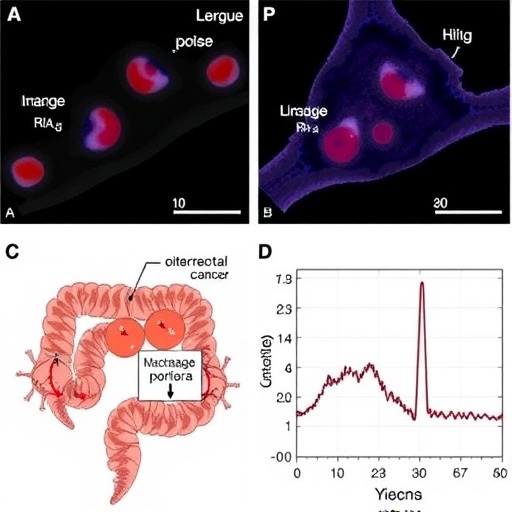
Recent research conducted by a team of scientists has unveiled critical insights into the role of LRRFIP1, a protein specific to tumor-associated macrophages, in the progression of colorectal cancer. This study highlights the intricate relationship between the immune system’s cellular components and cancer development, revealing how the activation of this protein can lead to enhanced macrophage polarization toward the M2 phenotype. Such findings not only shed light on the mechanisms underlying tumorigenesis but also open up possibilities for innovative therapeutic interventions.
In the context of cancer biology, macrophages are known to play dichotomous roles, classified as either M1 or M2 types based on their functional characteristics. M1 macrophages typically exhibit pro-inflammatory properties and are considered tumor-suppressive, while M2 macrophages are associated with immune suppression and tumor progression. The polarization of macrophages toward the M2 phenotype has been linked to various cancers, including colorectal cancer, which remains a global health concern due to its high incidence and mortality rates.
LRRFIP1, or Leucine-Rich Repeat Flightless Interacting Protein 1, has emerged as a pivotal factor in steering macrophage behavior within the tumor microenvironment. The researchers have demonstrated that the expression of LRRFIP1 is significantly elevated in tumor-associated macrophages compared to their non-tumor counterparts. This overexpression correlates with increased M2 polarization, which subsequently enhances the aggressiveness of colorectal tumors and facilitates their progression.
A closer examination of the mechanisms revealed that LRRFIP1 promotes M2 macrophage polarization through the activation of the phosphoinositide 3-kinase (PI3K) pathway. This pathway is well-recognized for its crucial role in cellular survival, growth, and metabolism. When activated, the PI3K pathway instigates a cascade of intracellular signaling events that culminate in the promotion of anti-inflammatory responses, which is characteristic of M2 macrophages. This not only undermines the anti-tumor immune response but also fosters an environment conducive to tumor growth and metastasis.
The study employed a range of experimental techniques to elucidate these findings. In vitro assays demonstrated that the silencing of LRRFIP1 expression in macrophages resulted in a marked decrease in M2 polarization markers, indicating a direct role of this protein in determining macrophage phenotype. Furthermore, in vivo studies using mouse models of colorectal cancer reinforced the hypothesis that LRRFIP1-deficient macrophages exhibited reduced tumor-promoting capabilities. This promising evidence positions LRRFIP1 as a compelling target for therapeutic strategies aimed at reprogramming the immune response in colorectal cancer.
As researchers continue to unravel the complexities of the tumor microenvironment, the implications of manipulating macrophage polarization become increasingly evident. Developing therapeutic agents that can inhibit LRRFIP1 function could shift the balance from M2-dominance toward a more favorable M1-skewed anti-tumor immunity. Such interventions could potentially improve the outcomes of colorectal cancer patients, whose treatment options remain limited, especially in advanced stages.
Furthermore, the findings raise questions about the potential for leveraging LRRFIP1 as a biomarker for colorectal cancer prognosis. Given its association with M2 polarization and aggressive tumor behaviors, measuring LRRFIP1 levels could help stratify patients based on their risk profiles and tailor personalized therapeutic approaches accordingly. The prospect of integrating biomarker-driven strategies into clinical practice is an exciting frontier in oncology.
In conclusion, the research conducted by Mu, Zhang, Wang, and colleagues emphasizes the significant role of LRRFIP1 in modulating macrophage behavior within the malignant setting of colorectal cancer. As the field of cancer immunotherapy continues to evolve, further investigations into the pathways regulating macrophage polarization will be crucial. Understanding how to effectively target these pathways could pave the way for novel treatments that harness the immune system’s potential to combat cancer more effectively, marking a transformative shift in colorectal cancer management.
The connection between immune cell regulation and cancer progression, especially through mechanisms involving LRRFIP1 and the PI3K pathway, underscores the need for continued interdisciplinary research efforts. This study not only provides a foundation for future investigations but also serves as a clarion call for the cancer research community to explore innovative therapeutic avenues that could harness the full power of the immune system in the fight against colorectal cancer.
By emphasizing the structural and functional roles of immune components, this exciting research underscores how intricately linked the fields of immunology and oncology are. As we better understand these relationships, it becomes increasingly possible to innovate and revolutionize cancer treatment paradigms, ultimately aiming to enhance patient outcomes on a global scale. The study exemplifies the kind of transformative research that can lead to significant advancements in cancer therapeutics, aligning with the pressing need for more effective interventions against one of the leading causes of cancer-related deaths worldwide.
Subject of Research: Role of LRRFIP1 in M2 Macrophage Polarization and Colorectal Cancer Progression
Article Title: Tumor-associated macrophage-specific LRRFIP1 promotes M2 macrophage polarization and progression of colorectal cancer via activation of the PI3K pathway.
Article References:
Mu, S., Zhang, S., Wang, M. et al. Tumor-associated macrophage-specific LRRFIP1 promotes M2 macrophage polarization and progression of colorectal cancer via activation of the PI3K pathway.
J Transl Med (2026). https://doi.org/10.1186/s12967-026-07759-1
Image Credits: AI Generated
DOI: 10.1186/s12967-026-07759-1
Keywords: LRRFIP1, M2 macrophages, colorectal cancer, PI3K pathway, tumor progression
Tags: cancer biology advancementscolorectal cancer incidence and mortalityimmune suppression M2 macrophagesimmune system and tumor developmentLeucine-Rich Repeat Flightless Interacting Protein 1LRRFIP1 role in colorectal cancermacrophage behavior in tumorsmacrophage polarization M2 phenotypepro-inflammatory M1 macrophagestherapeutic interventions colorectal cancertumor microenvironment factorstumor-associated macrophages in cancer