In a groundbreaking advance that sheds light on the enigmatic biosynthesis of withanolides, researchers have unveiled the genetic blueprint responsible for producing these medicinally valuable steroidal lactones in Withania somnifera, commonly known as ashwagandha. Long prized for its neurological, anti-cancer, and adaptogenic properties, ashwagandha’s therapeutic potential has been hindered by the limited understanding of the molecular pathways underpinning its key active compounds. This new study, published in Nature Plants, leverages cutting-edge genomic assembly and metabolic engineering to decode gene clusters and enzyme functions crucial for synthesizing withanolides, opening doors to scalable biomanufacturing and innovative drug development.
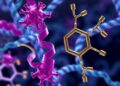
Withanolides are complex triterpenoid lactones characterized by a steroidal backbone fused with a distinctive lactone ring—a structural hallmark responsible for their diverse bioactivities. However, the biosynthetic route by which ashwagandha and related Solanaceae species construct these molecules had remained largely elusive, mainly due to the plant’s complex genome and the intricacy of the enzymatic steps involved. To overcome these challenges, the research team generated a chromosome-scale assembly of the W. somnifera genome, a feat that laid the foundation for systematic identification of candidate genes involved in withanolide production.
Crucially, the identification of two gene clusters that house the core withanolide biosynthetic machinery marks a major step forward. These clusters exhibit a segmented and tissue-specific expression pattern, suggesting stringent spatial regulation of withanolide biosynthesis within the plant. Distinct from many secondary metabolite pathways that are broadly expressed, this spatial specificity hints at complex evolutionary refinement—possibly to optimize the plant’s biochemical arsenal against environmental stressors or herbivores. The chromosomal localization and co-expression patterns of these clusters now provide invaluable insights into the pathway’s genetic architecture.
To functionally link genes to metabolic steps, the researchers employed an innovative approach: metabolic engineering in yeast platforms. By heterologously expressing candidate enzymatic genes in yeast and tracking metabolite intermediates, the team could reconstruct portions of the withanolide biosynthetic pathway in a controllable microbial host. Supporting this, heterologous expression in Nicotiana benthamiana—a widely used model for transient plant expression—validated enzyme activities within complex plant cellular environments. Together, these complementary systems confirmed individual enzymes’ catalytic roles.
Among the pivotal enzymes uncovered are two cytochrome P450 monooxygenases, CYP87G1 and CYP749B2, alongside a short-chain dehydrogenase, SDH2. These enzymes orchestrate the formation of the lactone ring, a feature that is essential to the pharmacological actions of withanolides. The CYP enzymes, known for their versatile oxidative capabilities, introduce chemical modifications central to ring closure and lactonization. This represents a significant biochemical revelation since lactone formation had previously been a black box in this pathway.
Further adding to the biosynthetic narrative, two additional P450 enzymes—CYP88C7 and CYP88C10—along with a sulfotransferase named SULF1, were shown to sculpt the pivotal A-ring structure of withanolides. This includes critical features such as the C-1 ketone group and the C-2–C-3 double bond, both of which influence the molecular reactivity and biological properties of the compounds. Notably, the involvement of SULF1 as a core enzyme challenges preconceived notions, as sulfotransferases were traditionally relegated to “tailoring” roles modifying end products, rather than central pathway catalysis.
The discovery of SULF1’s participation fundamentally shifts our understanding of sulfotransferase function within plant specialized metabolism. Instead of merely refining metabolites post-synthesis, these enzymes can actively shape core structural features during backbone assembly. This insight may prompt a reassessment of sulfotransferases across numerous plant biochemical pathways, many of which remain underexplored but have significant potential for pharmaceutical exploitation.
The ramifications of these findings extend beyond scientific curiosity. With a now-elucidated biosynthetic map, the path is clear for sustainable production of withanolides through synthetic biology and metabolic engineering strategies. Microbial cell factories, such as engineered yeast strains, can be optimized to produce high yields of withanolides or novel derivatives unattainable from natural sources. This circumvents the limitations of plant cultivation, including long growth cycles, environmental variability, and low metabolite concentration, thereby enabling commercial-scale pharmaceutical and nutraceutical manufacture.
Beyond production, detailed enzymatic knowledge enables medicinal chemists to manipulate withanolide structures informed by biosynthetic logic, facilitating the design of analogs with improved efficacy, reduced toxicity, and targeted delivery profiles. Such drug development efforts could expand the therapeutic landscape for neurological disorders, cancers, and stress-related conditions where ashwagandha extracts have shown promise but require rigorous clinical validation and optimization.
Furthermore, the dual expression clusters underscore the elegant modularity of plant metabolic pathways. Understanding how spatial and temporal gene expression is orchestrated offers avenues to engineer plants with enhanced or novel chemical profiles, potentially leading to improved crop varieties with augmented medicinal value. These genetic insights also pave the way for gene editing tools like CRISPR-Cas to fine-tune pathway fluxes or introduce beneficial traits into related species.
The use of sophisticated genomics combined with functional assays illustrates the remarkable synergy between molecular biology, chemistry, and synthetic biology driving modern plant natural product research. This interdisciplinary approach not only resolves long-standing biochemical mysteries but also exemplifies how traditional ethnobotanical knowledge can be translated into precision medicine. Ashwagandha, revered in Ayurveda for millennia, is now poised to benefit from 21st-century molecular science.
As this research propels withanolide biosynthesis into the realm of predictable and controllable bioproduction, it also enriches fundamental science by highlighting novel enzymatic functions and complex gene cluster regulation. The comprehensive nature of the work—from genome assembly to biochemical pathway reconstruction—sets a new standard in plant natural product discovery, with implications extending to other medically significant plant metabolites whose biosynthetic routes remain obscure.
In summary, the elucidation of gene clusters governing withanolide biosynthesis in W. somnifera represents a milestone achievement with multifaceted impact. It not only demystifies the molecular processes that give rise to a class of highly bioactive compounds but also establishes a platform for engineering their production, enabling future pharmaceutical innovation. This pioneering work heralds a new era where the intersection of plant genomics and synthetic biology can transform traditional herbal medicines into next-generation therapeutic solutions.
The study opens exciting prospects for sustainable medicine manufacturing and highlights the untapped potential within the vast diversity of plant specialized metabolites. As researchers continue to explore nature’s biochemical lexicon with ever-advancing tools, the ancient secrets of plants like ashwagandha are finally yielding to scientific unraveling, promising a new wave of bioactive compounds optimized for human health and well-being.
Subject of Research: Withanolide biosynthesis in Withania somnifera (ashwagandha)
Article Title: Elucidation of gene clusters underlying withanolide biosynthesis in ashwagandha through yeast metabolic engineering.
Article References:
Reynolds, E.E., Trauger, M., Li, FS. et al. Elucidation of gene clusters underlying withanolide biosynthesis in ashwagandha through yeast metabolic engineering. Nat. Plants (2026). https://doi.org/10.1038/s41477-026-02220-z
Image Credits: AI Generated
DOI: https://doi.org/10.1038/s41477-026-02220-z
Tags: adaptogenic properties of medicinal herbsanti-cancer properties of ashwagandhaashwagandha withanolide biosynthesisbiosynthetic pathways of medicinal compoundsdrug development from natural compoundsenzyme functions in plant metabolismgenetic blueprint of withanolidesgenomic assembly of Withania somniferametabolic engineering in plantsscalable biomanufacturing of withanolidesSolanaceae family medicinal plantstriterpenoid lactones in herbal medicine