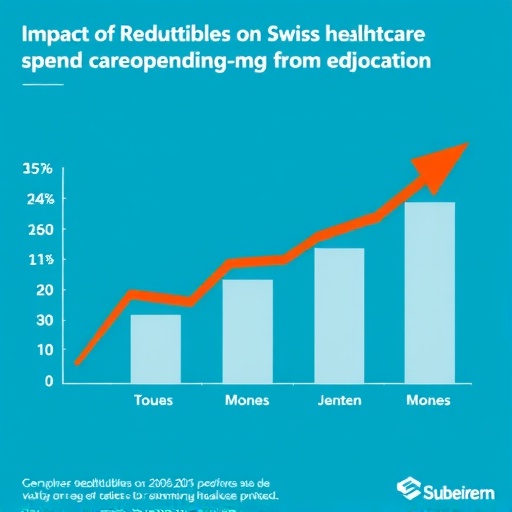
In 2026, a groundbreaking study emerged from Switzerland, detailing the profound impact that healthcare deductibles wield on financial expenditure in the medical realm. Authored by researchers Simon Felder and Sarah Meyer, this investigation delves into a topic of critical significance, especially as healthcare systems worldwide grapple with burgeoning costs. Deductibles—the amount patients must pay out-of-pocket before insurance coverage kicks in—have long been a cornerstone of insurance policies, influencing patient behavior, provider practices, and the overarching dynamics of healthcare economics.
The study meticulously uncovers nuanced insights into how varying deductible levels can reshape patient spending patterns. In recent years, many healthcare systems have moved towards high-deductible plans, ostensibly aiming to encourage consumers to make more judicious healthcare choices. While the rationale behind this shift rests on fostering personal responsibility, the implications can often lead to unexpected consequences, especially for vulnerable populations who may face financial barriers to accessing necessary services.
Through a comprehensive analysis, Felder and Meyer provide new evidence that illustrates not just direct healthcare expenditure but also the ripple effects across different demographics and regions in Switzerland. Their work emphasizes that understanding these effects is crucial for policymakers who must navigate the often-complex interplay of cost containment and health outcomes. As reviewing patient expenditure becomes increasingly vital, the researchers’ findings offer a timely contribution, particularly in light of the ongoing dialogue surrounding healthcare reform.
Moreover, the findings suggest that patient awareness regarding deductibles varies significantly among different socio-economic groups. Lower-income populations, who are often already struggling with financial pressures, may find the implications of high deductibles overwhelming. This can lead to critical decisions regarding care—ranging from postponing necessary treatments to avoiding them altogether—posing questions about equity in healthcare access. The research prompts a deeper contemplation about patient education and transparency in healthcare costs, essential in promoting informed decision-making.
The methodology employed in this study is equally compelling. Utilizing a robust dataset that spans various demographics, Felder and Meyer leverage statistical analyses to tease out the relationships between deductible levels and healthcare spending. Their approach not only enhances the validity of their conclusions but also paves the way for subsequent studies to build upon their findings. The meticulous nature of their research underscores the importance of evidence-based policymaking in the evolving landscape of healthcare finance.
A notable aspect of their analysis is the potential for variation in outcomes based on geographical considerations. Different regions of Switzerland exhibit unique healthcare patterns and spending behaviors, influenced by local economic conditions, healthcare infrastructure, and public health policies. This spatial variability highlights the necessity for tailored approaches when reforming healthcare financing mechanisms, ensuring that strategies resonate with the specific needs of diverse communities.
In exploring the implications of high deductibles, the authors also touch upon the paradox of consumer-driven healthcare. While the intention is to promote cost-effectiveness and efficiency, the actual realization of these goals often falters in practice. Many patients, particularly those who are less health literate, are ill-equipped to navigate the complexities of medical billing and insurance claims. The study advocates for enhanced educational initiatives aimed at demystifying the healthcare financing process, ensuring that individuals are empowered to make choices that align with both their health needs and their financial realities.
The conversation extends beyond mere financial delineations, as the authors consider the broader societal implications of rising healthcare costs and the associated stress it induces on families and individuals. Healthcare expenditure is not just a financial issue; it is deeply intertwined with physical and mental well-being. The study thus serves as a clarion call for stakeholders across the spectrum—from insurers to policymakers—to engage in meaningful discussions on how to create a more sustainable and equitable healthcare financing framework.
Importantly, the research conducted by Felder and Meyer also sheds light on the behavioral economics of healthcare. The interplay between financial incentives and treatment decisions is complex, often leading to counterintuitive behaviors among patients. Their findings reveal that while higher deductibles might prompt patients to seek more cost-effective care, it can simultaneously inhibit necessary medical interventions, leading to potential long-term health ramifications. This paradox highlights an essential consideration: that cost-cutting measures should never come at the expense of patient health.
The implications are not just confined to Switzerland but resonate globally. As countries grapple with the challenge of controlling healthcare expenditure while maintaining high standards of care, the findings promote an urgent dialogue on the efficacy of current insurance models. Policymakers worldwide can glean invaluable lessons from the Swiss experience, utilizing insights from this research to build more resilient and equitable healthcare systems.
Felder and Meyer propose a multifaceted approach to healthcare reform that encompasses not just deductible adjustments but broader systemic changes. Their call for action underscores the importance of balancing financial incentives with patient welfare, ensuring that healthcare remains accessible and affordable. The study’s conclusions invite further scrutiny and discussion, emphasizing the critical role research plays in shaping healthcare policy.
As the healthcare landscape continues to evolve, it is clear that understanding the ramifications of deductible structures remains paramount. The findings presented by Felder and Meyer not only expand the academic conversation but serve as a genuine reflection of pressing real-world issues faced by patients. Their work encourages all stakeholders to engage in a deeper exploration of how to create an equitable, affordable, and sustainable healthcare environment.
In summary, the comprehensive analysis conducted by Felder and Meyer stands as a vital contribution to the literature on healthcare expenditure and its multifaceted dynamics. By illuminating the effects of deductible structures within the Swiss healthcare system, the study instigates a broader discussion on health equity, accessibility, and the balance between financial responsibility and care. As the world continues to navigate the challenges posed by healthcare financing, the insights gleaned from this research will undoubtedly inform future approaches and policies aimed at fostering a healthier society.
Subject of Research: The impact of healthcare deductibles on expenditure in Switzerland.
Article Title: The effect of deductibles on healthcare expenditure: new evidence for Switzerland.
Article References:
Felder, S., Meyer, S. The effect of deductibles on healthcare expenditure: new evidence for Switzerland.
BMC Health Serv Res (2026). https://doi.org/10.1186/s12913-026-14052-w
Image Credits: AI Generated
DOI:
Keywords: Healthcare expenditure, deductibles, Switzerland, health policy, healthcare access, economic impact.
Tags: demographic effects on healthcare spendingfinancial barriers to healthcare accesshealthcare cost containment strategieshealthcare deductibles impacthealthcare economics and policyhigh-deductible insurance plansimplications of deductible levelsout-of-pocket medical expensespatient spending behaviorpersonal responsibility in health choicesSwiss healthcare spending analysisvulnerable populations in healthcare