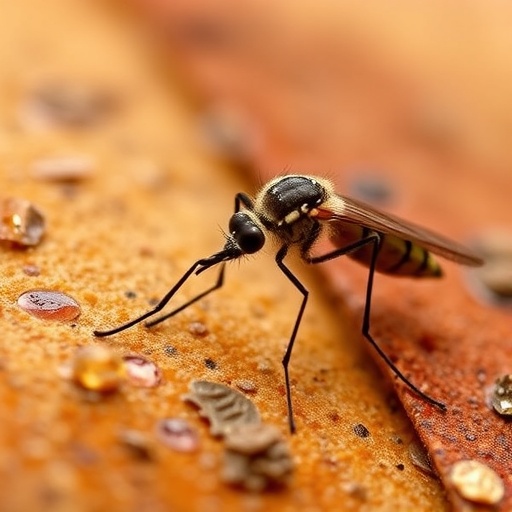
As the world grapples with the escalating crisis of climate change, new research from Symons, Moran, Balzarolo, and colleagues casts a stark light on its looming threat to malaria control efforts in Africa. This comprehensive study illuminates the complex interplay between ecological shifts and extreme weather disruptions, projecting a worrying surge in malaria transmission and mortality over the next quarter-century. While previous discourse has largely dwelled on ecological changes altering mosquito habitats, this analysis breaks new ground by rigorously quantifying both gradual ecological alterations and the far-reaching consequences of climate-induced disasters like floods and cyclones.
The researchers leveraged an innovative synthesis of mechanistic models grounded in biophysical principles alongside rich epidemiological and intervention datasets. Their approach extends beyond simplistic boundary shifts of transmission zones, revealing that roughly 99% of climate-induced malaria impacts will emerge within already endemic regions rather than newly affected areas. This nuanced understanding challenges prevailing assumptions and urges malaria programs to recalibrate their strategies around intensifying burdens in familiar hotspots—not merely anticipating expansion into new territories.
Crucially, the study distinguishes between two categories of climate impacts: ecologically driven and disruption-driven. The former encompasses changes in temperature, humidity, and rainfall patterns that enhance or diminish mosquito survival and parasite development rates. These tend to produce relatively modest but steady alterations in transmission potential. In stark contrast, disruption-driven impacts arise from the increasing frequency and severity of extreme weather events, which disrupt healthcare delivery, supply chains, infrastructure, and community resilience. According to the analysis, these disruptive effects may amplify malaria incidence by approximately threefold compared to ecological factors alone, marking them as a critical yet often underappreciated driver of future disease burden.
By projecting these dynamics over decadal timeframes and integrating ensemble runs of global climate models, the authors present a robust medium-term forecast balancing natural year-to-year climate variability with emergent climate trends. This methodological rigor enhances confidence in their findings, which foresee hundreds of millions of additional cases and hundreds of thousands of excess deaths attributable to climate change by 2050. These sobering figures emerge amidst ongoing global efforts to reduce malaria and achieve eradication—an ambition that climate-driven setbacks threaten to undermine substantially.
Despite the thoroughness of their simulations, the authors acknowledge several important limitations inherent in modeling such a vast and multifactorial challenge. Notably, the analysis confines disruption-driven impacts to floods and cyclones, where evidential support is strongest, while other climate-induced stressors—such as food insecurity, economic instability, forced migration, and healthcare system breakdown—remain inadequately captured. These unmodeled pathways could exacerbate malaria risk further, underscoring the need for interdisciplinary research bridging climate science, public health, and socioeconomics.
The study also holds constant present-day health system capacities and intervention coverage to isolate climate impacts specifically, rather than predict actual future malaria incidence. Real-world trajectories will undoubtedly be shaped by socioeconomic progress, evolving vector control technologies, and adaptive policies, which can mediate the quantified threats or potentially amplify vulnerabilities. Consequently, the projections serve as an urgent call to action rather than deterministic forecasts.
A salient insight from the research is the likely disproportionate impact of climate disruption on malaria control efforts. Extreme weather events repeatedly stress supply chains for insecticide-treated nets, indoor spraying campaigns, antimalarial drug availability, and access to diagnosis and treatment. These operational disruptions could erode years of progress, highlighting the imperative for climate-resilient health systems capable of absorbing shocks and maintaining uninterrupted malaria interventions.
To bolster resilience, the authors advocate strategic investments that could include reinforcing health infrastructure against climate extremes, decentralizing service delivery to empower local health actors, and integrating early warning systems aligned with meteorological forecasts. Furthermore, the deployment of novel malaria control tools less susceptible to climate variability—such as vaccines or genetically engineered vectors—may offer vital complementarity to conventional measures.
Beyond malaria, the framework presented establishes a versatile template for assessing climate impacts on other vector-borne diseases vulnerable to ecological and disruption-related influences. Through blending mechanistic and correlative modeling approaches alongside inclusive climate ensemble analyses, this integrated paradigm addresses key gaps in prior research, advancing the frontier of climate-health risk assessment.
The broader implication of this study is a cautionary tale about the fragility of global health achievements amid accelerating climate change. The goal of eradicating malaria within this century, a pinnacle of public health ambition, will require vigilance and innovation in the face of multifaceted climate threats. Success hinges on a convergence of sustained financing, engaged communities, and policies that anticipate and accommodate climate dynamics rather than reactively responding after devastation occurs.
Ultimately, this research underscores the urgency for multisectoral collaboration encompassing public health, climate science, infrastructure planning, and social policy. It invites an era of proactive climate-proofing of disease control programs—a paradigm shift essential not only for malaria but for safeguarding human health in an increasingly unpredictable world. As the authors poignantly conclude, building climate-resilient societies intertwined with robust health systems will be paramount to preserving the hard-won gains against malaria and achieving the historic milestone of eradication.
Subject of Research: Projected impacts of climate change on malaria transmission and burden in Africa, considering both ecological and disruption-driven mechanisms.
Article Title: Projected impacts of climate change on malaria in Africa.
Article References:
Symons, T.L., Moran, A., Balzarolo, A. et al. Projected impacts of climate change on malaria in Africa. Nature (2026). https://doi.org/10.1038/s41586-025-10015-z
Image Credits: AI Generated
DOI: https://doi.org/10.1038/s41586-025-10015-z
Tags: biophysical principles in epidemiologyclimate change and malaria transmissionclimate-induced disasters and healthecological shifts and disease dynamicsendemic regions and malaria resurgencefuture projections of malaria in Africaimpact of extreme weather on malariainnovative models in malaria researchintervention strategies for malaria controlmalaria control challenges in Africatemperature and humidity effects on mosquitoesunderstanding malaria hotspots