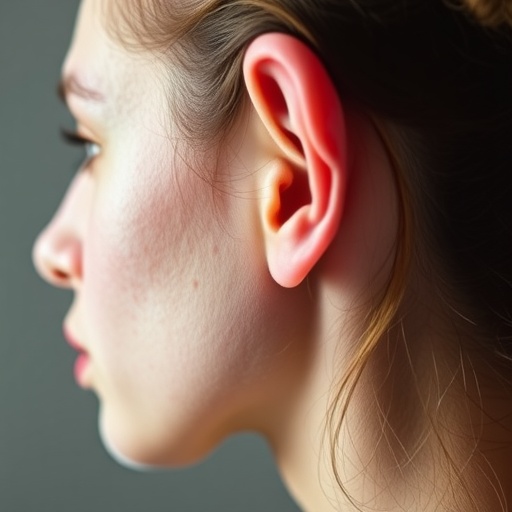
In a groundbreaking nested case-control study published in a forthcoming issue of Archives of Dermatological Research, researchers Vaidyula and Kundu have uncovered a troubling correlation between vitiligo and an increased risk of sensorineural hearing loss. The implications of this research extend far beyond the dermatological symptoms most commonly associated with vitiligo, an autoimmune disorder characterized by the loss of skin pigment. This finding calls for a reevaluation of how we understand the systemic impacts of vitiligo and raises critical questions regarding patient care and monitoring.
Vitiligo, affecting millions worldwide, manifests as white patches on the skin due to the destruction of melanocytes, the cells responsible for producing melanin. Traditionally viewed through a cosmetic lens, this condition’s systemic ramifications have often been overlooked in clinical settings. The study by Vaidyula and Kundu sheds light on the potential neurological complications faced by individuals suffering from vitiligo, particularly advancing our understanding of sensorineural hearing loss, a form that results from damage to the inner ear or auditory nerve pathways.
The nested case-control design employed by the researchers allows for robust examination within a population that includes well-defined cases of both vitiligo and sensorineural hearing loss. This methodological approach strengthens the validity of the conclusions drawn, as it controls for potential confounding variables that could skew the relationship between these two health issues. By focusing on a specific, controlled population, the team was able to delve deeper into how vitiligo might predispose individuals to hearing impairment.
One of the more surprising aspects of the findings is the strength of the correlation between vitiligo and hearing loss. While the mechanisms underlying this relationship remain unclear, the researchers have hypothesized several pathways that could explain this concerning association. One possibility rests on the autoimmune nature of vitiligo itself. Autoimmune responses may not only affect the skin but could also lead to damage in other body systems, including auditory function.
Moreover, the age and demographic factors of the study participants may shed light on the broader epidemiological patterns present in both conditions. The data gathered suggest that younger vitiligo patients may face a heightened risk of hearing loss than their older counterparts, emphasizing the importance of early detection and preventative measures. Healthcare professionals should be aware of this risk and consider regular auditory evaluations for younger patients diagnosed with vitiligo.
In addition to the biological interactions potentially at play, the psychosocial impacts of vitiligo cannot be dismissed. The stress associated with living with a visible disorder can exacerbate other health issues, leading to a cycle where mental health negatively influences physical well-being. The intersection of stress, autoimmune responses, and auditory health presents another daunting avenue for future research.
It also raises significant questions about how dermatologists and audiologists can work more collaboratively. Integrated care approaches may be necessary, ensuring that patients with vitiligo receive comprehensive evaluations that include hearing assessments. By fostering communication between different specialties, healthcare providers can give holistic care that addresses the interconnected nature of these conditions.
The study highlights the urgent need for further research into the relationship between vitiligo and auditory health. Clinical trials exploring potential treatments and interventions aimed at preventing hearing loss in this population could yield transformative results. Furthermore, the research exemplifies the necessity for larger, multicentric studies that can further elucidate the mechanisms linking these two seemingly disparate health issues.
As researchers continue to explore the intricacies of vitiligo, this study serves as a clarion call for a revised perspective on how chronic skin conditions can influence systemic health. The findings could potentially redefine the standard of care for individuals diagnosed with vitiligo. Awareness of hearing loss as a potential complication should be part of a comprehensive care plan.
Importantly, public health initiatives can take this research into account to foster awareness and education around the risks associated with vitiligo. This knowledge could empower patients to seek earlier intervention and resources, leading to improved health outcomes. Knowledge is power, and by disseminating insights from this pivotal research, the medical community can champion the cause for better patient education.
With these revelations, the study by Vaidyula and Kundu stands to make a significant impact not only within dermatology but across the spectrum of healthcare. It instills an understanding that cross-disciplinary exploration is vital in untangling the web of complex health issues that afflict patients. As our understanding of conditions like vitiligo expands, it is imperative that patient care evolves alongside this knowledge base.
In conclusion, the association between vitiligo and increased risk of sensorineural hearing loss emphasizes the need for a paradigm shift in how healthcare practitioners approach autoimmunity and its systemic consequences. The findings compel a significant reassessment of traditional perceptions of dermatological disorders, paving the way for more integrated and informed patient care strategies in the years to come.
Subject of Research: The relationship between vitiligo and sensorineural hearing loss.
Article Title: Increased risk of sensorineural hearing loss in patients with vitiligo: a nested case-control study.
Article References:
Vaidyula, V.R., Kundu, R.V. Increased risk of sensorineural hearing loss in patients with vitiligo: a nested case-control study.
Arch Dermatol Res 318, 61 (2026). https://doi.org/10.1007/s00403-026-04521-x
Image Credits: AI Generated
DOI: 28 January 2026
Keywords: Vitiligo, Sensorineural Hearing Loss, Autoimmune Disorders, Dermatology, Audiology, Nested Case-Control Study.
Tags: auditory nerve and vitiligo relationshipautoimmune disorders and skin conditionsdermatological research studiesimplications of vitiligo on healthmelanocyte destruction and hearing issuesnested case-control study methodologyneurological complications of vitiligopatient care for vitiligoreevaluating vitiligo treatment strategiessensorineural hearing loss risk factorssystemic impacts of vitiligovitiligo and hearing loss correlation