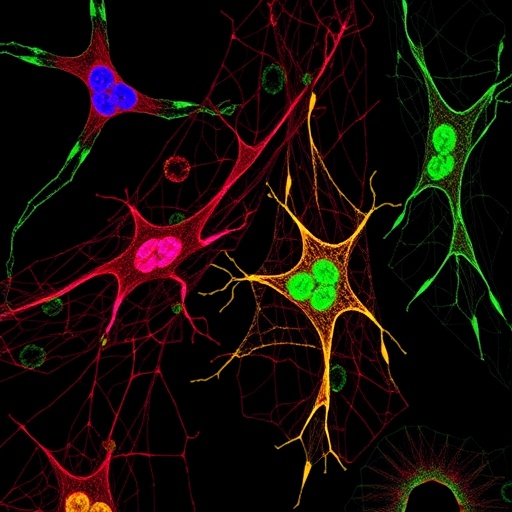
In a groundbreaking study published in Nature Metabolism, researchers have unveiled the intricate molecular interplay between the nuclear lamin proteins and cellular metabolism that ultimately governs stem cell fate decisions. The work, led by Wang, Shi, Wittig, and colleagues, sheds unprecedented light on how Lamin A/C, a fundamental structural component of the nuclear envelope, modulates cysteine catabolic flux to reprogram the epigenome, thereby influencing whether stem cells maintain pluripotency or differentiate. This research offers a new paradigm for understanding stem cell biology and opens potential therapeutic avenues for regenerative medicine and aging-related diseases.
At the heart of this discovery lies Lamin A/C, known predominantly for its role in maintaining nuclear integrity and chromatin organization. However, this study transcends the classical view by linking Lamin A/C to metabolic fluxes, particularly those involving cysteine, an amino acid pivotal to cellular redox homeostasis and epigenetic regulation. The team meticulously traced how Lamin A/C orchestrates cysteine breakdown pathways, effectively tuning the intracellular metabolite landscape that interfaces with the epigenetic machinery controlling gene expression.
The revelation that cysteine catabolism is not merely a metabolic sidetrack but a critical regulator of stem cell identity underscores the complex connectivity between metabolism and epigenetics. Cysteine-derived metabolites, the study demonstrates, serve as substrates or cofactors for chromatin-modifying enzymes, thus influencing patterns of histone modification and DNA methylation. These epigenetic marks are central determinants in stem cell fate, dictating the silencing or activation of developmental programs.
Delving deeper, the researchers deployed a combination of advanced metabolomics, chromatin immunoprecipitation sequencing (ChIP-seq), and single-cell transcriptomics to elucidate the molecular cascade from Lamin A/C regulation, through cysteine metabolic flux, to epigenomic reconfiguration. The data revealed that alterations in Lamin A/C levels modulate cysteine catabolism flux, which in turn affects the availability of key metabolites required by epigenetic writers such as histone demethylases and DNA methyltransferases.
This mechanism operates as a finely tuned sensor system, wherein Lamin A/C status can relay environmental and cellular cues to the epigenome through metabolic intermediates. Consequently, stem cells leverage this circuitry to dynamically adjust their gene expression profiles in response to physiological demands, striking a balance between self-renewal and differentiation. Such insights deepen understanding of how nuclear architecture can integrate with metabolic networks to govern fundamental biological processes.
The study also highlights how disruption of this Lamin A/C-cysteine axis impacts stem cell function. Loss or mutation of Lamin A/C perturbed cysteine catabolic flux, resulting in aberrant epigenetic landscapes that compromised stem cell pluripotency and biased differentiation trajectories. This finding links nuclear envelope defects observed in laminopathies and aging to metabolic and epigenetic dysregulation, potentially explaining some aspects of stem cell decline observed during aging and disease.
Moreover, by employing pharmacological modulation of cysteine metabolism, the research team demonstrated the capacity to restore proper epigenomic regulation and rescue stem cell function in Lamin A/C-deficient models. This not only validates the causative role of cysteine catabolic flux in maintaining cellular identity but also suggests new metabolic intervention strategies aimed at rejuvenating stem cell pools in degenerative conditions.
Intriguingly, this study provides an integrative model that connects structural nuclear proteins to metabolic pathways and epigenetic control, highlighting an underappreciated axis of cellular regulation. By revealing cysteine catabolism as a key metabolic node influenced by Lamin A/C, the work challenges the canonical compartmentalization of nuclear scaffolding and metabolism as discrete entities, instead proposing a complex, interdependent network maintaining cellular homeostasis.
Technically, the work leveraged state-of-the-art isotope tracing methodologies to precisely quantify flux through cysteine degradation pathways, combined with high-resolution epigenomic profiling to map genome-wide modifications associated with metabolic shifts. The convergence of these approaches allowed for a mechanistic dissection of how metabolic flux imprints on the chromatin landscape, an advancement poised to propel the field of metabolic-epigenetic crosstalk forward.
The implications of these findings are vast, extending beyond fundamental stem cell biology into broader aspects of developmental biology, tissue regeneration, and aging. Understanding how Lamin A/C-mediated metabolic flux modulates the epigenome may help decode the molecular basis for stem cell exhaustion in aged tissues, offering targets to prevent or reverse decline. Furthermore, manipulating this pathway could enhance the efficacy of stem cell-based therapies by stabilizing desirable cell states.
This research also opens new inquiries regarding the possible involvement of other nuclear lamina components and metabolic pathways in epigenetic regulation, potentially revealing a wider network of nuclear-metabolic integration. The bidirectional communication between nuclear structure and metabolism could thus constitute a central axis in cellular function, with broad relevance across cell types and disease contexts.
In summary, the discovery that Lamin A/C controls cysteine catabolic flux to dictate stem cell fate through epigenetic reprogramming represents a landmark advance. It underscores the sophistication of intracellular regulation mechanisms where nuclear architecture, metabolism, and epigenetics intersect seamlessly. Such multidimensional control systems exemplify nature’s complexity and promise new biomedical breakthroughs.
Wang and colleagues’ study delineates a compelling narrative where a structural nuclear protein exerts remarkable influence over cell fate by leveraging metabolic pathways to sculpt the epigenome. This integrative understanding transforms how researchers view nuclear functions and highlights metabolism’s critical role in shaping cell identity beyond traditional bioenergetics.
As this pioneering research paves the way for new therapeutic strategies, it invites the scientific community to expand explorations of epigenome-metabolism interface. Future investigations will likely focus on how modulating this axis in various stem cell types and tissues can optimize regenerative outcomes and combat age-associated decline and disease.
The work stands as a testament to the power of interdisciplinary research blending cell biology, metabolism, and epigenetics. It reveals a nuanced cellular choreography ensuring fundamental decisions on stem cell fate are finely calibrated, unlocking potential to manipulate these processes for improved health and longevity.
In the vibrant landscape of stem cell biology, wherein countless factors converge to determine destiny, this study carves out a novel metabolic-epigenetic niche governed by nuclear lamin dynamics. It challenges existing dogma and sets the stage for a new era of understanding cellular identity control with far-reaching translational impact.
Subject of Research: Stem cell fate regulation through Lamin A/C-controlled cysteine metabolism and epigenome reprogramming
Article Title: Lamin A/C-regulated cysteine catabolic flux modulates stem cell fate through epigenome reprogramming
Article References:
Wang, Y., Shi, H., Wittig, J. et al. Lamin A/C-regulated cysteine catabolic flux modulates stem cell fate through epigenome reprogramming. Nat Metab (2026). https://doi.org/10.1038/s42255-025-01443-2
Image Credits: AI Generated
DOI: https://doi.org/10.1038/s42255-025-01443-2
Tags: cysteine catabolism in stem cellsepigenetic regulation by metabolisminterplay of metabolism and epigeneticsLamin A/C role in stem cell fatemetabolic flux and gene expressionmetabolic pathways in cell identitynuclear lamins and metabolismredox homeostasis in stem cellsregenerative medicine and agingstem cell pluripotency and differentiationstructural proteins in cellular biologytherapeutic implications of Lamin A/C