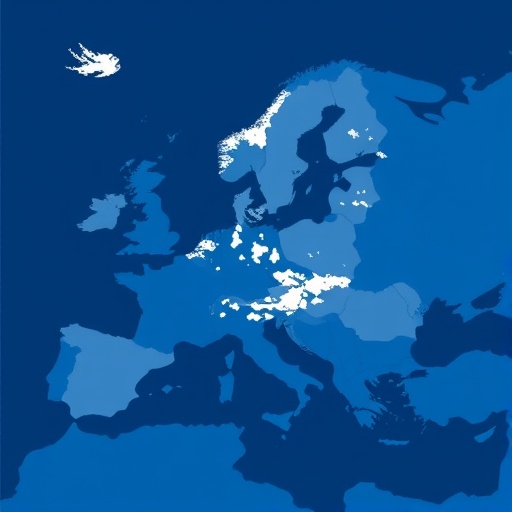
The study of historical population displacement presents a fascinating lens through which we can understand the evolution of human behavior and life history strategies. In a groundbreaking article authored by S. Koljević, titled “Historical Population Displacement is Associated with Faster Life History in Czechia,” published in the journal Adaptive Human Behavior and Physiology, the author investigates how past migrations and displacements can shape contemporary life history traits in populations. This research offers crucial insights into the interplay between demographic changes and biological adaptations, particularly within the Czech Republic.
Population displacement, a phenomenon frequently observed throughout human history, has profound effects on genetic diversity, reproductive strategies, and overall life history patterns. Koljević delves into how successive waves of migration, both voluntary and forced, have influenced the biological and cultural elements within Czech populations. Such movements may accelerate certain life-history traits—such as earlier reproduction, increased fertility rates, and shorter lifespans—consequences that can echo through generations. This can lead to significant shifts in population dynamics, ultimately influencing survival and reproductive success.
In examining historical data, Koljević analyzes various epochs marked by significant displacement events, including wars, economic unrest, and changes in political regimes. Each of these factors not only caused immediate suffering and upheaval but also instigated long-term demographic changes. By comparing historical records with genetic data, Koljević supports the hypothesis that populations exposed to high levels of displacement adapt faster in terms of their life history strategies. This accelerated adaptation is thought to arise from the necessity to optimize survival amidst instability and uncertainty.
The study draws on multiple case studies from Czech history, exploring how each instance of displacement has left a unique imprint on the local populations. From the impacts of World War II, which led to considerable forced migrations, to the more recent socio-economic changes following the dissolution of Czechoslovakia, Koljević’s research highlights the nuanced ways in which human societies respond to crises. For instance, the author notes that communities forced to migrate frequently experience a pressure to reproduce early, hence evolving a faster life history strategy as a means of ensuring lineage survival.
Moreover, the findings suggest that these adaptations are not solely biological but are also influenced by socio-economic and cultural factors. Koljević points out that in periods of stability, individuals are more likely to delay reproduction in favor of personal and professional development. Conversely, in the face of adversity, the need for rapid population replacement outweighs the benefits of delayed life stages. This observation presents an intriguing juxtaposition between biological imperatives and socio-cultural contexts, suggesting that evolutionary responses are deeply embedded in the fabric of human society.
Drawing connections with broader evolutionary theories, Koljević aligns his findings with the concepts of life history theory. This theory postulates that lifespan traits are trade-offs shaped by environmental pressures. Koljević convinces that the harsh realities of displacement create an environment ripe for accelerated life history traits, favoring those who can adapt swiftly. The research underscores an evolutionary perspective that sees human adaptability as a continuous interplay between external pressures and internal reproductive strategies.
A critical aspect of Koljević’s work is the methodical approach to data collection, employing both qualitative and quantitative methods. Historical analyses are corroborated with genetic sampling, providing a robust framework for understanding the biological implications of historical events. By synthesizing these diverse data points, the study not only highlights historical narratives but also enhances our understanding of human biology in a contemporary context.
The implications of Koljević’s findings extend beyond the borders of the Czech Republic. As globalization continues to facilitate unprecedented levels of human movement, understanding the effects of previous displacements can offer valuable tools for addressing current demographic challenges across the globe. This work sheds light on how modern societies, including those facing refugee crises or migration pressures, might adapt their life strategies in response to socio-economic instability.
Researchers and policymakers can look to Koljević’s conclusions to inform strategies that assist communities undergoing rapid demographic changes. Recognizing the potential for accelerated adaptation in vulnerable populations allows for more effective interventions, particularly in health and social services. The study thus serves as a vital resource for not only understanding human evolution but also shaping responsive social policies amid ongoing migration challenges.
As the discourse surrounding population displacement grows increasingly relevant in today’s global landscape, Koljević’s research is poised to resonate with a wide audience. The findings provoke critical questions about human resilience, adaptability, and the enduring effects of historical legacies on contemporary life histories.
Ultimately, Koljević’s work stands at the intersection of history and biology, providing a compelling narrative about how our past continues to shape our present and future, particularly in an age of unprecedented mobility. Through its detailed exploration of the relationship between historical population displacement and accelerated life histories, this study pushes the boundaries of our understanding about adaptation, survival, and the human condition.
As societies continue to navigate the complexities of migration and displacement, Koljević’s insights serve as an important reminder of the profound impact such experiences can have on human evolution—a tale of resilience and adaptation that continues to unfold.
Subject of Research: Historical Population Displacement and Life History Adaptation
Article Title: Historical Population Displacement is Associated with Faster Life History in Czechia
Article References:
Koljević, S. Historical Population Displacement is Associated with Faster Life History in Czechia.
Adaptive Human Behavior and Physiology 10, 324–334 (2024). https://doi.org/10.1007/s40750-024-00249-y
Image Credits: AI Generated
DOI: 23 September 2024
Keywords: population displacement, life history theory, adaptation, Czechia, migration, historical demography, evolutionary biology.
Tags: adaptive human behavior and physiologyconsequences of economic unrest on human behaviorcultural influences on life history traitsdemographic changes and survival successearlier reproduction in displaced populationsforced migrations and biological adaptationsgenetic diversity and reproductive strategieshistorical migration patterns in Czech Republicimpact of wars on population dynamicslife history strategies in human evolutionpolitical regime changes and population shiftspopulation displacement in Czechia