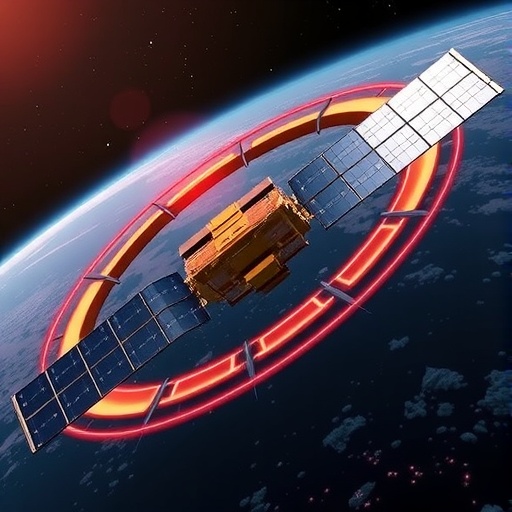
In the rapidly evolving landscape of space exploration, maintaining the orbits of low Earth orbit (LEO) satellites has become an increasingly critical task. The intricate dance of these satellites in their predefined paths is essential for various applications such as telecommunications, weather forecasting, and scientific research. Yet, as these satellites age and face the harsh realities of their environment, they often encounter a phenomenon known as the loss of effectiveness. This occurs when their propulsion systems, often reliant on various types of thrusters, begin to underperform. The implications of such deterioration can jeopardize not only the functionality of the satellites themselves but also the vast array of services they provide to humanity.
To address the challenges posed by the loss of effectiveness in satellite thrusters, researchers are turning towards robust model predictive control (RMPC) strategies. This innovative approach allows for more accurate predictions and adjustments to be made in real time, providing a framework for more efficient orbit maintenance. In their groundbreaking study, Rahimi, Jahangiri, and Abedi delve into the application of Hall-effect thrusters—a type of electric propulsion system—and the methodologies for counteracting the effects of performance degradation. These thrusters have gained popularity in recent years due to their efficiency and ability to provide controllable thrust over extended periods.
The motivation behind utilizing robust model predictive control stems from the need to maintain optimal orbit trajectories despite the variances and uncertainties that may arise from thruster degradation. The authors meticulously outline the intricacies of designing RMPC algorithms that can withstand such disturbances. By incorporating model dynamics, they demonstrate how predictive controls can be engineered to adaptively modify thrust levels. This responsiveness to changing conditions is paramount in ensuring that LEO satellites remain in their designated orbits, thus fostering the reliability of critical services reliant on these orbiting technologies.
Moreover, the study highlights the importance of simulating various loss of effectiveness scenarios encountered by Hall-effect thrusters. Implementing these simulations allows the researchers to analyze their proposed control designs under real-world conditions. The outcomes of such assessments are vital, as they reveal the strengths and potential weaknesses of the RMPC strategies when faced with unforeseen events or diminished thruster performance. Through relentless testing and refinement, Rahimi, Jahangiri, and Abedi are paving the way for a future where satellites can effectively navigate the cosmos, even when their propulsion systems falter.
A significant aspect of this research is its alignment with sustainability practices within the aerospace sector. As space becomes more crowded with satellites, the need for effective debris management and orbit maintenance will only grow more pressing. By harnessing the power of RMPC, the authors are not only contributing to operational efficiency but also to an environmentally conscious approach to space logistics. This forward-thinking ethos reflects a growing trend in the industry that recognizes the need for sustainable technology and practices.
The implications of their findings extend beyond just technical advancements; they also prompt an essential discussion around the economic viability of implementing robust control systems in satellite management. The investment in such predictive technologies can yield substantial returns by minimizing the risk of costly satellite failures and ensuring the longevity of existing space assets. This economic argument is particularly persuasive for commercial operators who greatly depend upon the seamless operation of their satellite fleets.
Furthermore, the study emphasizes the collaborative nature of space research. The intersection of engineering, computer science, and aerospace technology exemplifies how interdisciplinary efforts can result in monumental advancements. By pooling expertise from various fields, the solutions derived from this research will undoubtedly refine the practices of orbit maintenance in a manner consistent with modern technological capabilities.
As global demands for satellite services expand, understanding and enhancing the efficiency of orbit maintenance practices become paramount. As such, the techniques described in this research will likely feed into larger frameworks aimed at optimizing satellite operations. Future missions, including those involving larger constellations of satellites, will depend on robust control strategies to manage their collective movements and mitigate risks related to uncontrolled satellite behavior.
The study by Rahimi, Jahangiri, and Abedi is set to be published in a prestigious journal, where it will contribute to the body of knowledge that informs both current and future satellite operations. Through the publication, the authors are ensuring that their work reaches a wider audience of scientists and engineers keen on advancing the conversation surrounding LEO satellite management.
These advancements undoubtedly place science at the forefront of contemporary issues surrounding space exploration and satellite functionality. With technology evolving at a staggering pace, equipping spacecraft with sophisticated controls that can accommodate unforeseen variables will be critical. These efforts are not only about solving immediate problems but also about preparing for the challenges that lie at the boundary of our atmosphere.
In conclusion, the work put forth by Rahimi, Jahangiri, and Abedi represents a critical step toward preserving the operational integrity of LEO satellites amid challenges posed by aging thrusters and performance decline. Their innovative approach using robust model predictive control offers a glimpse into the future of satellite orbit maintenance, promising enhanced reliability and operational longevity. As we look ahead, it is clear that the methods developed in this research will serve as a vital resource for not just engineers and researchers, but also for the myriad of industries reliant on satellite technology and services.
Subject of Research: Orbit maintenance of LEO satellites with Hall-effect thrusters.
Article Title: Orbit maintenance of LEO satellites with Hall-effect thrusters subjected to loss of effectiveness using robust model predictive control.
Article References:
Rahimi, H., Jahangiri, F. & Abedi, M. Orbit maintenance of LEO satellites with Hall-effect thrusters subjected to loss of effectiveness using robust model predictive control.
AS (2026). https://doi.org/10.1007/s42401-025-00426-1
Image Credits: AI Generated
DOI: 10.1007/s42401-025-00426-1
Keywords: Robust model predictive control, Hall-effect thrusters, low Earth orbit satellites, orbit maintenance, performance degradation.
Tags: Addressing satellite performance degradationChallenges in LEO satellite operationsEnhancing satellite functionality and longevityHall-effect thrusters in spaceImpact of aging satellites on servicesInnovative strategies for satellite controlLow Earth Orbit satellite maintenanceModel predictive control in orbit maintenanceReal-time satellite orbit adjustmentsRobust control for satellitesSatellite propulsion system optimizationSpace exploration and telecommunications