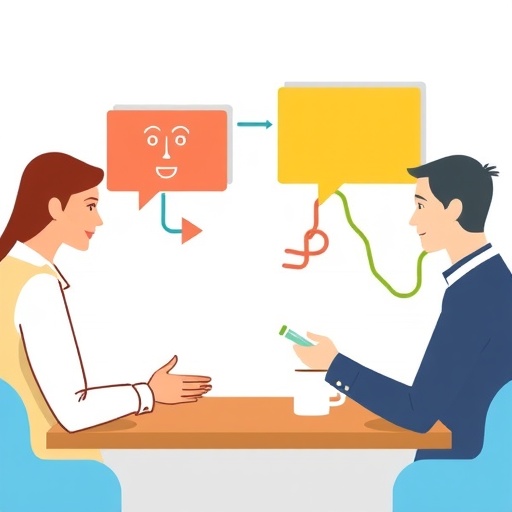
In the myriad of human experiences, the ability to understand and respond to social feedback is nothing short of fascinating. A recent study published in the journal “Adaptive Human Behavior and Physiology” by researchers Crivelli, Rovelli, and Balconi illuminates how different forms of social feedback can either elevate or diminish individual performance while simultaneously modulating psychosocial stress levels. This exploration primarily delves into the underlying neurophysiological mechanisms that drive these effects, offering new insights into the intricate relationship between social interactions and human behavior.
The implications of social feedback have been of interest to psychologists and neuroscientists for decades. Feedback from peers, whether positive or negative, can significantly influence an individual’s self-perception and performance outcomes. The study presents an innovative perspective by categorizing social feedback into distinct types that can evoke varying emotional and physiological responses. This differentiation allows researchers to understand how specific feedback affects cognitive functioning and stress response systems.
The role of neurophysiological mechanisms in processing social feedback cannot be understated. Neural pathways related to reward and punishment are activated when individuals receive feedback about their performance or behavior. For example, positive social feedback may stimulate areas in the brain associated with reward, such as the nucleus accumbens or ventral striatum, enhancing motivation and performance. Conversely, negative feedback can activate stress-related neural circuits, potentially leading to anxiety, decreased performance, and even burnout. Understanding these mechanisms is crucial considering the increasing prevalence of stress-related disorders in today’s fast-paced world.
Moreover, the findings from this exploratory study reveal that different types of social feedback can evoke varying stress responses among individuals. For instance, constructive criticism may lead to growth and resilience, while harsh negative feedback could exacerbate feelings of inadequacy and stress. This illustrates that the context and manner in which feedback is delivered play critical roles in determining its psychological impact. The researchers emphasize that recognizing the nuances of social feedback is essential for optimizing performance in both educational and occupational settings.
Another significant aspect of the study is the concept of feedback loops in social dynamics. The interaction between individuals and their social environment can create a cycle of feedback that either builds or erodes confidence. For instance, a supportive feedback loop may foster better performance and enhance well-being, while a negative feedback loop could contribute to a decline in individual potential. Thus, the study underscores the importance of fostering an environment where constructive feedback is the norm, thereby allowing individuals to thrive.
The research also highlights how the effectiveness of social feedback is influenced by individual differences. Factors such as personality traits, past experiences, and emotional resilience can significantly shape how feedback is perceived and processed. The authors suggest that tailoring feedback to align with an individual’s specific needs and psychological makeup can maximize its positive effects. This personalized approach could lead to improved performance outcomes and reduced stress levels, particularly in competitive environments where the stakes are high.
Furthermore, the implications of these findings stretch beyond individual performance. In the realm of education, for example, educators can leverage this understanding to create learning environments conducive to growth. By utilizing positive reinforcement and constructive criticism, teachers can significantly influence student motivation and learning outcomes, paving the way for long-term academic success. In workplace settings, managers can foster a more productive culture by prioritizing supportive and transparent feedback mechanisms that cultivate employee engagement and satisfaction.
Additionally, the impact of technology on social feedback in today’s digitalized world cannot be overlooked. With social media platforms and online communication becoming ubiquitous, the manner in which feedback is shared and received has transformed dramatically. This study resonates especially within these contexts, as individuals navigate the complexities of online interactions where feedback can be instantaneous and, at times, overwhelming. Understanding the neurophysiological basis of how this feedback is processed is essential for developing strategies that mitigate negative effects and promote psychological well-being in virtual settings.
Equally important is the role of research in shaping policies that address mental health challenges linked to social feedback. Policymakers can draw from such studies to implement frameworks that promote healthier social interactions across various domains. Initiatives aimed at enhancing social support networks and encouraging constructive feedback within communities can significantly alleviate psychosocial stressors prevalent in modern society.
The findings of this research also open doors for future investigations. There is much to learn about the temporal dynamics of social feedback—how the timing of feedback impacts emotional states and performance outcomes. Additionally, further research is needed to explore the interplay between different types of feedback across diverse cultural contexts. Such inquiries can provide a more comprehensive understanding of the universal and culturally specific aspects of social feedback.
As the conversation about mental health continues to gain traction globally, studies like this highlight the critical need for increased awareness of the effects of social feedback. By fostering environments that encourage positive interactions and constructive criticism, individuals and society as a whole can better navigate the challenges of performance and psychosocial stress. This research serves as a reminder that our social interactions are not merely peripheral in our lives; they are fundamental components of our psychological landscapes, influencing our well-being in profound ways.
In conclusion, the exploratory study conducted by Crivelli, Rovelli, and Balconi represents a significant contribution to our understanding of social feedback’s multifaceted role in human behavior. By unpacking the neurophysiological mechanisms underlying feedback responses, this research offers valuable insights that can inform practices in education, workplaces, and beyond. As we seek to promote optimal performance and mental health, the significance of social feedback cannot be overstated. By harnessing its potential, we can create environments that uplift individuals and society at large, paving the way for enhanced well-being and resilience.
Subject of Research: The impact of different types of social feedback on performance and psychosocial stress.
Article Title: Different Types of Social Feedback can Enhance or Reduce Performance, and Induce or Alleviate Psychosocial Stress: An Exploratory Study of the Underlying Neurophysiological Mechanisms.
Article References:
Crivelli, D., Rovelli, K. & Balconi, M. Different Types of Social Feedback can Enhance or Reduce Performance, and Induce or Alleviate Psychosocial Stress: An Exploratory Study of the Underlying Neurophysiological Mechanisms.
Adaptive Human Behavior and Physiology 11, 3 (2025). https://doi.org/10.1007/s40750-025-00257-6
Image Credits: AI Generated
DOI: 11 January 2025
Keywords: social feedback, performance, psychosocial stress, neurophysiology, psychological mechanisms.
Tags: adaptive human behavior researchcognitive functioning and feedbackemotional responses to social feedbackhuman behavior and social interactionsinfluence of peer feedback on self-perceptionneurophysiological mechanisms of feedbackneuroscience of social feedbackpositive vs negative feedback effectspsychosocial stress and feedbackreward pathways in social interactionssocial feedback and performancestress response systems and feedback