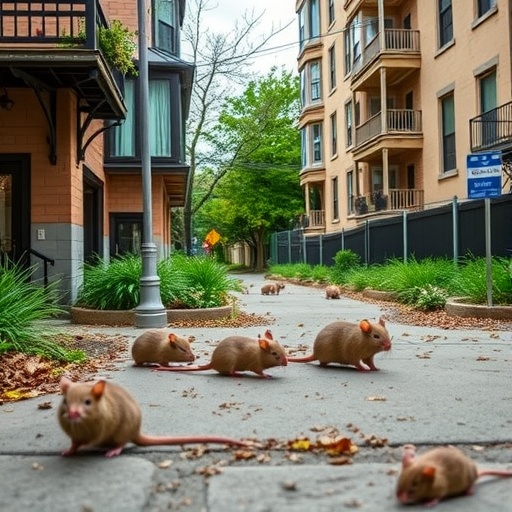
In an intriguing study published in Animal Cognition, researchers led by Mazza, Schianini, and Canestrelli have shed light on the cognitive adaptability of mice in varying environments. Their research provides compelling evidence that mice inhabiting human-disturbed areas exhibit not only faster problem-solving abilities but also enhanced behavioral flexibility compared to those residing in strictly protected habitats. This discovery raises important questions about the impact of environmental pressures on animal intelligence and behavior.
Mice are often seen as ordinary creatures, yet their problem-solving skills can be remarkably complex. The researchers set out to explore how urbanization and human interference influence these skills. The study involved a series of behavioral tests designed to challenge the cognitive capabilities of the rodents. Mice from urban areas were pitted against those from rural, protected spaces, where natural interactions were less interfered with by human activities. The results were undeniable: the urban mice performed more efficiently in solving problems.
The experimental setup included various mazes and puzzles, which demanded not only physical agility but also mental acuity for successful navigation. The researchers noted that urban mice not only completed the tasks quicker, but they also displayed innovative strategies, adapting to the challenges with a level of ingenuity that was surprising. Their readiness to tackle new situations demonstrated a form of cognitive resilience which is often overlooked in these small creatures.
Contrarily, mice from strictly protected areas tended to stick to familiar strategies, exhibiting a sort of cognitive rigidity. This might suggest that prolonged exposure to unchanging environments diminishes problem-solving flexibility in these mice. While nature may cultivate certain instincts for survival, the findings imply that adaptation to dynamic environments fosters a more agile mind. This adaptation can be crucial for survival in rapidly changing conditions, which are becoming increasingly common due to urban encroachment.
Interestingly, the researchers also discovered that the enhanced problem-solving skills of urban mice did not come without costs. The challenges posed by urbanization, such as food scarcity and increased predation from domestic pets, could potentially weigh heavily on their survival. These conditions might sharpen their cognitive skills, but they also pose significant risks. The balance of survival in human-altered landscapes highlights the complex interplay between adaptation and vulnerability.
The study raises pivotal questions regarding the evolutionary implications of such changes in behavior and intelligence. Can faster problem-solvers outlast their more cautious counterparts in a world dominated by human presence? As urban areas continue to expand, understanding these dynamics becomes crucial not only for wildlife conservation but also for the broader ecological context in which these animals exist.
Furthermore, these findings can provide insights into cognitive evolution across species. As environments shift, every species faces the dilemma of adapting or perishing. The study on mice serves as a microcosm for larger ecological trends, suggesting that intelligence is not fixed but rather a trait that can be molded by external pressures. In a rapidly changing world, the ability to think on one’s feet—quite literally, as in the case of these mice—could determine not just individual survival, but species survival as well.
The variances in cognitive flexibility observed between urban and rural rodent populations may also serve as a basis for further research into how other species respond to environmental stressors. A potential avenue for exploration could be how these cognitive adaptations manifest in other mammals or even different taxa entirely. Understanding these mechanisms could pave the way for innovative strategies in wildlife management and conservation efforts.
In addition, the implications of this research are significant for urban ecology and conservation biology. If the adaptability of certain species allows them to thrive in human-dominated landscapes, then there may be opportunities to foster a more biodiverse urban environment. On a societal level, this could inspire new wildlife conservation strategies that consider the cognitive needs of urban wildlife and their capabilities.
In conclusion, the research led by Mazza and colleagues provides not just a glimpse into the life of a mouse, but also a window into the broader implications of adaptation in an age of rapid change. The findings stress the significance of cognitive adaptability for survival in disturbed environments, highlighting how these small creatures could inform our understanding of resilience in the animal kingdom.
This groundbreaking study is a reminder of the resilience of nature and the remarkable capabilities of wildlife to adapt and thrive in a world increasingly shaped by human hands. It serves as a call to recognize the complexities of animal behavior and intelligence as we face ongoing environmental challenges and strive for a harmonious coexistence with the natural world.
Subject of Research: Cognitive adaptability and problem-solving abilities of mice in human-disturbed and protected environments.
Article Title: Quick on their paws: mice living in human-disturbed areas are faster problem-solvers than mice in strictly protected areas.
Article References:
Mazza, V., Schianini, V., Canestrelli, D. et al. Quick on their paws: mice living in human-disturbed areas are faster problem-solvers than mice in strictly protected areas.
Anim Cogn 28, 91 (2025). https://doi.org/10.1007/s10071-025-02013-5
Image Credits: AI Generated
DOI: 10.1007/s10071-025-02013-5
Keywords: Cognitive adaptability, urban wildlife, problem-solving, environmental pressures, animal behavior, resilience.