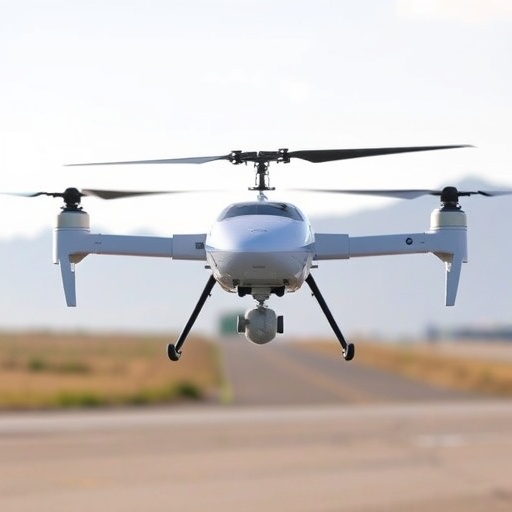
As the realm of aviation witnesses a drastic transformation towards electric vertical take-off and landing (eVTOL) aircraft, a pivotal question emerges: how does the propulsion type affect the performance and stability of these innovative flying machines? A groundbreaking study conducted by Liu, Wang, Li, and their team explores this very issue, providing a comprehensive analysis of the implications of different propulsion systems on the aerodynamic capabilities and overall cruise efficiency of eVTOL aircraft. The results could be a game-changer in shaping the future of urban air mobility.
The advent of eVTOL technology heralds a new era of aerial transport, promising to alleviate urban congestion while offering on-demand travel experiences. However, as this technology integrates into the crowded skies above urban landscapes, understanding the nuances of aerodynamic performance becomes paramount. Liu and his team meticulously details the intricacies of how propulsion systems influence flight characteristics, ensuring that the eVTOL aircraft not only are operationally effective but also safe and stable during cruise conditions.
In their comparative study, the researchers delve into a range of propulsion types, examining conventional rotor systems alongside innovative electric propulsion methodologies. Each system exhibits unique characteristics that can dramatically influence flight dynamics, including thrust generation, energy consumption, and ultimately, the ability to maintain stable flight across varying conditions. By analyzing these parameters, the researchers shed light on how the choice of propulsion can dictate performance outcomes, paving the way for optimized aircraft designs in the future.
One of the key findings of the study underscores the significance of thrust-to-weight ratio in relation to propulsion type. A higher thrust-to-weight ratio is essential for achieving efficient take-offs and maintaining stable flight, especially in densely populated areas where eVTOL operations are likely to thrive. The study indicates that electric propulsion systems, particularly those employing advanced motor technology, can provide advantageous thrust outputs which streamline operations while enhancing safety margins. This is crucial in developing an air vehicle that can handle various payload capacities and flight durations.
Cruise aerodynamic performance also requires detailed examination, as it directly correlates with passenger comfort and energy efficiency during sustained flight. Liu et al. found that specific propulsion configurations were significantly better at reducing drag, thus enhancing fuel efficiency. This reduction in drag plays a critical role in the sustainability of eVTOL operations, presenting a viable option for long-term viability in future urban transport networks. With rising concerns over environmental impact, these findings could aid in promoting greener aviation solutions.
The stability of eVTOL aircraft during cruise is vital, particularly in windy urban environments. High levels of stability are necessary for passenger safety and comfort, so understanding how different propulsion types contribute to stability is essential. The research emphasizes that certain configurations exhibit improved yaw and pitch stability, enabling the aircraft to better withstand unpredictable gusts of wind that are common in urban areas. These insights could inform regulatory frameworks as urban air mobility systems evolve.
Furthermore, the research draws attention to the varying power requirements linked to propulsion types. Electric propulsion systems, for instance, can lead to substantially lower operational costs due to the reduced energy needs, making eVTOL operations more economically feasible in the long run. This is especially pertinent for companies aiming to implement widespread aerial taxi services on a commercial scale, where cost-effectiveness becomes the backbone of a successful operational model.
The impacts of different propulsion strategies extend beyond conventional metrics of performance and stability. The study also emphasizes how advancements in technology, such as battery efficiency and motor design, play into these evaluations. Innovations in energy storage technology could lead to significant improvements in the overall effectiveness of eVTOL aircraft, enabling longer flight times with reduced environmental impacts. This paradigm shift in design principles may define future projects undertaken by aerospace engineers.
Moreover, the implications of these findings resonate not only with technical audiences but also with policymakers and urban planners who envision integrating aerial vehicles into existing transport infrastructure. By aligning on the insights gathered from Liu et al.’s study, a more comprehensive strategy can be generated to develop effective air traffic management systems that will be necessary when eVTOL operations expand.
As this research gains visibility in the public domain, it could spur further interest and investment into the electric aircraft sector. Stakeholders from various industries may rally around the prospects outlined by Liu and his team, recognizing both the economic potential and the need for responsible airspace management solutions that ensure safety while promoting innovation.
In conclusion, the study conducted by Liu, Wang, and Li underscores significant considerations for the burgeoning field of electric vertical take-off and landing aircraft. As aviation technology progresses, understanding the intricate relationships between propulsion types, aerodynamic performance, and stability will become foundational for the design of new aircraft suited to urban air mobility. This research not only propels the academic discourse forward but lays down benchmarks that future aircraft must meet to succeed in an evolving aerial landscape. The collaborative knowledge shared in this study will undeniably influence the trajectory of aviation innovations in the years to come.
Understanding the nuances and technical aspects around eVTOL propulsion choices enhances the discourse on future urban transport; as we witness integration into daily life, the boundaries of traditional transport will be further challenged. The research conducted by Liu and his team represents more than just an academic pursuit—it is a bold step toward reshaping how we perceive transportation in the skies and across our cities.
Subject of Research: Effects of propulsion type on the cruise aerodynamic performance and stability of electric vertical take-off and landing aircraft.
Article Title: Effects of propulsion type on the cruise aerodynamic performance and stability of electric vertical take-off and landing aircraft: a comparative study.
Article References:
Liu, W., Wang, X., Li, J. et al. Effects of propulsion type on the cruise aerodynamic performance and stability of electric vertical take-off and landing aircraft: a comparative study.
AS (2025). https://doi.org/10.1007/s42401-025-00421-6
Image Credits: AI Generated
DOI: 13 November 2025
Keywords: electric vertical take-off and landing aircraft, propulsion systems, aerodynamic performance, stability, urban air mobility, energy efficiency, aerospace innovation.