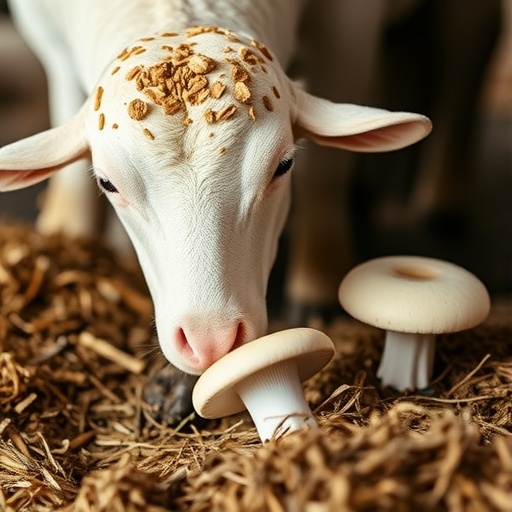
In an era where sustainability is paramount, research highlighting innovative alternatives to conventional livestock feed is becoming increasingly crucial. One such promising contender is spent mushroom substrate (SMS), the organic residue remaining after mushrooms are harvested. Recent studies, including one led by Mbambalala et al., have pointed to the potential of SMS as a viable and sustainable feed resource in ruminant nutrition. This agricultural byproduct not only presents a cost-effective solution for farmers but also aligns with global initiatives aimed at reducing waste and promoting environmental sustainability.
Spent mushroom substrate is derived from various substrates utilized in mushroom cultivation, such as straw, sawdust, and corn cobs. Once mushrooms are harvested, this substrate, which is typically disposed of or composted, retains significant nutritional value. This study elucidates its composition, emphasizing that SMS is rich in essential nutrients, including proteins, carbohydrates, and other micronutrients vital for the growth and health of ruminants. Incorporating SMS into livestock diets could enhance nutrient intake and overall animal performance, enabling farmers to maintain more efficient production systems.
The nutritional profile of SMS, particularly its protein content, can substantially benefit ruminant livestock, which require a high-fiber diet. Ruminants, such as cows, sheep, and goats, possess specialized digestive systems that enable them to convert fibrous plant materials into energy, thanks to the symbiotic relationship between the animal and the microorganisms in their rumen. SMS, being high in fiber, can boost the microbial population in the rumen, improving digestion and nutrient absorption. This synergy may translate to increased weight gain, better milk production, and overall healthier livestock.
Nutritionally, SMS can serve as a supplementary feed ingredient due to its unique amino acid profile. The study explores how the amino acids present in SMS can enhance protein synthesis in ruminants, supporting not only growth but also reproductive health. By substituting a certain percentage of conventional feed with SMS, farmers could potentially lower feed costs while maintaining, or even improving, livestock productivity. This shift could be especially beneficial for smallholders who face the dual challenge of rising feed costs and maintaining profitability.
Furthermore, the environmental implications of utilizing SMS as feed are noteworthy. Traditional feed production can contribute to significant deforestation, greenhouse gas emissions, and soil degradation. Conversely, repurposing agricultural waste such as SMS not only reduces landfill stress but also mitigates these environmental impacts. Utilizing SMS can lead to a circular agricultural economy where waste is minimized, and resources are recycled efficiently, contributing to more sustainable agricultural practices.
However, the study does not shy away from highlighting the limitations associated with using SMS in ruminant diets. One primary concern is the variability in nutrient content due to differences in mushroom species and the substrate used. This unpredictability could complicate feed formulation for livestock, as farmers need to ensure their animals receive balanced nutrition. Consequently, further research is essential to standardize SMS production and enhance its nutritional reliability for livestock feeding.
Moreover, there might be potential bioactive compounds present in SMS that could influence animal health. While some studies suggest that these compounds may offer health benefits by enhancing immunity or affecting gut flora, more extensive research is necessary to understand their effects. This aspect of SMS could pave the way for developing functional feeds that not only nourish but also improve the overall well-being of ruminants.
The availability of sufficient quantities of SMS is another critical factor that could influence its adoption in mainstream livestock feeding. Farmers would need assurance that a reliable supply of SMS is accessible if they shift to this alternative feed resource. Collaborative efforts between mushroom producers and livestock farmers could form the foundation for establishing a supply chain that supports this new feeding strategy.
As the global demand for meat and dairy products continues to rise, the pressure on existing feed resources intensifies. Exploring alternative feed solutions such as SMS can lead to innovative feeding strategies, reduce reliance on conventional feeds, and support the livestock sector in adapting to global sustainability goals. The research underscores a broader need for agricultural innovation, showcasing how waste materials can be transformed into valuable resources.
In conclusion, the potential of spent mushroom substrate as a sustainable alternative feed resource marks a promising development regarding ruminant nutrition. This study not only highlights the nutritional benefits of SMS but also promotes a more sustainable agricultural framework. The transition to using SMS could spark a significant shift in livestock feeding practices, encouraging a movement towards environmentally friendly agricultural solutions that could benefit farmers, animals, and the planet alike.
As we continue to seek viable solutions for the future of food production, research like that conducted by Mbambalala et al. serves as a reminder that the answers may already be within our grasp—in the very waste we strive to eliminate.
Subject of Research: The potential of spent mushroom substrate as a sustainable alternative feed resource in ruminant nutrition and its limitations.
Article Title: Potential of spent mushroom substrate as a sustainable alternative feed resource in ruminant nutrition and its limitations.
Article References: Mbambalala, L., Mwanda, L., Cembi, S.K. et al. Potential of spent mushroom substrate as a sustainable alternative feed resource in ruminant nutrition and its limitations. Discov Anim 3, 10 (2026). https://doi.org/10.1007/s44338-025-00148-w
Image Credits: AI Generated
DOI: https://doi.org/10.1007/s44338-025-00148-w
Keywords: Sustainable feed, spent mushroom substrate, ruminant nutrition, agricultural waste, livestock feed alternatives.
Tags: agricultural byproducts in animal feedcost-effective livestock feed optionsenhancing animal performance with SMSenvironmental sustainability in farminghigh-fiber diets for ruminantsinnovative feed solutions for sustainable farmingmushroom cultivation byproductsorganic waste recycling in agricultureruminant nutrition alternativesSMS nutritional benefits for ruminantsspent mushroom substratesustainable livestock feed