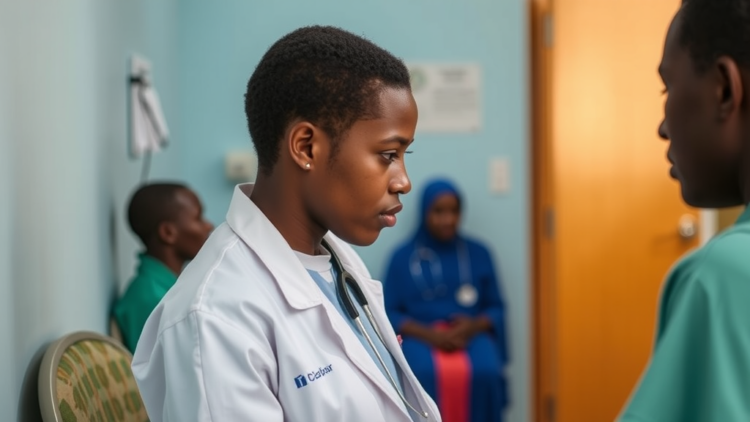
In a groundbreaking study published in the Journal of Ovarian Research, researchers led by Li, N., Chen, Y., and Zhao, W. delve into the intricate relationship between female reproductive disorders and psychiatric conditions. This pioneering research, which aims to uncover the genetic connections between these two seemingly disparate fields, opens up new avenues for understanding women’s health issues that have historically been treated separately.
The study comes at a crucial time, as mental health awareness grows and the complexity of reproductive health is increasingly acknowledged. Many women with reproductive disorders have reported experiencing various psychiatric symptoms, yet the underlying genetic factors that contribute to these comorbidities have been poorly understood. By investigating this intersection, the researchers hope to provide valuable insights that could lead to enhanced treatment options for affected individuals.
Utilizing advanced genomic analyses, the team examined a cohort of female participants suffering from conditions such as polycystic ovary syndrome (PCOS) and endometriosis. These disorders have been associated with a myriad of psychological symptoms, including anxiety and depression, yet the biological underpinnings remain largely elusive. Through their genetic investigations, the researchers aim to trace back common genetic variants that may predispose individuals to both reproductive and psychiatric conditions.
The study incorporated a multi-faceted approach, combining genome-wide association studies (GWAS) with bioinformatics tools to identify specific genetic markers. By analyzing the genomes of thousands of women, the team identified several candidate genes that appear to be involved in both female reproductive health and psychiatric resilience. This dual focus not only strengthens the understanding of each disorder but also highlights the shared pathways that could be critical in managing both health aspects.
Furthermore, the implications of this research extend beyond mere academic curiosity. With mental health issues often stigmatized and reproductive health frequently overlooked, combining these research areas could lead to more compassionate healthcare practices. The findings suggest that addressing one condition might positively affect the other, paving the way for integrated treatment strategies that consider the whole person rather than isolated symptoms.
The researchers underscore the importance of a collaborative approach in studying these interconnected health issues. Acknowledging the multifactorial nature of both reproductive and psychiatric conditions, they advocate for interdisciplinary teams that include geneticists, psychologists, and gynecologists. This perspective not only fosters a deeper understanding of the biological mechanisms at play but also encourages holistic treatment strategies that could improve patient outcomes.
One of the most compelling aspects of this research is its potential to shift the narrative around women’s health. Traditionally, reproductive health has been marginalized in discussions of overall health, especially concerning how it relates to mental well-being. By highlighting the genetic connections between these domains, the researchers are challenging long-standing perceptions and urging healthcare providers to adopt a more inclusive view of women’s health issues.
As with any research endeavor, there are limitations. The study focuses primarily on specific cohorts and relies on available genetic data, which may not represent all populations. However, the findings serve as a vital stepping stone for future investigations. By encouraging broader studies and diverse participant recruitment, researchers hope to build upon these initial findings and develop a more comprehensive understanding of the genetic architecture that unites these conditions.
Anticipated advancements in personalized medicine could arise from the outcomes of this study as well. With further validation of the identified genetic markers, it may be possible to tailor interventions based on an individual’s predisposition to either reproductive or psychiatric disorders. Such targeted approaches could revolutionize treatment paradigms, ultimately enhancing the quality of life for countless women nearing reproductive age or experiencing reproductive challenges.
In summary, the research conducted by Li, N. and colleagues is a significant step forward in the quest to understand the complex interplay between female reproductive disorders and psychiatric conditions. The findings not only shed light on the shared genetic architecture between these health challenges but also advocate for a more integrated approach to treatment and management. As the research community continues to explore these avenues, it opens up promising opportunities for better health outcomes for women everywhere, redefining the interfaces between reproductive health and mental well-being.
By publishing their findings, the research team invites further inquiry and collaboration in this field, urging others to join them in deciphering the complex genetic codes that govern not only individual health but collective well-being. As they look toward future research endeavors, the hope is that their work will spark a broader investigation into the biological interconnections that highlight the importance of holistic healthcare strategies for women.
In the realm of women’s health, this study represents a critical examination of multiple systems and a clarion call for interdisciplinary approaches moving forward. With researchers actively engaging in this frontier, they are not only contributing to scientific knowledge but also working towards a future where women’s health issues are addressed more thoroughly and compassionately.
As this research gains attention within the scientific community and beyond, it serves to raise awareness about the often-overlooked ties between mental health and reproductive health. Critics of the traditional compartmentalization of health issues may find their arguments bolstered by this novel research, inspiring a more connected understanding of the human body and its myriad functions.
In conclusion, the shared genetic architecture documented in this study adds a vital piece to the burgeoning puzzle of women’s health. The ramifications of their findings could transcend academic interest, potentially influencing healthcare policies and practices worldwide. As this research continues to unfold, the path toward recognizing and addressing the complexities faced by women will hopefully grow clearer, leading to innovative solutions for improving lives and fostering well-being in the process.
Subject of Research: Shared genetic architecture between female reproductive disorders and psychiatric disorders
Article Title: Deciphering the shared genetic architecture between female reproductive disorders and psychiatric disorders
Article References:
Li, N., Chen, Y., Zhao, W. et al. Deciphering the shared genetic architecture between female reproductive disorders and psychiatric disorders.
J Ovarian Res (2026). https://doi.org/10.1186/s13048-026-01970-w
Image Credits: AI Generated
DOI: 10.1186/s13048-026-01970-w
Keywords: female reproductive disorders, psychiatric disorders, genetic architecture, mental health, women’s health, genome-wide association studies, integrated treatment strategies
Tags: advanced genomic analyses in women’s healthcomorbidity of reproductive and psychiatric disordersendometriosis and mental health challengesfemale reproductive health issues and psychiatric symptomsgenetic connections between reproductive disorders and mental healthgenetic variants linked to reproductive and psychiatric conditionsgroundbreaking research on women’s health disordersinsights into treatment for reproductive disordersintersection of reproductive health and mental illnessmental health awareness and reproductive healthpolycystic ovary syndrome and psychological effectsunderstanding women’s health through genetics