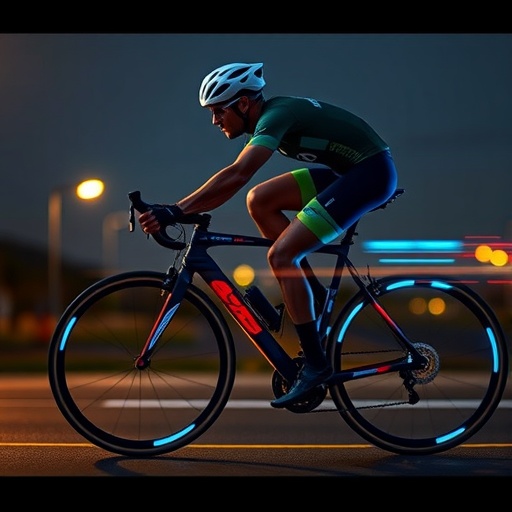
In the realm of sports science, a groundbreaking study has emerged, leveraging the latest advancements in electrical impedance tomography (EIT) to enhance athletic performance, specifically addressing the needs of cyclists. The research, conducted by a team led by D. Furukawa, along with co-authors K.A. Ibrahim and T. Shirai, has unveiled an innovative approach called Conductive Response Imaging (CRI) that provides real-time insights into the physiological conditions of thigh muscle compartments. This novel application aims to optimize bicycle training strategies, potentially revolutionizing how athletes tailor their workouts.
Electrical impedance tomography offers a non-invasive technique that visualizes internal biological processes by measuring electrical conductivity across tissues. Thigh muscles, which play a crucial role in cycling performance, are a prime target for this technology. By analyzing how electrical currents interact with particular muscle compartments, researchers can infer muscle composition, hydration levels, and even changes related to fatigue or strain during rigorous training sessions. This methodological advancement allows for a much deeper understanding of muscular function and its implications for performance enhancement.
SLegal constraints limit personal monitoring in competitive sports. This innovative approach suggests the possibility of a more sophisticated understanding of muscular health and performance. Traditionally, athletes have relied on subjective assessments and generalized training regimens, often leading to suboptimal results and increased risk of injury. The introduction of CRI could signal a shift towards a more individualized and data-driven paradigm in athletic training, where decisions are based on real-time muscle data rather than intuition or guesswork.
Findings from this research indicate that CRI can detect variations in muscle conditions that were previously undetectable with standard training assessments. For example, cyclists often face challenges related to muscle fatigue that can compromise both performance and recovery. With CRI, trainers can monitor these muscle compartments continuously, identifying the onset of fatigue and adjusting training loads accordingly. This approach could minimize injuries and improve overall performance, enabling athletes to maximize their potential.
Moreover, the study has implications beyond professional athletes. The ability to track muscle responses in amateur cyclists could democratize access to advanced training techniques. Individuals pursuing cycling for fitness could benefit from the same insights that elite athletes enjoy, ultimately fostering a broader interest in the sport and encouraging healthier lifestyles. The potential for wider application of this technology could inspire a new generation of riders, transforming how both casual and competitive cyclists approach their training regimens.
The adoption of CRI technology also raises questions about the future of athletic personal monitoring devices. As this study suggests, integrating such innovative techniques into wearable technology could revolutionize how data is captured and interpreted. Future developments could make CRI accessible to athletes of all levels, promoting an era where personalized training strategies become the norm. The convenience of having insights at one’s fingertips could further encourage adherence to training plans and foster community among cyclists.
Aside from cycling, the principles of electrical impedance tomography have potential applications in various fields, including rehabilitation, physical therapy, and general health monitoring. Understanding muscle compartment responses opens new avenues for recovery strategies, providing actionable data to tailor rehabilitation protocols after injuries. As researchers continue to explore EIT’s capabilities, it may lead to breakthroughs in treating muscular and neuromuscular disorders, further assisting patients in their recovery journey.
The collaborative efforts of Furukawa and his team signal an exciting juncture in the intersection of sports science, technology, and health. Their findings not only highlight the effectiveness of CRI in enhancing athletic performance but also underscore the broader implications of applying advanced imaging techniques to other domains. This research paves the way for future studies that could refine and improve athletic training protocols across various sports.
As the world of competitive cycling evolves, adopting novel technologies like CRI will likely become essential for athletes striving for an edge. The opportunity to visualize and respond to muscle performance in real-time offers a compelling advantage, combining technology with human athleticism. Future competitions may increasingly rely on such integrated approaches, culminating in an era where data-driven strategies become inseparable from athletic success.
In summary, the introduction of Conductive Response Imaging in cycling training is a significant step forward in sports science. By harnessing the power of electrical impedance tomography, athletes can gain unprecedented insights into their muscular health. This innovative approach promises to transform training methodologies, making them more tailored and effective while paving the way for broader applications across health and wellness.
The implications of this research are vast, suggesting a future where not only athletes but also the general population can benefit from advanced monitoring techniques. As technology continues to intertwine with human performance, we stand on the brink of a new age in sports training, one where informed decisions based on real-time data ultimately lead to unprecedented levels of achievement and health.
The journey toward integrating advanced methodologies like CRI into everyday training regimens will undoubtedly take time, but the implications for future athletic performance are immense. With growing interest from both the scientific community and athletic organizations, the research could set the stage for essential innovations in sports training and rehabilitation, carrying us into a new frontier of understanding the human body under physical exertion. As we progress, one thing is clear — the fusion of technology and sport will continue to change how we perceive and attain athletic excellence.
Subject of Research: Conductive Response Imaging in Thigh Muscle Compartments for Bicycle Training Strategy
Article Title: Conductive Response Imaging in Thigh Muscle Compartments by Electrical Impedance Tomography for Efficient Bicycle Training Strategy
Article References:
Furukawa, D., Ibrahim, K.A., Shirai, T. et al. Conductive Response Imaging in Thigh Muscle Compartments by Electrical Impedance Tomography for Efficient Bicycle Training Strategy. Ann Biomed Eng (2026). https://doi.org/10.1007/s10439-026-03988-z
Image Credits: AI Generated
DOI: https://doi.org/10.1007/s10439-026-03988-z
Keywords: Electrical impedance tomography, Conductive Response Imaging, athletic performance, cycling training, muscle monitoring, injury prevention, personalized training strategies.
Tags: athletic performance enhancementbicycle training optimizationconductive response imaging technologyElectrical impedance imagingfatigue assessment in cyclinghydration monitoring in athletesinnovative training strategies for cyclistsmuscle composition analysisnon-invasive sports science techniquesreal-time physiological insightssports science research advancementsthigh muscle physiology