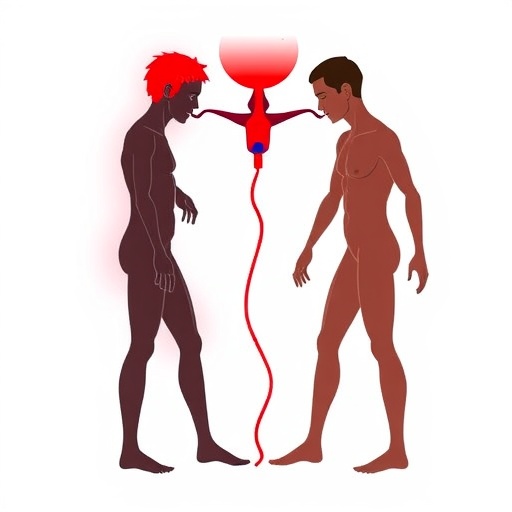
Recent advancements in the understanding of human sexuality have taken a remarkable turn as researchers delve into the intricate role of gonadal hormones in shaping sexual orientation. A groundbreaking study published in “Adaptive Human Behavior and Physiology” details how these hormones may influence the sexual preferences of individuals. The investigation, led by Swift-Gallant, Aung, and Rosenfield, provides compelling insights into the complex interplay between biology and sexuality, offering a fresh perspective on a topic that has long intrigued scientists and the public alike.
The research identifies that gonadal hormones, traditionally recognized for their roles in reproductive health, may also have far-reaching effects on sexual orientation. This notion challenges the conventional view that sexual orientation is a purely psychological or social construct. Instead, it posits that biological factors — specifically hormonal levels during critical developmental periods — may play a pivotal role in determining sexual preferences. Such insights could provide a physiological basis for understanding the spectrum of human sexuality that exists beyond the binary classification.
Preliminary findings from the investigation indicate that variations in hormone levels, particularly during prenatal and early postnatal periods, might predispose individuals to specific sexual orientations. Although the study emphasizes the complexity of human sexuality, it opens up discussions for further research into how hormonal fluctuations could relate to variations in sexual identity and preferences later in life. The interplay of hormones and sexuality is not only a topic of academic interest but also possesses profound implications for public policy and social attitudes towards sexual diversity.
As scientists continue to unravel the mysteries of human attraction, the findings suggest that individuals may not have as much control over their sexual orientation as previously thought. This realization could transform societal views on LGBTQ+ issues, lending more credence to the idea that sexual orientation is not a choice, but rather a fundamental aspect of human identity influenced by biological factors.
Moreover, Swift-Gallant and colleagues’ assertions have sparked a broader conversation about the significance of biological research in understanding social phenomena. By examining the underlying biological mechanisms, researchers may develop a more nuanced appreciation of how individuals navigate their sexual identities in the contemporary world. This study emphasizes the need for interdisciplinary approaches that blend biology, psychology, and sociology to create a holistic understanding of human behavior.
In addition to its implications for societal norms, the research raises poignant questions concerning public health and education. Understanding the biological underpinnings of sexual orientation could lead to more informed discussions surrounding mental health, sexual health education, and the support systems available for LGBTQ+ individuals. Ignorance surrounding the biological aspects of sexuality can perpetuate stigma and discrimination, highlighting the necessity for evidence-based approaches in public discourse.
Furthermore, the revelations from this study serve to challenge the stigma that often accompanies varying sexual orientations. By framing sexual orientation within a biological context, it becomes evident that diversity in sexual attraction is a natural variation of human experience. This paradigm shift can contribute to eradicating harmful myths and stereotypes that suggest non-heteronormative orientations are abnormal or deviant.
Alongside the hormonal focus, the study encourages scholars to explore the influence of environmental factors on sexual orientation, taking into consideration familial, cultural, and societal impacts. It poses the possibility that while biology plays a critical role, environmental elements during key developmental experiences can further refine or alter hormonal influences. A synthesis of these perspectives will likely reveal a comprehensive landscape of human sexuality that respects both innate drives and external factors.
This study not only enhances academic understanding but also offers validation to individuals questioning their identities. By acknowledging the biological components that influence sexual orientation, it can promote self-acceptance and understanding among those within the LGBTQ+ community. As societies evolve and diversify, recognizing the legitimacy of various sexual orientations as part of the human experience fosters an inclusive environment for all.
As public discourse shifts towards acceptance and understanding, researchers are encouraged to pursue further studies that build on these findings. The complexity of human sexuality cannot be understated, and the exploration of hormonal influences represents an intriguing frontier in social, psychological, and biological research. By investigating these avenues, scholars can continue to challenge misconceptions and promote a scientifically grounded understanding of sexual orientation that resonates with both the academic community and the general public.
The need for education on these findings is paramount, as society grapples with entrenched notions of sexuality. Fostering a dialogue that integrates scientific discovery with educational initiatives can pave the way for meaningful societal change. Workshops, seminars, and discussions that center on such research can empower individuals with knowledge and affirm that sexual orientation is a multifaceted aspect of human life rooted in both biology and environment.
In summary, Swift-Gallant et al.’s research delineates a crucial link between gonadal hormones and sexual orientation, prompting a reassessment of previously held beliefs about sexuality’s origins. As exploration in this field progresses, it is vital to promote an informed perspective that embraces biological variance and acknowledges the diversity inherent in human sexuality. This approach not only contributes to academic inquiry but also fosters societal acceptance, helping individuals understand themselves and one another in a world that continues to evolve.
Subject of Research: Influence of Gonadal Hormones on Human Sexual Orientation
Article Title: Organizational Effects of Gonadal Hormones on Human Sexual Orientation
Article References:
Swift-Gallant, A., Aung, T., Rosenfield, K. et al. Organizational Effects of Gonadal Hormones on Human Sexual Orientation.
Adaptive Human Behavior and Physiology 9, 344–370 (2023). https://doi.org/10.1007/s40750-023-00226-x
Image Credits: AI Generated
DOI: 10.1007/s40750-023-00226-x
Keywords: Gonadal Hormones, Sexual Orientation, Human Behavior, Biological Determinants, LGBTQ+ Studies, Sexual Diversity.
Tags: biological influences on sexualitycomplex nature of sexual orientationcritical developmental periods and sexual orientationgonadal hormones and sexual orientationhormonal dynamics in human sexualityhormonal impact on sexual preferencesimplications of hormone research on LGBTQ+ understandinginterplay between biology and sexualityprenatal hormone levels and sexualitypsychological vs biological factors in orientationreproductive health and sexual identitysexual orientation research advancements