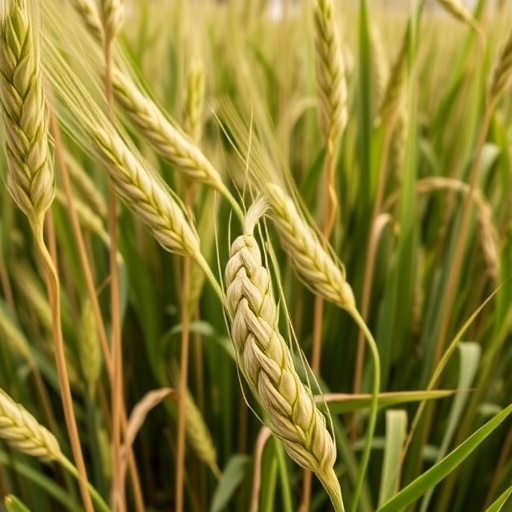
In a groundbreaking study, researchers have embarked on an ambitious genome-wide association study (GWAS) aimed at unraveling the complex genetic architecture underlying agronomic traits that influence malt quality in Ethiopian barley germplasm, scientifically known as Hordeum vulgare L. This research is particularly significant, given that barley is a staple crop in Ethiopia, integral to the nation’s agricultural landscape and economy. The study highlights the application of modern genomic tools to enhance barley cultivation strategies, paving the way for improvement in both yield and quality.
The researchers, led by Babiye and supported by co-authors Negawo and Ejerso, recognized the critical need for better understanding the genetic factors that contribute to malt quality. Malt quality is paramount for brewing and distilling industries, making its enhancement vital for both local consumption and international trade. Yet, the genetic determinants of these traits, especially in the diverse Ethiopian barley varieties, have remained poorly characterized.
To achieve their objectives, the team employed a comprehensive GWAS approach, analyzing an extensive collection of barley germplasm from various Ethiopian regions known for their unique climatic and agricultural conditions. By focusing on these specific local varieties, they aimed to capture the genetic diversity that exists within Ethiopian barley, which is crucial for identifying traits linked to malt quality. This research not only advances barley science but also addresses food security and economic stability in Ethiopia.
The study identified a multitude of single nucleotide polymorphisms (SNPs) associated with key traits influencing malt quality, including grain size, protein content, and enzyme activity. By systematically linking these SNPs to phenotypic traits, the researchers contributed a detailed map of genetic markers that breeders can use for marker-assisted selection. This technique significantly speeds up the breeding process, allowing for the accelerated development of barley varieties with desirable malt qualities.
One exciting aspect of this research is its potential to enhance the resilience of barley crops against climate change. As the global climate continues to shift, creating more extreme weather patterns, the ability to breed barley varieties that can thrive under these conditions becomes increasingly important. The genetic insights provided by the GWAS could enable the development of barley varieties that are not only higher in quality but are also better suited to withstand environmental stresses.
The implications of this study stretch beyond just contemporary production techniques; they also resonate deeply within the cultural fabric of Ethiopia. Barley holds a special place in Ethiopian heritage, being utilized in traditional dishes and local alcoholic brews. As such, improvement in barley quality has the potential to uplift local communities, providing better income opportunities for farmers and enhancing food security for consumers.
A key finding of the study was the identification of specific genes that regulate malt-related traits. These genes may hold the secret to unlocking new pathways for barley breeding programs. The research team has laid the groundwork for future studies that can delve deeper into the physiological and biochemical mechanisms behind these traits. By corroborating genetic data with functional studies, researchers can develop a more robust understanding of malt quality determinants.
Furthermore, the use of advanced bioinformatics tools allowed for a meticulous analysis of the barley genome, creating a rich compendium of data that is publicly available for researchers in the field. This open-access approach is crucial for fostering collaboration and innovation in barley research, as it enables other scientists to build upon the findings of this transformative study.
In the grander scheme of agricultural research, this GWAS is representative of a larger shift toward genomics-driven strategies in crop improvement. As other staple crops face similar challenges in yield and quality due to climate change and increasing global demand, methodologies from this study could be adapted to enhance a variety of crops worldwide. This underscores the universal relevance of such research and its implications for global food security.
As societies increasingly prioritize sustainable agricultural practices, the insights gained from this research emphasize the importance of preserving genetic diversity within crops. The Ethiopian barley collection serves as a repository of potentially beneficial traits that could be harnessed to tackle future agricultural challenges. This understanding can empower local farmers to cultivate varieties that not only meet market needs but also adapt to their specific environmental conditions.
In conclusion, this genome-wide association study stands as a monumental step forward in barley research, with significant implications for malt quality improvement and sustainable agricultural practices. The commitment to harnessing genomic advancements for better crop outcomes reflects a promising future for both Ethiopian farmers and the international barley market. By combining traditional agricultural knowledge with modern genomic tools, this research embodies a holistic approach to addressing the challenges faced by global agriculture in the face of rapid change.
As the study finds its place in scientific discourse, one can envision a scenario where the enhanced malt quality of Ethiopian barley sets a new standard in the brewing industry, making Ethiopian products more competitive on the global stage. With ongoing support and collaboration among research institutions, farmers, and the agricultural industry, the aspirations set forth in this study can become a tangible reality.
Subject of Research: Genome-wide association study on malt quality in Ethiopian barley germplasm.
Article Title: Genome-wide association study of pre-indicative agronomic traits affecting malt quality in Ethiopian barley (Hordeum vulgare L.) germplasm.
Article References:
Babiye, B., Negawo, A.T., Ejerso, W.F. et al. Genome-wide association study of pre-indicative agronomic traits affecting malt quality in Ethiopian barley (Hordeum vulgare L.) germplasm.
BMC Genomics (2026). https://doi.org/10.1186/s12864-026-12555-8
Image Credits: AI Generated
DOI:
Keywords: Barley, malt quality, genome-wide association study, Ethiopia, genetic diversity, agronomic traits.
Tags: agricultural impact of barley in Ethiopiabarley yield and quality enhancementbrewing industry and malt qualityeconomic importance of Ethiopian barleyenhancing barley cultivation strategiesEthiopian barley germplasm analysisgenetic architecture of barley traitsgenome-wide association study in barleylocal barley varieties genetic diversitymalt quality improvement for brewingmalt quality traits in Ethiopian barleymodern genomic tools in agriculture