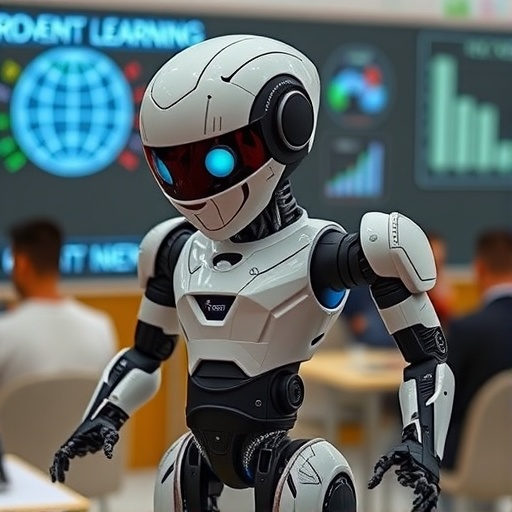
In the rapidly evolving landscape of artificial intelligence and robotics, recent research has shed light on a transformative aspect of human-robot interaction: the influence of robot learning on human educators. This concept, which bridges the gap between machine capabilities and human expertise, is explored in a significant study titled “The effects of robot learning on human teachers for learning from demonstration” by Hedlund-Botti, Schalkwyk, Johnson, et al. Published in the esteemed journal Autonomous Robots, this research delves into how robots can enhance the teaching methodologies employed by human instructors, particularly in contexts that leverage learning from demonstration (LfD).
At its core, the study examines the potential for robots equipped with advanced learning algorithms to assist teachers by processing and interpreting complex instructions provided during demonstration sessions. This is particularly relevant in settings where instructional contexts change rapidly, requiring educators to adapt their teaching strategies dynamically. The authors argue that robots, when designed with the capability to learn from human interactions, can help alleviate some of the burdens placed on teachers, enabling them to focus on higher-level pedagogical tasks.
The research showcases how robots, through iterative learning processes, can refine their understanding of instructional material and pedagogical techniques based on real-time feedback from educators. This results in a symbiotic relationship where both parties—robots and teachers—enhance one another’s capabilities. By giving teaching staff a partner that continuously learns and adapts, the overall educational experience becomes richer and more effective for students.
One of the key advancements highlighted in the study is the development of algorithms that allow robots to better analyze and mimic human behaviors. These algorithms enable the machines to not only recognize the task at hand but also to interpret the nuances of human teaching methods. The focus is on a dual-loop learning process where robots learn from past experiences while incorporating user feedback, thereby improving their performance over time. The implications for this are profound, especially in complex disciplines where hands-on instruction is necessary, such as robotics education itself.
As robots begin to take an active role in the classroom, ethical considerations become crucial. The human-robot interaction must be built on principles that ensure students receive quality education while also addressing the social dynamics at play. The integration of robotic systems in educational ecosystems prompts discussions around dependency on technology, the role of the teacher, and the importance of interpersonal connections within learning environments.
Moreover, the research underscores the importance of developing robots capable of emotional intelligence—an area that has often been overlooked in the realm of robotic design. Understanding and responding to students’ emotional needs can significantly enhance the effectiveness of robotic teaching assistants. When robots can recognize when a student is struggling or disengaged, they can adapt their instructional methods accordingly, providing personalized learning experiences that traditional models often lack.
The study also brings to light the potential for robots to serve as role models in situations where human educators may not be available, such as in remote learning scenarios. This capability emphasizes the versatility of robotic technologies and their role in expanding access to education, particularly in under-resourced areas. Through the lens of this research, we envision classrooms where robots serve not only as aides but also as integral components of the educational landscape.
A pivotal aspect of the study comes from the analysis of data collected during teacher-robot interaction sessions. The findings indicate that teachers who engaged with learning-enabled robots reported feeling more empowered in their roles. Their insights were not just limited to the immediate context of the robot’s assistance but extended into general teaching practices and methodologies. This influence highlights the importance of integrating technology in ways that enhance rather than disrupt established educational paradigms.
Importantly, the implications of this research are not confined to education alone. As robots increasingly enter various spheres of human activity, understanding how they affect human performance and decision-making becomes essential. The insights from this study can be applied to multiple domains, including healthcare, where robotic companions can assist with everything from patient care to administrative tasks, thereby allowing human professionals to focus on more critical aspects of their work.
In conclusion, as we advance into an age where human and robotic intelligences coalesce, studies such as this one underscore the transformative potential of machine learning in educational settings. The collaborative frameworks established between robots and teachers not only pave the way for innovative teaching strategies but also foster a deeper understanding of how technology can serve humanity’s best interests. By enhancing the teaching and learning experiences, robots may ultimately redefine the future of education, presenting endless possibilities for collaboration and growth.
This crucial research lays the groundwork for future exploration into the vast potential of collaborative learning environments and the role of robots as educational partners. As educators continue to navigate the intricacies of technology integration, finding a balance between human insight and robotic precision will be key in shaping the classrooms of tomorrow.
Ultimately, the journey to redefine education involves a collective effort from researchers, educators, technologists, and policymakers to create a collaborative future where both humans and robots thrive together in pursuit of knowledge and understanding.
Subject of Research: The influence of robot learning on human teachers in learning from demonstration.
Article Title: The effects of robot learning on human teachers for learning from demonstration.
Article References:
Hedlund-Botti, E., Schalkwyk, J., Johnson, M. et al. The effects of robot learning on human teachers for learning from demonstration.
Auton Robot 49, 33 (2025). https://doi.org/10.1007/s10514-025-10216-5
Image Credits: AI Generated
DOI: 23 October 2025
Keywords: Robot learning, human-robot interaction, educational technology, learning from demonstration, pedagogical improvement.
Tags: adaptive teaching strategies with robotsadvanced algorithms in education technologydynamic instructional contexts in teachingenhancing teacher efficiency with robotsfuture of robotics in human educationhuman-robot interaction in classroomsimpact of robots on teaching methodslearning from demonstration in roboticspedagogical support from artificial intelligencereal-time feedback in robot learningrobot learning in educationtransformative effects of AI on education