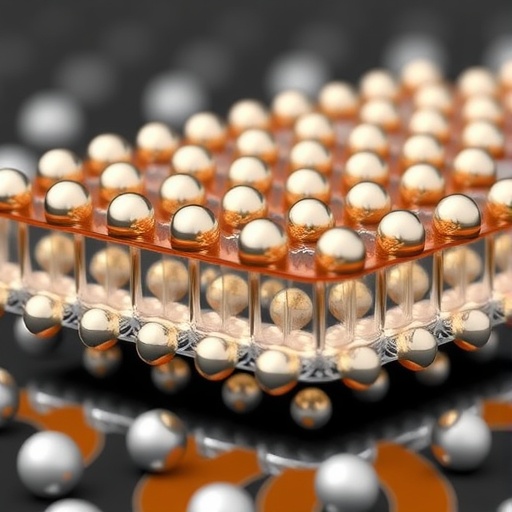
Recent advancements in organic electronics have highlighted the importance of high-performance materials for the development of next-generation transistors. A study published in Nature Electronics sheds light on the metallic charge transport properties of a newly synthesized conjugated molecular bilayer known as Ph-BTBT-C10. Researchers led by Lu et al. revealed how these materials can be processed and characterized to extract superior electrical performance, paving the way for more efficient and versatile electronic devices.
The journey of Ph-BTBT-C10 fabrications began with meticulous sample preparation techniques. Silicon substrates with a thin oxide layer were carefully cleaned through a sonication process employing acetone and isopropanol solutions. This critical step eliminates impurities that could potentially disrupt the film growth process. The researchers then dissolved Ph-BTBT-C10 in anisole, heating the mixture to 80 °C for ten minutes, ensuring a complete dissolution of the material. This solution was drop cast onto the silicon substrate, allowing for the formation of high-quality crystalline films via slow crystallization at room temperature.
Once the pristine crystalline structures were established, the team proceeded to convert these into SmE Ph-BTBT-C10 samples, employing a heating method at 150 °C. The meticulous processing of this material is essential, as it significantly affects the film quality, enhancing the charge transport properties through optimized structural integrity. The research emphasizes how crucial sample preparation is, as even subtle changes can influence the final characteristics of the electronic devices.
The next phase in their investigation involved the fabrication of Ph-BTBT-C10 transistors. Utilizing shadow mask techniques, the team designed transistors with defined channel lengths, carefully measuring the distances between voltage-sensing electrodes. With the implementation of gold electrodes, evaporated at a low rate to minimize diffusion issues, the configuration ensured the reliability of the measurements that would follow. The thin 40-nm gold layer was deposited with precision, combining both slow and faster evaporation rates to confine diffusion effectively, promoting ideal electrical contact with the organic semiconductors.
Electrical characterizations were conducted in a controlled vacuum environment, allowing for detailed examination of transfer and output characteristics across a wide temperature range. The experimental setup included a sophisticated Agilent B1500 semiconductor parameter analyzer, showcasing the advanced techniques implemented for accurate data collection. The researchers utilized a cooling-down process to observe the metal-insulator transition, revealing the fascinating temperature-dependent behaviors of Ph-BTBT-C10 when subjected to external electric fields.
In addition to this, Hall effect measurements were performed within a specialized He-gas-exchanged cryostat, which further probed the material’s charge transport properties under various magnetic field configurations. These measurements delivered comprehensive insights into the longitudinal and transverse voltage components, contributing to a deeper understanding of the mechanisms underlying charge movement through the material. The meticulous arrangement of equipment ensured that high-quality data was obtained, affirming the reliability of the findings.
To understand the intricate structural characteristics of Ph-BTBT-C10, the team employed advanced imaging techniques. Atomic Force Microscopy (AFM) played a pivotal role in analyzing surface morphology, with high-resolution images shedding light on the nanoscale features of the films. Furthermore, Grazing Incidence Wide-Angle X-ray Scattering (GIWAXS) measurements provided further crystallographic insights, demonstrating how the molecular packing impacts electronic properties. The integration of these high-resolution techniques contributes robustly to characterizing the films’ structure and topology.
A significant part of the study revolved around the extraction of carrier mobility, a fundamental parameter influencing device performance. Traditional methods fall short for systems displaying non-linear transfer characteristics, leading the researchers to employ a method derived from Hofstein’s original work. This novel approach enhanced accuracy by reducing reliance on derivative calculations, capturing the nuanced complexities of the relationship between gate voltage and carrier mobility more effectively than conventional techniques. By implementing this robust measurement, the study established a clear linkage between device characteristics and fundamental charge transport dynamics.
Temperature-dependent photoluminescence and Raman spectroscopy measurements provided complementary perspectives on the electronic properties of Ph-BTBT-C10. Employing an ytterbium-doped laser, researchers assessed steady-state and time-resolved photoluminescence under vacuum conditions, achieving temperature stabilization to facilitate accurate observational studies. The integration of distinct laser wavelengths highlighted how structural features interact with electronic properties, enhancing the understanding of exciton dynamics within the material.
Density Functional Theory (DFT) calculations further enriched the findings, allowing researchers to predict and analyze the electronic structures and charge density distributions within Ph-BTBT-C10. By employing advanced computational models, they were able to simulate molecular configurations and their resulting charge transport capabilities. This theoretical backing complements the experimental observations, offering a holistic view of how the material’s structure critically influences its electronic behavior.
The exploration of Ph-BTBT-C10 significantly advances the field of organic electronics, showcasing the potential for improved performance through careful processing and characterization techniques. Understanding the charge transport mechanisms within these materials is crucial for optimizing transistor designs, especially as industries pivot towards organic compounds in electronic applications. This comprehensive investigation into the properties of conjugated molecular bilayers represents a pivotal step towards realizing fully functional and scalable organic electronic devices in the very near future.
The study exemplifies both the challenges and the innovations at the forefront of materials science, where meticulous attention to detail can yield transformative results. As organic electronics continue to attract interest for sustainable and flexible applications, findings related to Ph-BTBT-C10 may lead to breakthroughs, encouraging the development of next-generation materials critical for advancing the electronic landscape. Research, such as this, holds promise not just in academic domains, but also in practical industrial applications, where the demand for efficient semiconductor technologies remains paramount.
In sum, the exploration of metallic charge transport in conjugated molecular bilayers such as Ph-BTBT-C10 reveals a landscape ripe with possibilities. As researchers continue to unlock the potential of organic materials, they pave the way for a future characterized by smarter, more efficient technologies that could revolutionize the interface between the digital and physical worlds.
Subject of Research: Charge transport properties of conjugated molecular bilayers in organic electronics.
Article Title: Metallic charge transport in conjugated molecular bilayers.
Article References:
Lu, K., Li, Y., Wang, Q. et al. Metallic charge transport in conjugated molecular bilayers. Nat Electron (2026). https://doi.org/10.1038/s41928-025-01553-5
Image Credits: AI Generated
DOI: https://doi.org/10.1038/s41928-025-01553-5
Keywords: Charge transport, organic electronics, Ph-BTBT-C10, metallic properties, semiconductor devices, AFM, GIWAXS, DFT calculations.
Tags: conjugated molecular bilayersdrop casting techniques in material scienceelectrical performance enhancementfilm growth processeshigh-quality crystalline filmsmetallic charge transport propertiesnext-generation transistor materialsorganic electronics advancementsPh-BTBT-C10 performancesample preparation techniquessilicon substrates in electronics