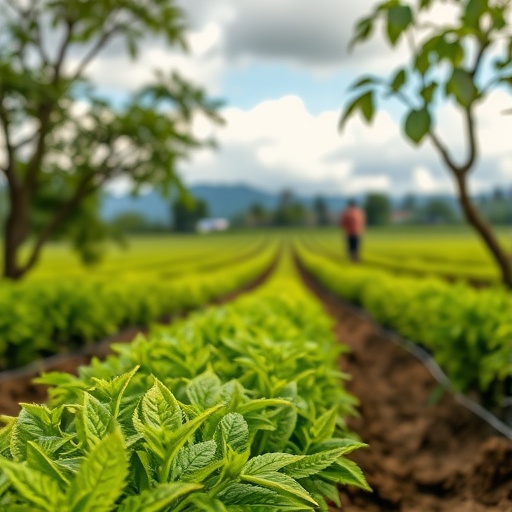
In a rapidly changing world, the stability of agroecosystems presents a critical challenge that demands urgent attention. The recent research conducted by Menalled, Ebel, and Peterson emphasizes the need for innovative frameworks that assess the resilience of these agricultural systems, particularly in the face of climate change. This study paves the way for enhancing our understanding of how agroecosystems can adapt to shifting environmental conditions. The authors propose a combination of eco-evolutionary and risk assessment frameworks that serve as vital tools for gauging agroecosystem resilience.
Resilience in agroecosystems refers to the ability of these systems to withstand disturbances while still maintaining their functions and productivity. Climate change is at the forefront of these disturbances, causing alterations in weather patterns, soil moisture levels, and pest dynamics. The authors argue that traditional agricultural practices often overlook the full spectrum of ecological interactions and evolutionary responses that determine resilience. By integrating eco-evolutionary dynamics into resilience assessments, the research presents a more holistic approach that acknowledges the complex interplay between biotic and abiotic factors.
One of the core elements of the proposed framework is the dynamic nature of species interactions, including competition, predation, and mutualism. These interactions can significantly influence the stability of ecosystem functions. For instance, stronger predator populations may control pest species more effectively, thus enhancing crop yields. However, these relationships are not static; they evolve over time in response to environmental pressures, making it essential to incorporate them into resilience assessments.
Moreover, the study highlights the significance of genetic diversity among crops and their wild relatives as a resilience factor. Crop genetic diversity allows for differential responses to stressors, such as drought or disease. Maintaining a diverse genetic pool within agroecosystems can foster adaptability and reduce the risk of catastrophic failures. The researchers advocate for breeding programs that prioritize genetic diversity, which not only secures food production but also strengthens ecosystem resilience.
Importantly, the framework put forth by Menalled and his colleagues assesses risks associated with various management practices and their potential impacts on agroecosystem resilience. Conventional agricultural strategies often focus on immediate productivity without considering long-term ecological consequences. This research stresses the importance of evaluating the trade-offs between short-term gains and the preservation of ecological functions that contribute to resilience.
Furthermore, the integration of technology, particularly big data and machine learning, is highlighted as a transformative factor in resilience assessment. These technologies can facilitate the collection and analysis of large datasets related to climate, soil health, and crop performance. By harnessing these data-driven insights, farmers and policymakers can make more informed decisions, tailoring practices that not only enhance productivity but also safeguard ecological balance.
In the sphere of policy-making, the implications of this research are profound. Resilience assessment frameworks can inform the development of agricultural policies that prioritize sustainability and adaptability. Policymakers can utilize these frameworks to shape regulations that support sustainable practices, invest in research and development, and promote education among farmers concerning adaptive management strategies.
The urgency of this research is underscored by the escalating impacts of climate change on farming communities globally. With rising temperatures, increasing pest pressures, and unpredictable weather patterns, the resilience of agroecosystems is more critical than ever. As the food supply chain faces unprecedented challenges, the frameworks proposed in this study offer a beacon of hope, equipping agricultural stakeholders with the tools necessary to tackle these emergent issues.
Moreover, the article delves into case studies that have successfully employed similar resilience frameworks, providing tangible examples of their effectiveness. These cases demonstrate how ecosystems have thrived despite climatic adversities through strategic management practices informed by ecological and evolutionary principles. Such success stories serve as a roadmap for implementing the research findings across diverse agricultural landscapes.
The significance of engaging local communities in resilience assessments also emerges as a key theme in the research. Local knowledge and traditional farming practices often harbor valuable insights into sustainable land management. Collaborating with communities can enhance resilience strategies, ensuring that assessments are contextually relevant and culturally sensitive.
In conclusion, the work of Menalled and his colleagues sheds crucial light on the interplay of ecological and evolutionary principles within agroecosystems as they face climate change. The proposed frameworks are not mere academic concepts; they are essential tools that can drive meaningful changes in agricultural practices and policies. By embracing these assessments, we can cultivate more resilient agroecosystems that not only sustain food production but also protect biodiversity and ecological health in a changing world.
The urgency of implementing these findings is underscored by the reality that we are at a tipping point in climate stability. Action must be taken now to ensure that agricultural practices are not only productive but also adaptive to future challenges. The frameworks outlined in this research can guide us toward a sustainable agricultural future, making them vital for researchers, practitioners, and policymakers alike.
The integration of eco-evolutionary principles into risk assessments for agroecosystems marks a significant advancement in our approach to agricultural sustainability. As we continue to grapple with the multifaceted impacts of climate change, these frameworks offer a promising path forward, illuminating our way toward resilient agroecosystems that can genuinely flourish.
In fostering collaborations between scientists, farmers, and policymakers, we pave the way for a more resilient agricultural landscape. This multifaceted approach, rooted in ecological integrity and adaptive management, is essential as we confront the realities of a changing climate. The research by Menalled, Ebel, and Peterson not only highlights the challenges but also inspires hope for the future of agroecosystems.
As we move forward, it is essential to continue dialogue and research in this vital area of study. The tools outlined in this research will not only empower farmers and stakeholders but will also contribute significantly to the overarching goal of sustainable development in agriculture, ensuring that future generations inherit a resilient and productive farming ecosystem.
Subject of Research: Resilience assessment frameworks in agroecosystems
Article Title: Eco-evolutionary and risk assessment frameworks for assessing agroecosystem resilience in a changing climate.
Article References:
Menalled, F.D., Ebel, R., Peterson, R.K.D. et al. Eco-evolutionary and risk assessment frameworks for assessing agroecosystem resilience in a changing climate. Discov Agric 4, 17 (2026). https://doi.org/10.1007/s44279-026-00491-w
Image Credits: AI Generated
DOI: https://doi.org/10.1007/s44279-026-00491-w
Keywords: Agroecosystems, Resilience, Climate Change, Eco-evolutionary Dynamics, Risk Assessment, Agricultural Sustainability, Farmer Engagement, Genetic Diversity, Technological Integration, Long-term Ecological Health.
Tags: adaptive strategies for climate resilienceagroecosystem resilience assessmentbiotic and abiotic factors in farmingclimate change impact on agricultureeco-evolutionary dynamics in farmingecological interactions in agroecosystemsenhancing productivity through resilience strategiesinnovative frameworks for agroecosystemspest dynamics in changing climatesrisk assessment in agriculturestability of agricultural systemstraditional vs modern agricultural practices