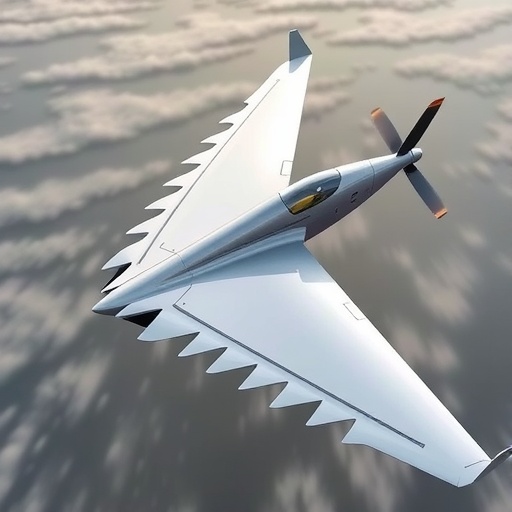
In recent advancements within the realm of aerodynamics, a groundbreaking study has shed light on the performance enhancement of the well-known NACA 6412 airfoil through the innovative use of serrated trailing edges. Conducted by a team of researchers led by Samir, S., the study explores how these unique modifications can significantly improve aerodynamic efficiency, offering potential benefits for various applications in aeronautics, including aviation and turbine technologies.
The NACA 6412 airfoil, recognized for its reliable performance, serves as an ideal baseline for testing aerodynamic enhancements. Traditionally, airfoil designs have sought to optimize lift and minimize drag, two critical factors that dictate the efficiency of any aerodynamic structure. With the introduction of serrated trailing edges, the design philosophy shifts towards fostering a more turbulent flow behind the airfoil, which has been shown to reduce the size of wake regions and diminish drag, ultimately leading to increased lift.
Through extensive computational fluid dynamics simulations, the research team meticulously analyzed airflow patterns around the modified NACA 6412 airfoil. The serrated edges, reminiscent of the teeth of a saw, disrupt the smooth flow of air, creating a controlled turbulence that improves the mixing of high and low momentum fluid layers. This mixing process effectively minimizes the formation of large vortices, which are typically responsible for increased drag in conventional designs. The result is a significantly refined aerodynamic performance that can be tailor-fitted for specific operational conditions.
Field tests supplemented the computational analyses, revealing impressive results that underscore the viability of serrated trailing edges in real-world applications. The experimental data indicated that the modified NACA 6412 airfoil achieved up to a 12% enhancement in lift-to-drag ratio, a crucial metric in aerodynamic efficiency that can translate into improved fuel economy and performance for aircraft and other flying objects.
Beyond the mere enhancement of lift and drag characteristics, the study delves into the implications of these findings on environmental sustainability. With the global push towards greener technologies, the aerospace industry faces increasing pressure to reduce fuel consumption and associated emissions. The integration of aerodynamic modifications such as serrated trailing edges presents a promising opportunity to meet these demanding sustainability goals. By augmenting aerodynamic efficiency, aircraft can operate more effectively, consuming less fuel and thus emitting fewer greenhouse gases.
As the demand for improved performance and environmental stewardship continues to rise, the implications of this research extend beyond aviation. Wind turbine design, for instance, stands to gain significantly from the aerodynamic principles demonstrated in this study. By adopting serrated designs, turbine blades may experience increased energy capture, leading to higher efficiencies in renewable energy generation. The potential cross-disciplinary applications of this research highlight its broad relevance in today’s technology-driven society.
Moreover, the study encourages further exploration into the fundamental mechanisms underlying airflow manipulation at serrated edges. Understanding the precise flow interactions at these modification points could open new avenues for engineering next-generation airfoils. Future projects could build on these findings by experimenting with varying serration configurations, analyzing how different shapes and sizes impact overall aerodynamic performance.
Intended applications for this innovative airfoil design extend into unmanned aerial vehicles (UAVs) and commercial aircraft, where performance optimization can yield substantial operational savings. Industries reliant on drones, such as agriculture and surveillance, would particularly benefit from the enhanced performance characteristics, enabling longer flight times and increased payload capacities.
The research not only informs academia but also provides actionable insights for aerospace engineers. By translating the findings into applicable design modifications, engineers can take advantage of these insights to push the boundaries of existing airfoil technology. The potential for quick adoption in real-world applications makes this research particularly exciting for those at the forefront of aerodynamic design.
In navigating the complexities of future air transport, incorporating such advancements into established design frameworks could ultimately redefine performance standards across the industry. As the conversation around sustainability and performance intertwines further, embracing innovative aerodynamic solutions like serrated trailing edges stands to become a vital component of competitive aerospace engineering.
In conclusion, the research conducted by Samir and colleagues on the NACA 6412 airfoil with serrated trailing edges represents a significant leap forward in aerodynamic technology. By merging theoretical frameworks with practical applications, this innovative approach paves the way for enhanced efficiency in both aviation and renewable energy sectors. As the findings resonate within scientific and engineering communities, the future of airfoil design may be forever changed.
The exploration of serrated trailing edges aligns perfectly with the ongoing quest for greater efficiency and sustainability in aerospace and renewable energy fields, offering a glimpse into a future where performance meets environmental responsibility.
As industries and researchers rally around these exciting findings, we can anticipate a wave of new designs and applications that embrace the aerodynamic benefits revealed in this study. The trajectory for improved airfoil technology seems increasingly promising, driven by studies that break conventional barriers and inspire future innovation.
Subject of Research: Aerodynamic performance enhancement of NACA 6412 airfoil with serrated trailing edges.
Article Title: Aerodynamic performance enhancement of NACA 6412 airfoil with serrated trailing edges.
Article References: Samir, S., Kumar, R., Thakur, A.K. et al. Aerodynamic performance enhancement of NACA 6412 airfoil with serrated trailing edges. AS (2025). https://doi.org/10.1007/s42401-025-00417-2
Image Credits: AI Generated
DOI: 11 November 2025
Keywords: Aerodynamics, NACA 6412 airfoil, serrated trailing edges, lift-to-drag ratio, fuel efficiency, sustainability, renewable energy.
Tags: advanced aeronautics researchaerodynamic efficiency improvementsairfoil design modificationsaviation technology enhancementscomputational fluid dynamics simulationsinnovative aerodynamic structureslift and drag optimization techniquesNACA 6412 airfoil performanceserrated trailing edges aerodynamicsturbine efficiency advancementsturbulence control in airfoilswake region reduction strategies