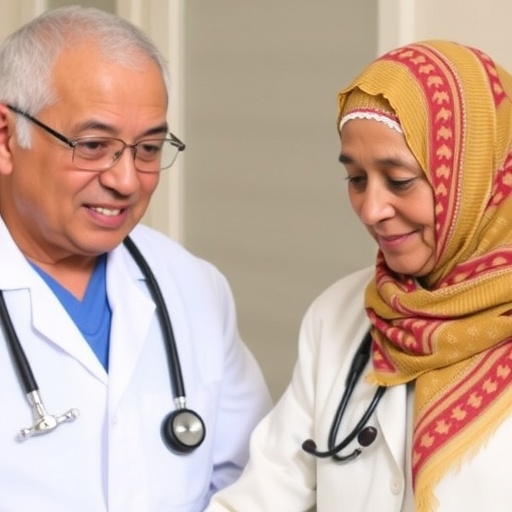
In a groundbreaking study published in Ageing International, a trio of researchers have spotlighted a critical yet often overlooked aspect of healthcare: the role of family doctors in providing relational care for older adult Arab immigrants and their family caregivers. This research underscores the complex nature of healthcare delivery to immigrant populations, particularly in light of the multifaceted challenges they face due to cultural, linguistic, and systemic barriers. As demographics in many countries shift, the importance of understanding and addressing these challenges becomes ever more salient.
The study, conducted by Sarah Tobah, Lynda Donelle, and Jennifer Hall, aims to fill a notable gap in the existing literature surrounding the health needs of Arab immigrant communities. The researchers gathered qualitative data, engaging with both elderly Arab immigrants and family caregivers in order to piece together a comprehensive understanding of their experiences within the healthcare system. Through interviews and focus groups, they were able to capture the nuanced realities that these communities face, revealing a rich tapestry of needs and expectations from their healthcare providers.
At the heart of the study is the concept of relational care, which emphasizes the importance of building strong, trust-based relationships between healthcare providers and patients. For older Arab immigrants, who often navigate the complexities of a new healthcare system, these relationships can be a lifeline. The researchers argue that family doctors are uniquely positioned to foster these connections, understanding the cultural contexts and values that shape their patients’ lives. The importance of establishing trust cannot be understated, especially for immigrants who may feel marginalized or misunderstood in their new surroundings.
Relational care goes beyond mere medical treatment; it encompasses a holistic approach to well-being that considers social, emotional, and cultural factors. The study highlights how family doctors can work collaboratively with patients and their caregivers to create care plans that resonate with the values and beliefs of the Arab community. This family-centric approach not only enhances patient satisfaction but can also lead to better health outcomes. By fostering open communication, healthcare providers can empower patients, enabling them to take an active role in their own health management.
One striking finding from Tobah, Donelle, and Hall’s research is the recognition of caregivers as integral members of the healthcare process. Family caregivers often shoulder significant responsibilities, providing daily assistance and emotional support to their elderly family members. The study emphasizes that family doctors must also engage with these caregivers, addressing their needs and offering support. This dual focus can help prevent caregiver burnout, which is a prevalent issue within immigrant families, often leading to a decline in the overall health of both the caregiver and the patient.
In an era where health inequities can manifest in profound ways, understanding the specific challenges faced by Arab immigrants is essential. The research indicates that systemic barriers, such as language differences and cultural misunderstandings, often hinder access to quality care. Family doctors who possess cultural competence are better equipped to mitigate these barriers. By integrating knowledge of cultural norms and practices into their healthcare delivery, they can create a more inclusive environment that fosters respect and understanding.
Moreover, the study highlights the importance of training and education for healthcare providers in understanding the unique experiences of immigrant populations. Bridging the gap between healthcare professionals and patients from diverse backgrounds can be achieved by implementing training programs focused on cultural sensitivity. Such initiatives can empower family doctors to recognize and appreciate the diverse stories and backgrounds their patients bring to the healthcare experience.
Additionally, the findings point to the crucial need for more resources and support systems for family physicians working with immigrant communities. As these practitioners grapple with high patient loads and systemic constraints, having access to resources that promote relational care can be invaluable. This includes training sessions, community workshops, and collaboration with cultural organizations that can help foster a supportive network for both providers and patients.
The implications of this research extend beyond the individual doctor-patient interaction. Policies at institutional and governmental levels must evolve to incorporate the insights gleaned from such studies. By fostering an environment that values relational care, stakeholders can advocate for systemic changes that prioritize the needs of marginalized populations. Through legislative action, funding initiatives, and community-based programs, the healthcare landscape can become more attuned to the complexities of immigrant health.
As our world becomes increasingly interconnected, the health and wellbeing of immigrant populations must remain a priority. The findings from Tobah, Donelle, and Hall serve as a clarion call to rethink our approach to healthcare, urging practitioners and policymakers alike to embrace a model that recognizes the tremendous potential of relational care. This holistic perspective not only acknowledges the individual needs of patients but also embraces their unique cultural backgrounds, facilitating a more compassionate and effective healthcare system.
The ongoing challenges faced by Arab immigrant families underscore why this research is so timely and necessary. As the global focus on diversity and inclusion grows, healthcare systems must reflect these values in their practices. By centering relational care in medical training and systemic reforms, we can ensure that healthcare is not just a service, but a partnership that respects and uplifts the communities it serves.
In conclusion, Tobah, Donelle, and Hall’s research presents a vital perspective on the intersection of cultural identity and healthcare. By shedding light on the experiences of older adult Arab immigrants and their caregivers, the study advocates for a model of care that is deeply relational, culturally informed, and inclusive. As healthcare continues to evolve, it is imperative that we heed the lessons learned from this research and strive for a system that genuinely honors and supports all individuals, particularly those from immigrant backgrounds.
Subject of Research: The role of family doctors in supporting older adult Arab immigrants and their family caregivers, focusing on relational care.
Article Title: Centring Relational Care: The Role of Family Doctors in Supporting Older Adult Arab Immigrants and Family Caregivers
Article References:
Tobah, S., Donelle, L., Hall, J. et al. Centring Relational Care: The Role of Family Doctors in Supporting Older Adult Arab Immigrants and Family Caregivers.
Ageing Int 51, 4 (2026). https://doi.org/10.1007/s12126-025-09646-4
Image Credits: AI Generated
DOI: https://doi.org/10.1007/s12126-025-09646-4
Keywords: Relational care, Arab immigrants, family caregivers, healthcare inequality, cultural competence, immigrant health.
Tags: Arab immigrant seniors healthcarechallenges faced by Arab immigrantscultural barriers in healthcare accesselderly care for Arab populationsfamily caregivers of immigrant seniorsfamily doctors role in immigrant carehealthcare system for diverse populationslinguistic challenges in medical settingsqualitative research on immigrant healthrelational care in healthcaretrust-based relationships in healthcareunderstanding immigrant health needs