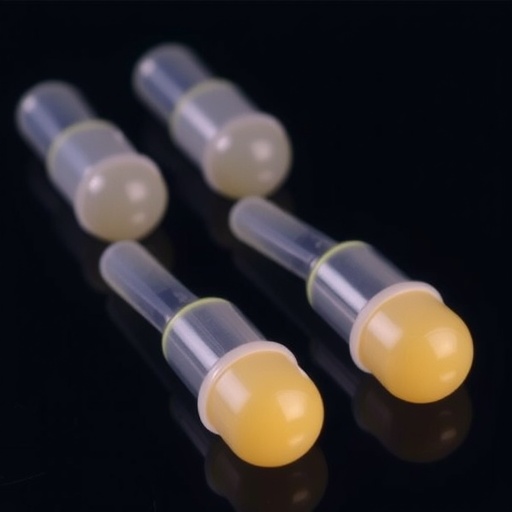
In an exciting advancement for personalized medicine, researchers have successfully implemented 3D printing technology to create acetaminophen suppositories. This groundbreaking study, led by a team from a prominent institution, is set to reshape the way we think about drug delivery systems. The potential of 3D printing in pharmaceuticals has often been theoretical, but this research firmly establishes a practical application that could revolutionize patient care, especially for individuals who struggle with oral medications.
The team meticulously designed the acetaminophen suppositories using sophisticated 3D printing techniques that allow for precise control over drug formulation. The process began with selecting appropriate biocompatible materials that could not only encapsulate the active ingredient but also dissolve efficiently in the rectal environment. This choice of materials is crucial, as it not only influences the bioavailability of the acetaminophen but also impacts the overall patient experience regarding comfort and efficacy.
Quality control is a significant concern in pharmaceutical manufacturing, and this study placed great emphasis on the rigorous evaluation of the printed suppositories. Each batch of acetaminophen suppositories underwent thorough testing to ensure that they met high standards of quality. Factors such as homogeneity, melting point, and structural integrity were meticulously assessed through various analytical methods, ensuring that every suppository produced was not only safe but also effective in delivering the intended dose.
Pharmacokinetic evaluation is another critical component of this study. Researchers conducted extensive testing to observe how the body absorbs, distributes, metabolizes, and excretes the acetaminophen when administered via suppository. This aspect of the research provided valuable insights that could help refine the formulation and delivery approaches in future applications. The pharmacokinetic data collected will serve as a benchmark for further studies aimed at optimizing dosage forms for specific patient needs.
One of the most striking aspects of this research is the potential for 3D printing technology to foster individualized medicine. In an era where personalization in healthcare increasingly takes center stage, the ability to produce tailored suppositories based on a patient’s unique medical profile offers tremendous promise. This method allows healthcare providers to adjust dosages easily, which is invaluable for pediatric patients or those with specific metabolic considerations.
The implications extend beyond mere convenience. As this technology matures, it could lead to significant reductions in waste. Traditional manufacturing techniques often produce excess pharmaceutical product that goes unused. By enabling on-demand production of acetaminophen suppositories, it minimizes excess while also catering specifically to a patient’s needs, ultimately leading to more cost-effective healthcare solutions.
This innovative study also contributes to ongoing discussions about sustainability in medicine. By reducing the need for mass production and extensive inventory systems, 3D printing helps curb the environmental impact associated with traditional pharmaceutical manufacturing. As the healthcare industry grapples with its carbon footprint, solutions like these become increasingly important for paving a greener path forward.
In addition to the environmental advantages, the study highlights the technological advancements in 3D printing itself. With ongoing improvements in printing speed, precision, and versatility of materials, the future of pharmaceutical manufacturing is bright. The techniques and methodologies outlined in this research pave the way for blending advanced engineering with pharmaceutical science, opening doors to new therapeutic avenues.
The outcome of this research not only strengthens the case for 3D printing in pharmaceuticals but also underscores the importance of interdisciplinary collaboration. Bringing together experts from pharmacology, materials science, engineering, and medical fields proved to be essential in achieving successful results. This collaborative approach serves as a model for future research endeavors, emphasizing the need for diverse expertise in tackling multifaceted problems in healthcare.
As interest in personalized medicine continues to grow, the role of technology in shaping patient care will undoubtedly become more pronounced. The researchers anticipate that their findings will encourage further studies exploring other drug formulations using 3D printing. Innovations such as this one contribute to a broader understanding of how to harness technology for better health outcomes.
While the initial focus of this research was on acetaminophen, the team envisions a future where a wide array of medications could be delivered using 3D-printed suppositories. Their work lays a foundation for exploring how this technology could cater to different therapeutic classes, potentially resulting in specialized formulations for various conditions. This capability could enhance therapeutic efficacy, patient compliance, and overall healthcare experiences.
Furthermore, as safety considerations are paramount in pharmaceutical development, ongoing studies will be essential to monitor long-term effects and adverse reactions. The researchers acknowledge that comprehensive clinical evaluations will be crucial in ensuring that 3D-printed medications can stand the rigorous scrutiny of regulatory bodies.
The excitement surrounding this research is palpable, as stakeholders from different sectors of the healthcare industry begin to recognize the potential of 3D printing in enhancing drug delivery systems. As this technology matures, it is anticipated that stakeholders will mobilize to integrate these innovations into mainstream clinical practices, ultimately improving the standard of care for patients worldwide.
Development in this area may herald a new dawn for both patients and healthcare providers. By overcoming traditional barriers associated with drug administration, 3D-printed acetaminophen suppositories could vastly improve quality of life for those who rely on acetaminophen for pain management. With continued exploration, the promising intersection of technology and healthcare may redefine how treatments are administered in the coming decades.
In conclusion, the exploration of 3D printing technology for the production of acetaminophen suppositories marks a significant milestone in drug delivery systems. As researchers continue to uncover the potential for customized pharmaceuticals, patients stand to benefit tremendously from innovations that prioritize their unique medical needs and experiences.
Subject of Research: 3D printing of acetaminophen suppositories and their quality and pharmacokinetic evaluation.
Article Title: 3D printing of acetaminophen suppository and its quality and pharmacokinetic evaluation.
Article References:
Chen, M., Duan, M., Ren, J. et al. 3D printing of acetaminophen suppository and its quality and pharmacokinetic evaluation.
3D Print Med 11, 52 (2025). https://doi.org/10.1186/s41205-025-00298-3
Image Credits: AI Generated
DOI: https://doi.org/10.1186/s41205-025-00298-3
Keywords: 3D printing, acetaminophen, suppository, pharmacokinetics, personalized medicine, drug delivery systems, pharmaceutical manufacturing.