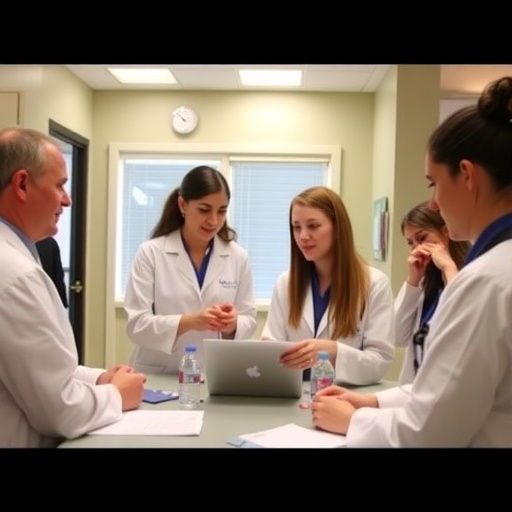
In the ever-evolving landscape of healthcare education, the integration of genetics into nursing curricula has emerged as a pivotal focus. Recent research conducted by Dewan, Rayani, and Hannan highlights significant findings regarding the enhancement of nursing students’ clinical experience with genetics. They explore the intertwined influences of prior knowledge and leadership support through the lens of the Donabedian Model, which has implications far beyond academic performance. As the understanding of genetic factors in patient care deepens, the importance of equipping future nurses with the necessary skills has never been more critical.
The Donabedian Model, conceived in the 1960s by Dr. Avedis Donabedian, is a framework that evaluates healthcare services. It categorizes healthcare quality into three distinct components: structure, process, and outcomes. By employing this model, the researchers were able to delineate the relationship between educational structures—such as curricula and teaching methods—and the resultant outcomes in clinical practice. This framework provides a robust mechanism for understanding how nursing students can best learn and apply genetic knowledge in real-world scenarios.
One of the pivotal components in the study is the role of prior knowledge in shaping students’ understanding of genetics. Many nursing students come with varying degrees of familiarity with genetic concepts, which can profoundly impact their engagement and performance in clinical settings. The researchers emphasize that fostering a baseline understanding of genetics before delving into more complex topics is crucial. This foundational knowledge not only boosts students’ confidence but also enhances their ability to translate genetic information into patient care effectively.
Leadership support within educational institutions often proves to be a game changer. The study reflects on how mentors and administrative figures can create an atmosphere conducive to learning. Supportive leaders can facilitate workshops, provide resources, and promote a culture of inquiry that encourages students to engage with genetics more deeply. This top-down approach ensures that students have the guidance needed to navigate the complexities of genetic information, reinforcing their clinical skills in practical scenarios.
The findings of this research are particularly relevant in light of the increasing prevalence of genetic disorders and the critical role that nurses play in managing related patient care. As healthcare systems evolve, the integration of genetic information into everyday nursing practices becomes paramount. Nurses are often the frontline providers who must interpret genetic data and communicate it to patients effectively, necessitating a thorough understanding of the underlying genetic principles.
Moreover, the study indicates that a well-rounded educational experience, bolstered by leadership support, can lead to better outcomes for patients. When nursing students are equipped with knowledge about genetics, they can make more informed decisions that improve patient care. This translates into enhanced patient education regarding genetic risks, informed consent, and personalized treatment plans, weaving genetics into the fabric of holistic patient care.
Critical to the implementation of this educational paradigm is the design of the nursing curriculum itself. An interdisciplinary approach that includes genetics alongside other nursing subjects fosters a more integrated learning experience. The researchers advocate for curricula that not only teach genetic concepts but also emphasize their application in clinical reasoning and decision-making. This alignment between theory and practice prepares students to face the genetic challenges they will encounter in their professional lives.
The implications of this research extend beyond nursing education and into hospital practices, where leadership roles can directly influence the integration of genetic services. By endorsing the importance of genetics in patient care, healthcare leaders can advocate for further training and resources, ultimately enhancing the role of genetics in nursing practice. This advocacy can encourage policy changes that further support genetic education and resources across nursing departments nationwide.
In addressing the concerns surrounding genetic education among nursing students, the researchers recommend the establishment of robust assessment and feedback mechanisms. Assessment tools can provide insights into students’ knowledge retention and ability to apply genetic concepts in clinical situations. Regular feedback from faculty can guide students’ learning, ensuring they are not only absorbing information but also applying it effectively in practices, thus fulfilling the overarching goal of nursing education: to provide quality patient care.
As we stand on the brink of a new era in healthcare, it is evident that genetics will play a pivotal role in the future of nursing. The findings from Dewan, Rayani, and Hannan underline the pressing need for all nursing education programs to embrace this shift. By prioritizing genetics in the nursing curriculum, institutions can ensure that nursing graduates are not only knowledgeable but also adept at applying this knowledge in a clinical setting, thereby improving patient outcomes in a profound way.
Looking ahead, it is essential for nursing education programs to incorporate findings such as those presented in this study. Developing a robust curriculum focused on genetics—supported by empirical research—will empower future generations of nurses to face the complexities of patient care with confidence. This transformative approach to education paves the way for an informed, capable nursing workforce ready to tackle the genetic challenges of tomorrow’s healthcare landscape.
Furthermore, the relationship between theory and practice cannot be understated. By bridging this gap, nursing students can transition from classroom learning to real-world application, facilitating a seamless integration of their genetic knowledge into clinical practice. The ultimate aim is to transform nursing education into a dynamic field that not only addresses the needs of today but anticipates the challenges of the future.
In conclusion, the research conducted by Dewan, Rayani, and Hannan provides a clarion call for nursing education reform. As genetics continues to permeate various aspects of healthcare, the role of nursing educators and leaders becomes increasingly crucial. Together, they can forge a path that elevates nursing practice, enhances patient care, and underscores the indispensable role of genetics in the future of nursing. The insights gleaned from this study are a crucial step towards revolutionizing nursing education and ensuring that the next generation of healthcare providers is equipped to meet the demands of a rapidly changing medical landscape.
Subject of Research: The influence of prior knowledge and leadership support on nursing students’ clinical experience with genetics.
Article Title: Improving nursing students’ clinical experience with genetics: the influence of prior knowledge and leadership support through the Donabedian Model.
Article References:
Dewan, M.F., Rayani, A.M. & Hannan, J. Improving nursing students’ clinical experience with genetics: the influence of prior knowledge and leadership support through the Donabedian Model.
BMC Nurs (2026). https://doi.org/10.1186/s12912-025-04252-w
Image Credits: AI Generated
DOI: 10.1186/s12912-025-04252-w
Keywords: Nursing education, Genetics, Donabedian Model, Clinical experience, Leadership support.
Tags: Donabedian Model in healthcareeducational structures in nursingenhancing nursing students’ clinical experiencegenetics curriculum developmenthealthcare quality evaluation frameworksleadership support in nursing educationnursing education genetics integrationnursing students’ skills in geneticspatient care genetic factorsprior knowledge in genetics for nursingreal-world application of genetic knowledgeteaching methods for genetics in nursing