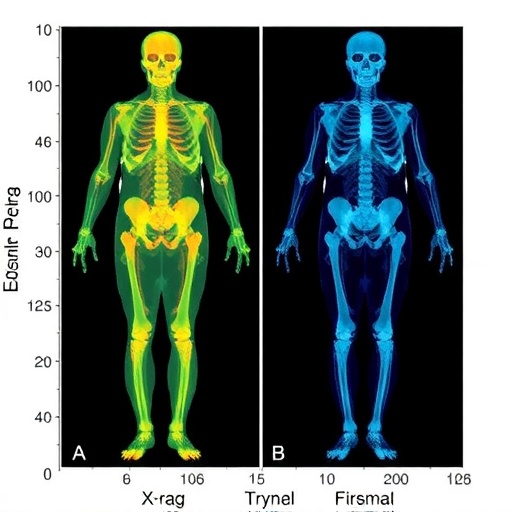
In a groundbreaking study titled “Concordance between radiofrequency echographic multispectrometry and dual X-ray absorptiometry in diagnosing osteoporosis among postmenopausal women: a real-world study,” researchers led by Medina, Ospino, and Vargas have taken a significant step forward in the diagnosis of osteoporosis. This comprehensive research, published in the esteemed journal Archives of Osteoporosis, addresses the growing need for accurate, non-invasive diagnostic tools for osteoporosis, particularly in postmenopausal women who are at heightened risk for skeletal fragility.
Osteoporosis, characterized by reduced bone density and increased fracture risk, affects millions globally, with postmenopausal women being particularly vulnerable due to hormonal changes that accelerate bone loss. Traditional diagnostic methods, such as Dual X-ray Absorptiometry (DXA), while effective, can expose patients to radiation and are not always accessible in every healthcare setting. This has spurred interest in alternative methods that can offer comparable results without the associated risks of radiation exposure.
The study in question focuses on Radiofrequency Echographic Multispectrometry (REM), a novel and innovative technique that utilizes non-ionizing radiation to assess bone quality and density. By employing ultrasound technology, REM has the potential to provide a reliable assessment of bone health, thereby addressing the concerns associated with conventional methods. This approach aligns with the growing trend towards personalized medicine and patient-centered care, prioritizing the well-being of patients while enhancing diagnostic accuracy.
Research conducted included a diverse cohort of postmenopausal women who underwent both REM and DXA assessments. The study meticulously analyzed the data to evaluate the concordance between these two diagnostic methods. Findings indicated a promising level of agreement, suggesting that REM could emerge as a viable alternative to DXA, particularly in settings where radiation exposure should be minimized.
Further scrutinizing the data, the study revealed that REM not only matched the results of DXA in many cases but also provided additional insights into bone quality parameters that DXA alone may overlook. This dual capability is crucial, as effective osteoporosis management requires a nuanced understanding of both bone density and structural integrity. The ability to assess these parameters could lead to earlier intervention strategies, potentially reducing the occurrence of fragility fractures in at-risk populations.
Moreover, the impact of this study extends beyond individual patient care; it has significant implications for public health policy. The accessibility of REM technology in various healthcare settings could democratize osteoporosis screening, making it available to women in rural or underserved areas where DXA machines may not be present. This shift could help mitigate the global burden of osteoporosis and optimize preventive strategies across different populations.
The research team also engaged in a thorough review of the limitations associated with both diagnostic modalities. While REM shows promise, it is not without challenges; standardized protocols, operator training, and the need for robust clinical validation remain critical for its widespread adoption. Additionally, ongoing refinements in technology and technique may further enhance the accuracy and reliability of REM assessments.
In the larger context of osteoporosis research, this study underscores the importance of continuous innovation in diagnostic approaches. As our understanding of bone health evolves, so too must our methods for assessment and intervention. The integration of technologies like REM alongside traditional methods could signify a paradigm shift in how we diagnose, treat, and ultimately manage osteoporosis.
As healthcare professionals consider the findings of this study, they must recognize the potential for REM to complement existing diagnostic frameworks. The pursuit of improved patient outcomes relies heavily on leveraging advancements in medical technology while ensuring that practitioners receive thorough training to interpret results accurately.
Looking towards the future, the research team recommends further longitudinal studies to better understand the long-term implications of utilizing REM in a clinical setting. Establishing comprehensive data that illustrates its effectiveness over time will be essential in influencing guidelines and encouraging adoption among healthcare practitioners.
In conclusion, the agreement between REM and DXA in diagnosing osteoporosis highlights an exciting avenue for future research and clinical application. The promise of a non-invasive, radiation-free diagnostic option could revolutionize the approach to osteoporosis screening and management, improving the quality of life for countless women worldwide. A broader implementation of such technologies could ultimately result in improved health outcomes, fewer fractures, and reduced healthcare costs associated with osteoporosis-related injuries.
The full study can be accessed for further insight into the methodologies and outcomes discussed here, highlighting the significant strides being made in osteoporosis diagnostics. As the medical community continues to embrace innovation, the integration of methodologies like REM could very well be a decisive factor in the future of bone health management.
Subject of Research: Osteoporosis diagnosis among postmenopausal women using Radiofrequency Echographic Multispectrometry and Dual X-ray Absorptiometry.
Article Title: Concordance between radiofrequency echographic multispectrometry and dual X-ray absorptiometry in diagnosing osteoporosis among postmenopausal women: a real-world study.
Article References:
Medina, A., Ospino, MC., Vargas, J. et al. Concordance between radiofrequency echographic multispectrometry and dual X-ray absorptiometry in diagnosing osteoporosis among postmenopausal women: a real-world study. Arch Osteoporos 21, 7 (2026). https://doi.org/10.1007/s11657-025-01634-0
Image Credits: AI Generated
DOI: https://doi.org/10.1007/s11657-025-01634-0
Keywords: Osteoporosis, Radiofrequency Echographic Multispectrometry, Dual X-ray Absorptiometry, Postmenopausal Women, Diagnosis, Bone Health, Non-invasive Techniques.
Tags: advancements in osteoporosis researchadvantages of REM over DXAbone density assessment techniquesdual X-ray absorptiometry comparisonhealthcare accessibility for osteoporosis testinginnovative ultrasound technology for bone healthnon-invasive osteoporosis screening methodsosteoporosis diagnosis in postmenopausal womenosteoporosis prevalence in womenradiation-free osteoporosis diagnosticsRadiofrequency echographic multispectrometryskeletal fragility risk factors.