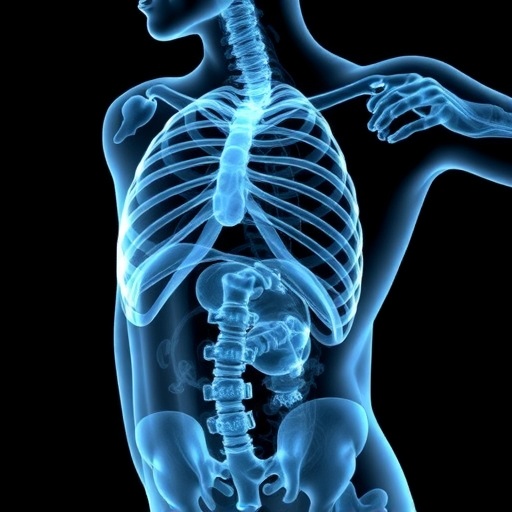
In the ever-evolving landscape of medical imaging technology, researchers have continually grappled with the challenge of managing the enormous volume and complexity of bulky medical images. These high-resolution images, while critical for accurate diagnoses and treatment planning, present significant hurdles in terms of storage, transmission, and real-time analysis. Recently, a groundbreaking approach has emerged from a team of scientists led by Yang, R., Xiao, T., and Cheng, Y., who have introduced a novel deep learning framework that strategically decouples shape and texture information in medical images. This pioneering technique, detailed in their 2026 Nature Communications article, promises to revolutionize the way bulky medical images are processed, opening pathways toward more efficient, scalable, and clinically practical solutions.
Traditional medical imaging modalities, including MRI, CT, and ultrasound, generate vast amounts of data that are not only large in size but also heterogeneous in content. Radiologists and clinicians face increasing pressure to interpret these images efficiently, yet the sheer volume can lead to bottlenecks in image storage, remote sharing, and even automated analysis. Conventional deep learning models have made strides in image classification and segmentation, but they often treat images as monolithic entities without discriminating between the critical shape features and the rich texture information embedded within. This limitation has inspired the development of specialized architectures that separately analyze these two fundamental aspects, allowing more focused and effective image compression and interpretation.
The core innovation of Yang and colleagues’ work lies in their shape-texture decoupled deep neural network design. By disentangling the structural shape information from surface textures, their model adeptly compresses medical images without sacrificing the crucial diagnostic details. Shape refers to the overarching geometric outline and spatial configuration of anatomical structures, while texture encompasses finer-grained intensity patterns, such as tissue heterogeneity or pathological markings. Capturing these components independently allows the network to prioritize and optimize the representation depending on the clinical context, effectively reducing redundancy and noise.
From a technical standpoint, the neural network architecture incorporates dual encoding pathways that separately process shape and texture features. The shape encoding pathway leverages specialized convolutional filters and morphological operations designed to emphasize geometrical contours and boundaries crucial for identification of organs and lesions. Simultaneously, the texture pathway employs high-resolution feature extractors capable of capturing subtle variations in intensity and patterning within tissues. Subsequently, a fusion mechanism intelligently integrates these two streams into a compact latent representation, balancing fidelity and compression.
An integral advantage of this decoupled approach is its robustness against common imaging artifacts and variable acquisition parameters. Whereas traditional models often conflate noise with texture, leading to degraded image quality, the separation allows the network to isolate and suppress irrelevant information. Consequently, the reconstructed images preserve diagnostically significant features while being substantially smaller in size. This reduction is not merely academic but has immediate practical implications for telemedicine, multi-center clinical trials, and storage infrastructures in hospitals.
Experimental validation of their framework involved large-scale datasets encompassing multiple imaging modalities and clinical scenarios. The authors reported compression ratios exceeding conventional deep learning techniques by a significant margin, all while maintaining or improving diagnostic accuracy in downstream tasks such as tumor segmentation and anomaly detection. These results underscore that the shape-texture decoupling is not only an elegant theoretical construct but a tangible advancement capable of reshaping workflows in medical imaging.
Moreover, the researchers highlight the potential impact on real-time imaging applications. Many interventional procedures, such as image-guided surgeries and biopsies, demand instantaneous feedback from imaging systems. Bulky image files often impede this dynamic exchange. By enabling rapid compression and decompression cycles without loss of critical information, the proposed network could facilitate seamless integration of AI tools in interventional suites, enhancing precision and patient outcomes.
Beyond immediate clinical use, this technology opens possibilities in advancing AI-powered diagnostic systems. Current algorithms often suffer from bias linked to inconsistent image quality and variations in texture contrast. Through the precise decoupling of shape and texture, machine learning models can be better trained to generalize across diverse patient populations, imaging devices, and protocols. This could significantly improve AI robustness in detecting subtle pathologies that are otherwise masked by texture noise or imaging artifacts.
The framework’s design also incorporates adaptive learning mechanisms that allow continuous refinement as new data accumulates. This feature is particularly vital in medical imaging, where emerging disease patterns or new modalities require flexible analytic tools. The shape-texture decoupled network can evolve over time, integrating novel image characteristics while retaining core diagnostic knowledge, thus future-proofing its utility.
In terms of computational efficiency, the architecture optimizes both memory footprint and inference speed. By compressing the images beforehand through targeted encoding, the processing demands for subsequent analysis or transmission are substantially lowered. This benefit extends to resource-limited healthcare settings, where bandwidth constraints and limited computational infrastructure often hinder the deployment of advanced imaging techniques.
This study also sheds light on the interpretability of AI in medical imaging, a critical facet for clinician trust and acceptance. By isolating shape and texture features, the network offers more transparent intermediate representations that can be reviewed and interpreted by radiologists. This explicit separation facilitates understanding of AI decision pathways, enabling clinicians to validate, critique, or override machine-generated assessments when necessary.
While the current work focuses on static imaging, the underlying principles hold promise for dynamic imaging sequences such as functional MRI or echocardiography. Future extensions may leverage temporal decoupling of shape and texture changes over time, providing richer diagnostic insights into physiological and pathological processes. This trajectory aligns with the broader trend toward multimodal and longitudinal imaging analytics in healthcare.
The implementation of this deep learning innovation is also envisioned to synergize with ongoing efforts in image standardization and harmonization across institutions. By providing a unified framework to represent critical image information compactly and consistently, it can facilitate collaborative diagnostics, multicenter AI training, and large-scale epidemiological studies with unprecedented efficiency.
Critically, the authors emphasize the ethical and clinical validation pathways required before broad deployment. Rigorous prospective clinical trials and regulatory clearances will be essential to ensure that the compression and decoupling strategies do not inadvertently obscure rare or nuanced pathological signals. Nonetheless, the preliminary findings provide a strong foundation for moving toward real-world clinical integration.
In summary, the shape-texture decoupled deep neural network introduces a transformative paradigm in the reduction and analysis of bulky medical images. By intelligently separating and encoding core visual components, it achieves substantial data compression without compromising diagnostic integrity. Its multifaceted advantages—ranging from improved storage efficiency and transmission speed to enhanced AI interpretability and clinical robustness—signal a critical leap forward in medical imaging science. As the healthcare ecosystem increasingly embraces digital transformation, such innovations will be pivotal in enabling scalable, precise, and patient-centered medical care.
Subject of Research: Novel deep learning framework for efficient compression and analysis of bulky medical images through shape-texture decoupling.
Article Title: Reducing bulky medical images via shape-texture decoupled deep neural networks.
Article References:
Yang, R., Xiao, T., Cheng, Y. et al. Reducing bulky medical images via shape-texture decoupled deep neural networks. Nat Commun (2026). https://doi.org/10.1038/s41467-026-68292-9
Image Credits: AI Generated
Tags: advancements in medical imaging diagnosticsautomated analysis of medical imageschallenges in medical image storagedeep learning framework for medical imagesefficient medical image processing solutionsMedical Imaging TechnologyMRI CT ultrasound imaging challengesreal-time analysis of medical imagesrevolutionary techniques in medical imagingscalable solutions for medical image analysisshape and texture decoupling in imagingvolume and complexity of medical images