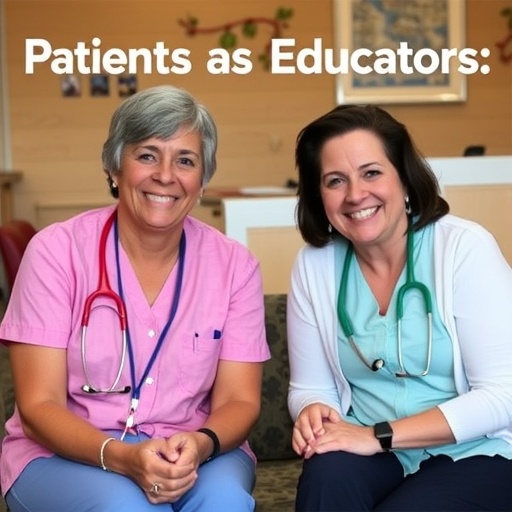
In a groundbreaking study scheduled for publication in the Journal of General Internal Medicine in 2026, researchers Dr. M. Stillman and Dr. A. Traczuk delve into the innovative concept of “Patients as Teachers.” This research pivots around an uncharted territory in the healthcare landscape, addressing the reciprocal relationship between patients and healthcare providers. The study aims to explore how patients living with disabilities can enrich the medical education system, ultimately shaping more empathetic and competent healthcare professionals.
The landscape of medical education has been evolving significantly, reflecting society’s changing values and expectations. However, the integration of patient perspectives, particularly those of individuals with disabilities, remains a largely unexplored area. Stillman and Traczuk argue that the traditional top-down approach, where medical knowledge flows exclusively from educator to student, is not only outdated but counterproductive. They advocate for a paradigm shift that includes patients as active participants in the educational process, thereby enhancing the learning experience for future physicians.
The researchers conducted in-depth interviews and focus groups with patients who have various disabilities. These discussions uncovered a wealth of insights that underscore the importance of patient experiences in shaping effective medical training. Participants highlighted their unique challenges and the multifaceted nature of living with a disability, showcasing stories that encapsulate resilience, adaptation, and personal growth. Their narratives serve as a powerful reminder of the human element often missing from clinical teachings.
Moreover, Stillman and Traczuk present compelling evidence that incorporating patient insights helps medical students develop essential competencies such as empathy, communication skills, and cultural competence. By engaging with patients directly, students are better equipped to understand the real-world implications of their medical decisions. This hands-on experience not only enriches academic learning but can also lead to improved patient outcomes in real-life clinical settings.
One key aspect of the study is its examination of the dynamics of power and knowledge within healthcare education. Traditionally, medical training has been influenced by an imbalance that often leaves patients feeling marginalized. This research challenges that status quo, inviting a more equitable sharing of knowledge. The findings suggest that when medical students listen to, learn from, and even celebrate the stories of patients with disabilities, a new form of understanding is cultivated. This synergistic approach shifts the narrative, allowing patients to reclaim their stories and engage meaningfully in their health care.
The study does not shy away from addressing the systemic barriers that continue to perpetuate the disconnection between patients and healthcare educators. Institutional norms, rigid curricula, and entrenched attitudes can frustrate efforts to adopt this model of learning. However, the research team emphasizes that progress is possible, and it requires the commitment of educational institutions to reshape their frameworks. Practical solutions are proposed, such as collaborative workshops, integration of patient-led seminars, and pathways for ongoing dialog between patients and students.
These adaptations not only promote inclusivity but also transform healthcare practices. For instance, students learning about disability through firsthand accounts are likely to bring a different perspective to their practice. They will be more mindful of the consequences of their approaches on their patients’ real experiences. This evolution in medical education promises not only to heighten understanding but also to foster a culture of respect and dignity within healthcare settings.
Another noteworthy element of the research is the validation of patient expertise. Patients are often the experts of their own lives, possessing lived experiences that surpass what could ever be learned in textbooks. This point was poignantly illustrated in several interviews; patients reflected on how their journeys with chronic illness or disability have informed their understanding of health, healthcare systems, and the importance of advocacy. This type of experiential knowledge is invaluable, advocating for a curriculum that respects and integrates patient voices.
Furthermore, Stillman and Traczuk reiterate that the lessons gleaned from patients extend beyond the medical curriculum. They promote a broader societal understanding of disability and health, with the potential to change public perceptions and reduce stigma. This wider cultural impact reinforces the importance of including diverse narratives in education. The research thus positions medical institutions not just as centers of healing, but as catalysts for social change.
As they prepare for publication, Stillman and Traczuk are hopeful that their findings will spark conversations and inspire action across medical schools. They envision a future where curricula are infused with patient stories, fostering a generation of healthcare providers who are not only technically proficient but also deeply attuned to the emotional and societal contexts of their patients. Their vision highlights an educational model where knowledge is co-created in partnership with the very individuals it seeks to serve.
In conclusion, the implications of the study present a transformative approach to medical education that prioritizes, respects, and values the experiences of patients as pivotal in shaping future healthcare professionals. As we move towards a more inclusive healthcare system, embracing the voices of patients with disabilities emerges as not just a recommendation, but an imperative for the evolution of compassionate care.
The study represents a significant step towards acknowledging the critical role patients play in the educational continuum. By redefining the boundaries of education and practice, Stillman and Traczuk advocate for a future where understanding, empathy, and shared experiences are paramount in the healthcare dialogue. Their message is clear: the journey towards healthier societies begins here, in the classroom, with the invaluable stories of those living with disabilities as our guide.
Subject of Research: The role of patients with disabilities in medical education.
Article Title: Our Patients as Teachers: Adapting to Disability Our Patients as Teachers.
Article References:
Stillman, M., Traczuk, A. Our Patients as Teachers: Adapting to Disability Our Patients as Teachers.
J GEN INTERN MED (2026). https://doi.org/10.1007/s11606-025-10140-5
Image Credits: AI Generated
DOI: https://doi.org/10.1007/s11606-025-10140-5
Keywords: Medical education, patients as teachers, disability, empathy, patient narratives.
Tags: Disability in HealthcareEmpathy in Healthcare TrainingEngaging Patients in EducationEnhancing Competence in Future PhysiciansInclusion of Disabled Voices in HealthcareInsights from Disabled Patientsmedical education innovationParadigm Shift in Medical EducationPatient Experiences in Medical TrainingPatient Perspectives in MedicinePatients as TeachersReciprocal Relationship in Healthcare