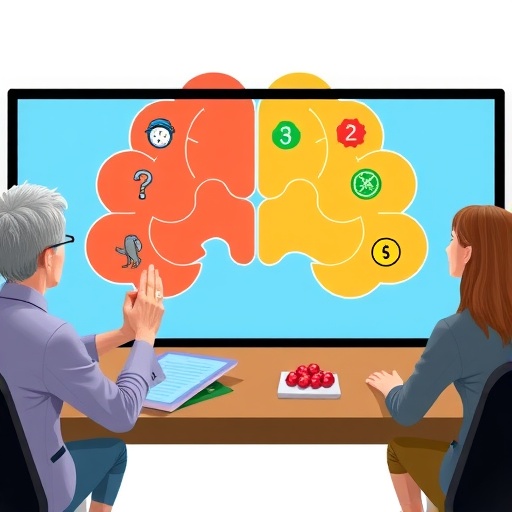
In the rapidly evolving landscape of cognitive health, a groundbreaking initiative is underway in India, targeting a pressing issue that affects millions – mild cognitive impairment (MCI). The CARE (Cognitive Assessment through Recreational Engagement) study protocol, presented by Bhargava, Sharma, Sarma, and colleagues, aims to revolutionize cognitive assessment methods through innovative game-based approaches, offering new hope for patients and their families. Unlike traditional evaluation methods, which often rely on standard tests and clinical assessments, this pioneering study integrates recreational engagement to create a more enjoyable and effective cognitive assessment experience.
Cognitive impairment, particularly in the elderly population, has become an increasing concern globally. MCI serves as a critical phase where individuals experience noticeable cognitive decline, but it does not severely interfere with daily life. It is recognized as a precursor to more severe conditions like Alzheimer’s disease and other forms of dementia. In India, where the aging population is growing exponentially, understanding and addressing MCI is essential in cultivating a healthier future for senior citizens. The CARE study positions itself as a pivotal exploration into leveraging interactive methods to evaluate cognitive health.
Central to the CARE study is the incorporation of game-based assessments, a novel approach that diverges from conventional testing paradigms. Traditional cognitive assessments can often be monotonous and stressful for patients, leading to anxiety or reluctance to participate. By contrast, game-based evaluations can foster a more relaxed environment, thereby encouraging greater participation and more authentic performance from individuals. The integration of enjoyment into the cognitive assessment toolkit may lead not only to improved data quality but also to a more holistic view of a patient’s cognitive health.
The study protocol outlines various games designed to engage participants in cognitively stimulating activities that mirror daily challenges. These games will not only measure specific cognitive functions such as memory, attention, and problem-solving skills, but also assess how participants interact within a playful context. This transition to an interactive format highlights the multifaceted nature of cognitive function — one that is not easily captured by traditional, static testing methods. Importantly, the study will evaluate the caliber of cognitive abilities in real-world scenarios, reflecting a more accurate portrayal of individuals’ capabilities.
Furthermore, the CARE study emphasizes inclusivity, making it relevant to diverse populations across India. With a myriad of languages, cultures, and social backgrounds, the research team is committed to ensuring that the games are accessible to participants from various backgrounds. The use of culturally relevant content embedded within the games not only increases engagement but also underscores the significance of cultural nuances in cognitive health assessments. This approach champions the idea that cognitive function is influenced by a complex interplay of cultural, social, and environmental factors.
The implications of this research extend beyond mere cognitive assessment; they point toward a future in which game-based methodologies can be employed in therapeutic contexts. For individuals diagnosed with MCI or exhibiting cognitive decline, engaging in these cognitive games could provide both evaluation and stimulation, potentially slowing down the progression of cognitive deterioration. The CARE study thus not only serves as a diagnostic tool, but also emerges as a potential intervention strategy, harnessing the power of play to foster cognitive resilience.
As technology continues to permeate every facet of our lives, the integration of digital tools within the CARE study cannot be overlooked. The study includes the development of digital platforms that allow for easier access to game-based assessments, thus expanding their reach. Participants can engage in assessments through smartphones or tablets, making cognitive evaluations more convenient while simultaneously adhering to the modern technological trends that resonate with younger caregivers and family members.
Nonetheless, conducting a robust study necessitates meticulous planning and execution. Researchers will implement a comprehensive methodology that includes pre-and post-assessment measures to evaluate the efficacy of game-based cognitive assessments. The results will be statistically analyzed to ascertain the reliability and validity of these new methods compared to established cognitive assessment techniques. The transparency of this research will be vital in instilling confidence among both participants and the broader medical community.
The CARE study protocol is founded on a holistic understanding of cognitive health, extending its scope beyond the individual. The inclusion of caregivers and family members in the assessment process embodies a community-oriented approach, recognizing that cognitive impairment affects not only the individual but also their support network. Developing a system that nurtures inter-family interactions and allows for shared experiences through game-based assessments can enhance emotional support and improve the overall wellbeing of everyone involved.
Moreover, findings from the CARE study could have far-reaching implications for policymakers and healthcare providers in India and beyond. By highlighting the importance of innovative, engaging assessment strategies, the research initiative could pave the way for broader reforms in how cognitive health is approached. The demand for effective and engaging cognitive assessment tools is burgeoning, and the CARE study stands to be at the forefront of this shift, potentially influencing national healthcare policies that prioritize dementia and cognitive health research.
In summary, the CARE study protocol ushers in a new era of cognitive assessment, characterized by its innovative game-based approach that seeks to engage patients, families, and clinicians alike. By prioritizing enjoyment and interaction, the research team embarks on a journey to redefine cognitive evaluations in India amid a landscape marked by rising cognitive health challenges. As this study progresses, it will be essential to monitor its outcomes and adapt the approach based on findings, contributing to the ongoing dialogue around cognitive health and well-being.
In conclusion, the CARE study represents not just a scientific endeavor but a transformative movement towards a more holistic understanding of cognitive health. Game-based approaches promise to enrich the landscape of cognitive assessments, ultimately leading to earlier detection, better outcomes, and improved quality of life for individuals grappling with cognitive impairment. By bridging the gap between assessment and recreation, this initiative holds the potential to create a paradigm shift in cognitive health care practices, elevating the standard of care for the aging population in India and beyond.
Subject of Research: Mild Cognitive Impairment and Game-Based Cognitive Assessment
Article Title: The CARE Study Protocol: Game-Based Cognitive Assessment via Recreational Engagement in Patients with Mild Cognitive Impairment in India
Article References:
Bhargava, Y., Sharma, A.R., Sarma, G. et al. The CARE study protocol: game-based cognitive assessment via recreational engagement in patients with mild cognitive impairment in India.
BMC Geriatr (2026). https://doi.org/10.1186/s12877-025-06929-y
Image Credits: AI Generated
DOI: 10.1186/s12877-025-06929-y
Keywords: Cognitive Health, Mild Cognitive Impairment, Game-Based Assessment, India, Research, Care Study, Interactive Tools, Digital Platforms, Inclusivity, Family Engagement, Cultural Nuances, Therapeutic Potential
Tags: Alzheimer’s disease prevention strategiesCARE study protocolcognitive health in aging populationseffective cognitive evaluation techniqueselderly cognitive decline evaluationgame-based cognitive assessmentIndia cognitive health initiativesinnovative cognitive health solutionsinteractive assessment methodsmild cognitive impairment researchnovel approaches to MCIrecreational engagement in health