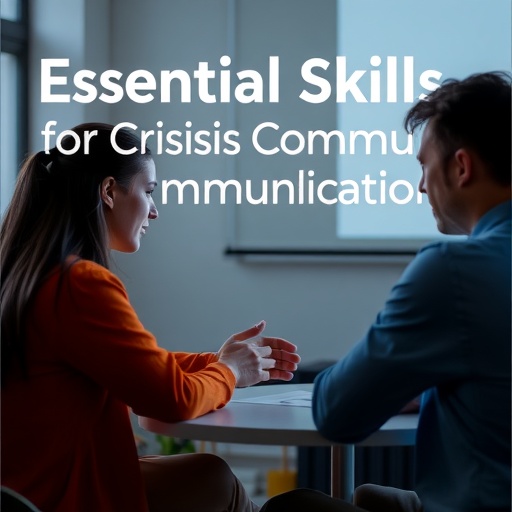
In a groundbreaking study, Rodriguez, Osman, and Lawton delve into the critical realm of crisis communication, particularly within the context of serious illness care. Their research illuminates a pressing need in healthcare—a sector often unprepared for the nuanced discussions that arise when time is of the essence. As patients and families navigate the murky waters of serious medical conditions, the ability of healthcare providers to communicate effectively can significantly impact outcomes, both emotional and clinical.
The tension between urgency and clarity in medical dialogue cannot be overstated. When healthcare professionals encounter patients in crisis situations, the stakes are invariably high. Physicians and nurses often face the daunting challenge of delivering difficult news while ensuring that the recipient truly comprehends their situation. The art of delivering bad news is not merely a procedural task; it involves intricate balances of empathy, clarity, and timeliness. This research tackles these complexities, offering a framework for improving communication in urgent settings.
A pivotal aspect of the study is its focus on the skills necessary for effective crisis communication. Rodriguez and colleagues identify key competencies that healthcare providers need to cultivate, such as active listening and emotional intelligence. These skills transcend traditional communication tactics; they require a deep understanding of both verbal and non-verbal cues, as well as the ability to respond to patients’ emotional states. Such competencies are often overlooked in conventional medical training, posing a critical gap in the preparedness of healthcare professionals.
Moreover, the role of contextual factors in communication is explored in depth. Each patient’s background, cultural beliefs, and personal experiences influence how they receive and process information. The research emphasizes the importance of tailoring communication strategies to meet the unique needs of each patient. This level of personalization goes beyond the one-size-fits-all approach often seen in medical settings, advocating instead for a more nuanced understanding of patient dynamics.
The timeline of effective communication becomes even more crucial in scenarios involving serious illness. Rodriguez and his team underscore that early and open discussions can help establish a roadmap for care, mitigate misunderstandings, and foster stronger relationships between patients and healthcare providers. The research argues that initiating these discussions earlier, even when outcomes are uncertain, can dramatically reshape patient experiences and facilitate more informed decision-making.
The implications of this research extend beyond the walls of individual hospitals and practices. As healthcare continues to evolve in response to societal demands, the need for a systemic shift towards better communication practices is evident. Healthcare organizations must take heed of these findings, investing in training programs that equip their staff with the necessary skills to communicate effectively in high-pressure environments. This investment in professional development is essential for fostering a culture of empathy and understanding, which can ultimately enhance patient care.
Furthermore, the study invites policymakers to reflect on the importance of integrating communication training into medical education. By advocating for curricular changes, the authors make a compelling case for preparing future healthcare leaders not only to treat illnesses but also to navigate the difficult conversations that accompany serious health challenges. Building this foundation is critical as we prepare a new generation of healthcare professionals equipped with both medical knowledge and exemplary communication skills.
The issue of crisis communication extends beyond personal interactions; it also encompasses the use of technology. As telehealth becomes increasingly prevalent, understanding how to communicate effectively through digital platforms is key. The study raises questions about how digital communication tools can facilitate or hinder meaningful conversations during health crises. Exploring the intersection of traditional and digital communication forms is essential, especially in a landscape where patients may opt for virtual consultations.
In particular, the authors suggest that leveraging digital tools can provide healthcare providers with additional resources to enhance their communication strategies. For instance, employing visual aids or structured communication frameworks during virtual consultations could significantly improve clarity and understanding. Navigating this hybrid landscape requires skills that are still underexplored in the medical field, warranting urgent attention and educational refinement.
Ultimately, the research led by Rodriguez, Osman, and Lawton serves as a clarion call for healthcare professionals to reassess their communication methodologies. As crisis scenarios become more prevalent in medical practice, the demand for skilled communicators grows. The task at hand is not merely to inform but to engage with empathy, ensuring that patients feel heard and understood even amidst the most challenging circumstances.
The findings present an opportunity for healthcare institutions to foster environments where crisis communication is prioritized. Through workshops, role-playing scenarios, and peer feedback, healthcare organizations can actively cultivate a culture that values effective communication as much as clinical skills. This transformation is vital as it acknowledges the emotional toll that serious illnesses exert on patients and families, emphasizing the need for compassionate dialogue.
As we look to the future, the implications of this research ripple outward. The study is an essential addition to the existing body of literature, paving the way for further exploration into the vital intersection of communication and healthcare. By promoting evidence-based strategies, the authors invite a reexamination of existing practices, urging a commitment to excellence in how we communicate during the most difficult times in our lives. The health sector stands at a critical crossroads—by embracing the findings of this research, it has the potential to redefine patient care and transform the patient experience into one that is more holistic, understanding, and supportive.
As the discourse around serious illness care unfolds, it is clear that effective communication will remain a cornerstone of medical practice. This research powerfully asserts that when time is short, the skillful navigation of conversations can make all the difference between mere medical treatment and compassionate care that respects the dignity of every patient.
Subject of Research: Crisis Communication in Serious Illness Care
Article Title: When Time Is Short: Exploring Key Skills for Crisis Communication in Serious Illness Care
Article References:
Rodriguez, R.A., Osman, N.Y. & Lawton, A.J. When Time Is Short: Exploring Key Skills for Crisis Communication in Serious Illness Care.
J GEN INTERN MED (2026). https://doi.org/10.1007/s11606-026-10196-x
Image Credits: AI Generated
DOI: https://doi.org/10.1007/s11606-026-10196-x
Keywords: Crisis Communication, Serious Illness Care, Healthcare Training, Patient Engagement, Empathy in Medicine, Digital Communication
Tags: active listening in patient carebalancing urgency and clarity in healthcarecommunication strategies for serious illnesscompetencies for healthcare professionals in crisisCrisis communication in healthcaredelivering difficult news in medicineeffective communication skills in healthcareemotional intelligence in medical dialogueimproving patient-provider communicationnavigating medical crises with empathyserious illness care communicationurgent communication in healthcare settings