In the rapidly evolving field of biomedical engineering, the integration of clinical immersion experiences in educational curricula has become a focal point for nurturing future innovators. A recent study conducted by researchers Wang, Kim, and Wang delves into the significance of clinical immersion courses, revealing insights that can transform how we educate aspiring biomedical engineers. The study highlights faculty experiences and reflections, providing invaluable perspectives on effectively building and refining such critical educational components.
The necessity for clinical immersion arises from the growing requirement for biomedical engineers to possess not only theoretical knowledge but also practical skills that align with real-world healthcare challenges. As the industry continues to advance, the gap between academic study and practical application often leads to a mismatch in preparedness among graduates. This research addresses these concerns directly, documenting the experiences of faculty who have grappled with the complexities of designing and enhancing immersive learning experiences.
Within the realms of clinical immersion, faculty reflections reveal recurring themes that span challenges, innovations, and lessons learned in the process of developing a robust course. One of the most significant points highlighted was the importance of collaboration among faculty members from various disciplines. Such interdisciplinary cooperation fosters a comprehensive approach that enriches the curriculum and enhances the learning experience for students. By engaging multiple perspectives, the course becomes a melting pot of ideas and methodologies, ultimately benefiting the students’ understanding of biomedical engineering’s multifaceted nature.
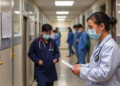
Wang and his team also discussed the impact of real-world application on the educational journey. They emphasized that student engagement levels soar when they interact with actual patients and healthcare professionals, experiencing firsthand the implications of engineering solutions on patient care. This interaction not only reinforces the concepts learned in the classroom but also cultivates empathy and ethical considerations that are essential for future engineers to respect and maintain in their professional lives.
Through careful reflection on the curriculum’s design, the study advocates for creating tailored clinical experiences that align closely with students’ learning objectives and career aspirations. Specifically, the authors suggest a variety of immersive experiences, ranging from shadowing healthcare practitioners to participating in ongoing research projects. These diverse opportunities not only cater to different learning styles but also provide students with a well-rounded view of the biomedical engineering landscape.
A striking observation made during the study was the necessity for feedback loops in refining the clinical immersion course. Continuous evaluations from both students and faculty have been crucial in identifying areas of improvement. This iterative process ensures that the course evolves alongside advancements in biomedical engineering and changes in healthcare practices, thereby remaining relevant and effective in preparing students for their careers.
The researchers also expressed the importance of incorporating cutting-edge technologies into the clinical immersion curriculum. By integrating virtual reality, robotics, and advanced simulation-equipped environments, students can practice essential skills in a controlled setting, alleviating the pressure often associated with initial patient interactions. Thus, leveraging technology bridges the gap between theoretical knowledge and practical skills, paving the way for graduates to enter the workforce with confidence and competence.
In light of the findings, the potential for further research and course development remains immense. The faculty reflections not only shed light on current practices but also inspire future educators and administrators to innovate within their own contexts. This ongoing dialogue in medical education serves as a catalyst for change, ensuring that biomedical engineering programs adapt to meet the dynamic needs of the healthcare sector.
The study’s implications extend beyond academia; they touch on the broader implications for healthcare outcomes. By equipping future biomedical engineers with a well-rounded education that emphasizes both technical and soft skills, we pave the way for more effective healthcare solutions. Improved educational methodologies directly influence patient safety, technological effectiveness, and ultimately, the quality of care delivered.
Ultimately, Wang, Kim, and Wang’s exploration of pedagogical strategies in biomedical engineering underlines the critical role that faculty play in shaping the educational landscape. Their reflections highlight how a collaborative, adaptive, and technology-infused approach to clinical immersion can profoundly impact students’ learning experiences and prepare them for the challenges they will face in their careers.
As the study concludes, it becomes evident that successful course design is not a linear or static process but rather a dynamic interplay of experiences, reflections, and innovations. The document serves as a call to action for educators to continually assess and adapt their methods, ensuring that students receive the most relevant and impactful education possible.
In this age of rapid technological advancement and evolving healthcare challenges, the contributions of biomedical engineers remain ever more crucial. By investing in effective educational practices, we ensure a generation of engineers who are not only competent but also compassionate and aware of their role within the healthcare ecosystem.
Strong collaborations, innovative curriculum design, and the embrace of technological advances can create a future where biomedical engineering education continuously evolves to meet new demands, thus improving patient outcomes and revolutionizing healthcare systems. In doing so, educators can empower their students to become leaders in the field, poised to address the complexities of modern medicine.
As we look to the future, this body of work could serve as an essential foundation for the development of educational frameworks that prioritize clinical experience as a vital element of learning in biomedical engineering. By acknowledging the experiences shared by faculty through their reflections, the academic community can forge pathways that lead to substantive improvements in education practices, ultimately transforming the biomedical engineering field for the better.
The comprehensive reflections and proposed methods from this research foster an enlightening discourse within medical education, advocating for a transformation that blends academic rigor with real-world application, thereby ensuring that biomedical engineers are prepared to meet the ever-evolving demands of the healthcare industry.
Subject of Research: Clinical immersion experiences in biomedical engineering education.
Article Title: Faculty Reflections on Building and Refining a Biomedical Engineering Clinical Immersion Course.
Article References:
Wang, X., Kim, J. & Wang, A. Faculty Reflections on Building and Refining a Biomedical Engineering Clinical Immersion Course.
Biomed Eng Education (2026). https://doi.org/10.1007/s43683-025-00212-7
Image Credits: AI Generated
DOI: https://doi.org/10.1007/s43683-025-00212-7
Keywords: Clinical immersion, biomedical engineering education, faculty reflections, curriculum design, interdisciplinary collaboration, real-world application, technology integration.
Tags: Biomedical engineering educationbridging theory and practice in engineeringchallenges in curriculum designclinical immersion experiencesenhancing biomedical engineering curriculaexperiential learning in healthcarefaculty insights in educationinnovations in educational practicesinterdisciplinary collaboration in engineeringpractical skills in biomedical engineeringpreparing future biomedical engineersreflections on immersive learning