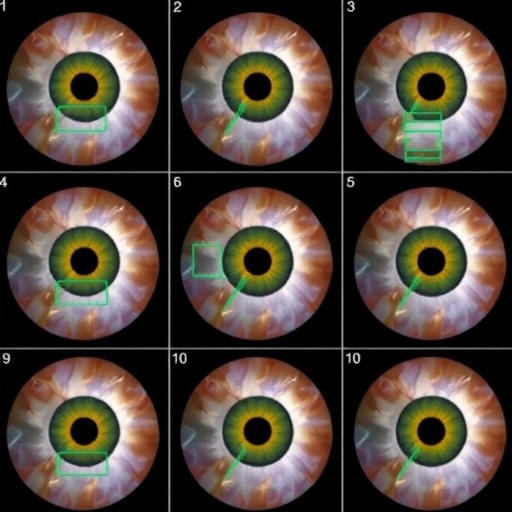
In a groundbreaking study published in the journal Discov Artif Intell, researchers from an acclaimed medical institution have delved deeply into the intersection of machine learning and surgical science, specifically focusing on strabismus surgery. Strabismus, a condition where the eyes do not properly align with each other, presents both functional and aesthetic challenges for patients, making effective and precise surgical intervention crucial. Traditional methods of predicting surgical parameters, however, face significant limitations, prompting researchers to explore innovative techniques to enhance surgical outcomes.
The team, consisting of experts in ophthalmology and artificial intelligence, embarked on a research journey to explore how machine learning could be harnessed to predict critical surgical parameters with unprecedented accuracy. By applying sophisticated algorithms to a comprehensive dataset comprising historical surgical cases, they aimed to uncover patterns that could inform preoperative decisions. This approach not only promises to refine surgical strategies but also hopes to lessen the margin of error that can occur during these intricate procedures.
Machine learning, a subset of artificial intelligence, involves algorithms that improve automatically through experience. In the context of predicting surgical outcomes, these algorithms can analyze vast amounts of data to identify trends and correlations that might not be evident through conventional analysis. The researchers designed a study that employed various types of machine learning techniques, including supervised learning, to train their models on a diverse and extensive dataset, which encompassed numerous variables related to patient demographics, preoperative assessments, and historical surgical outcomes.
One of the pivotal aspects of this research was the selection of the appropriate features or variables to include in the machine learning model. The researchers meticulously examined clinical records to select factors such as age, severity of strabismus, and previous surgical history. Each of these variables contributes to surgical decision-making, and understanding their interrelations could yield insights that dramatically enhance the predictive prowess of the algorithms. Through rigorous preprocessing of data, they ensured that the models were trained on high-quality inputs, enabling the generation of reliable predictions.
Additionally, the study employed various machine learning frameworks, from regression models to more complex neural networks. The researchers found that ensemble methods, which combine multiple algorithms to improve prediction accuracy, yielded the most promising results. By analyzing surgical data through these robust methodologies, they were able to achieve a high degree of accuracy in predicting which surgical parameters would lead to optimal patient outcomes. This can transform how surgeons approach decision-making, providing them with evidence-based insights drawn from historical data.
Moreover, the researchers recognized the importance of validating their predictive models. They used a separate testing dataset to evaluate the model’s performance, ensuring that their findings could be generalized beyond the initial data used for training. This validation process is crucial in machine learning, as it determines the reliability of the predictions made by the models. The results indicated a significant improvement in predicting outcomes, leading to discussions about the integration of machine-learning tools in clinical settings.
As part of their exploration, the team also considered the implications of these advancements for patient care. A predictive model that can accurately forecast surgical outcomes could enhance patient consultations by providing clearer expectations regarding the results of interventions. Surgeons could tailor their techniques based on predicted parameters, thereby optimizing surgical approaches for individual cases. This personalized medicine approach not only enhances patient satisfaction but also has the potential to improve the overall efficacy of strabismus surgery.
The significance of this research extends beyond the operating room. If widely adopted, machine learning techniques could revolutionize the field of ophthalmology, promoting a shift from traditional surgical practices to data-driven methodologies. As hospitals and clinics continue to embrace digital transformation, the integration of artificial intelligence into surgical practices may redefine how clinicians interact with technology and data, offering a more structured approach to patient management.
Nonetheless, the incorporation of machine learning into medical practice also raises ethical considerations. The researchers acknowledged the potential challenges of relying heavily on algorithms for decision-making. The importance of clinical judgment cannot be overstated, and educating surgeons on interpreting machine-generated predictions will be critical for responsible implementation. Ensuring that technological advancements complement rather than replace human expertise will be a vital aspect of future discussions on the role of AI in healthcare.
In conclusion, the exploration into machine learning methods for predicting surgical parameters in strabismus surgery heralds a new frontier in ophthalmic care. By harnessing the power of artificial intelligence, researchers are setting a precedent for how data can inform surgical decision-making processes, ultimately leading to improved patient outcomes. This pioneering study represents not only an evolution in surgical techniques but also a commitment to fostering a culture of continuous improvement and innovation within the medical community.
As the research from Speidel et al. demonstrates, the future of surgery may well lie in the hands of algorithms, with machine learning transforming the landscape of how surgical practices are approached. With ongoing advancements in technology and continued collaborations across disciplines, the potential for breakthroughs in patient care remains vast. This study marks an important milestone in realizing the benefits of artificial intelligence within the realm of medicine, inviting further exploration and development in this exciting field.
By pushing the boundaries of what is possible, this research lays the groundwork for future studies investigating other applications of machine learning in surgical disciplines, paving the way for a future where precision medicine becomes the norm rather than the exception.
Subject of Research: Use of machine learning methods in predicting surgical outcomes for strabismus surgery.
Article Title: Investigation of machine learning methods for predicting surgical parameters in strabismus surgery.
Article References:
Speidel, A.J., Fetzer, B., Wullbrand, M. et al. Investigation of machine learning methods for predicting surgical parameters in strabismus surgery.
Discov Artif Intell (2026). https://doi.org/10.1007/s44163-026-00846-8
Image Credits: AI Generated
DOI: 10.1007/s44163-026-00846-8
Keywords: Machine Learning, Strabismus Surgery, Predictive Analytics, Artificial Intelligence, Surgical Outcomes, Personalized Medicine.
Tags: algorithms for surgical parametersartificial intelligence in ophthalmologydata-driven surgical decision makingenhancing precision in eye surgeryhistorical surgical case analysisinnovative techniques in strabismus treatmentmachine learning in surgeryophthalmology and AI integrationpredictive analytics in healthcarereducing surgical error marginsstrabismus surgery predictionssurgical outcome prediction techniques