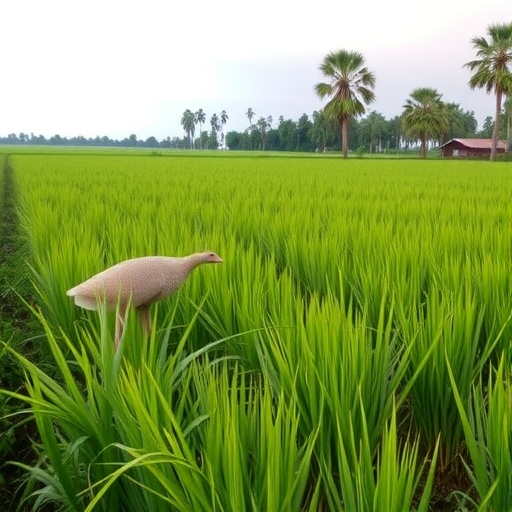
In the face of increasing climate change impacts, particularly in developing nations, understanding how agricultural communities adapt to these challenges is vital for ensuring food security. A recent study conducted by Mohammad Shamsul Hosain and Ahmed H. M. Mamun shines a spotlight on the rice farming community in Bogura, Bangladesh. This research addresses the multifaceted determinants influencing the adaptation strategies rice farmers are employing to mitigate the adverse effects of climate change. The findings not only enrich our knowledge of agricultural resilience but also provide a blueprint for policymakers seeking to bolster adaptation efforts globally.
The backdrop of this study reflects a concerning reality: the farmers of Bogura are experiencing the brunt of climate change through erratic weather patterns, increased flooding, and rising temperatures. These environmental shifts pose an existential threat to rice production, a staple food for millions and a critical economic driver for Bangladesh. Traditionally, rice farming has relied on predictable weather patterns, making the current climate variability particularly challenging. As such, farmers are compelled to innovate and adopt new strategies to sustain their livelihoods.
Farmers are exploring various adaptation measures to cope with these climate stresses. These strategies range from altering planting schedules to adopting drought-resistant rice varieties. The research highlights multiple socio-economic factors influencing these adaptations, such as access to information, financial resources, and social networks. The interplay of these determinants can significantly affect a farmer’s ability to adjust effectively to climate change.
Access to knowledge plays a critical role in shaping farmers’ adaptation strategies. The study emphasizes the importance of extension services and agricultural education in disseminating vital information regarding climate-resilient practices. Many farmers in Bogura are eager to learn about innovative techniques but lack access to reliable sources of information. Strengthening advisory networks can help bridge this gap, empowering farmers with the knowledge they need to make informed decisions.
Financial constraints are another significant barrier that affects adaptation choices. Rice farmers often find themselves faced with limited resources, hindering their ability to invest in new technologies or resilient seed varieties. The study reveals that farmers with greater financial literacy and access to credit services are better positioned to implement effective adaptation strategies. Therefore, it is essential for policymakers to consider financial support mechanisms that enable farmers to overcome these limitations.
The social fabric of rural communities also plays a crucial role in adaptation. Trust and collaboration among farmers can foster an environment conducive to sharing knowledge and resources. The research highlights that farmers within tightly-knit communities tend to share information more freely, leading to collective adaptation strategies. This finding underscores the importance of community engagement in fostering agricultural resilience amid climate change.
Moreover, gender dynamics significantly influence adaptation strategies within rice farming communities. The study points out that female farmers often face additional barriers to accessing resources and information compared to their male counterparts. Addressing these gender disparities is critical for designing inclusive adaptation strategies that empower all farmers, regardless of gender. Supporting women in agriculture can enhance overall community resilience, as women play a vital role in food production and household nutrition.
The interaction between climate change and agriculture is complex, requiring a multi-dimensional approach to research. The study employs various methodologies, including surveys and interviews, to capture a comprehensive understanding of the factors influencing adaptation strategies. This rigorous approach enables the researchers to draw nuanced conclusions about the challenges and opportunities faced by farmers in Bogura.
Another significant outcome of the research is the identification of local traditional knowledge and practices that can be harnessed for climate adaptation. Many farmers have developed indigenous techniques that have stood the test of time but often go unrecognized in formal agricultural research. By integrating local knowledge with scientific insights, there is potential to devise more effective adaptation strategies that resonate with the agricultural practices of the region.
The study’s findings have broader implications for global discussions surrounding climate change adaptation in agriculture. As countries worldwide grapple with similar challenges, the experiences of Bogura’s rice farmers could serve as a template for other regions impacted by climate variability. The need for context-specific strategies is critical, as one-size-fits-all solutions may neglect local realities.
Furthermore, the research highlights the importance of policy frameworks that facilitate adaptation efforts. Government support through subsidies, research funding, and infrastructure development can create an enabling environment for farmers. Policymakers must recognize the importance of integrating climate adaptation strategies into national agricultural policies, ensuring that farmers are equipped not only to survive but to thrive in a changing climate.
As the global community continues to grapple with the implications of climate change, this study provides an essential contribution to the discourse on agricultural resilience. The interplay of socio-economic factors, access to resources, and community dynamics reveals that effective adaptation is not merely about individual choices but also about collective action and systemic support.
Ultimately, the findings underscore the urgency of addressing the challenges faced by rice farmers in Bogura, Bangladesh, as they navigate a complex landscape marked by climate uncertainty. By fostering an environment conducive to adaptation, we not only support these farmers but also take crucial steps towards safeguarding food security in the face of an uncertain climate future.
Subject of Research:
Determinants influencing climate change adaptation strategies employed by rice farmers in Bogura, Bangladesh
Article Title:
Determinants influencing climate change adaptation strategies employed by rice farmers in Bogura, Bangladesh
Article References:
Hosain, M.S., Mamun, A.H.M.M. Determinants influencing climate change adaptation strategies employed by rice farmers in Bogura, Bangladesh.
Discov Agric 4, 10 (2026). https://doi.org/10.1007/s44279-026-00480-z
Image Credits:
AI Generated
DOI:
https://doi.org/10.1007/s44279-026-00480-z
Keywords:
Climate Change, Agriculture, Rice Farmers, Adaptation Strategies, Bangladesh, Socio-Economic Factors, Food Security, Resilience.
Tags: agricultural resilience in developing nationsBangladesh climate impactsclimate change adaptation strategiesdrought-resistant rice varietiesenvironmental challenges for rice productionfarmers’ adaptation to climate variabilityflooding and temperature rise effectsfood security in Bangladeshinnovative farming techniques for ricepolicy implications for climate adaptationrice farming community in Bogurasustainable agriculture practices